Our Pick: Vicks
Check price on Amazon →Do Humidifiers Help With Congestion? An Honest Answer
Many people find that comfortable indoor humidity makes a stuffy nose and a dry, scratchy throat feel better, and that is a real and reasonable reason to run one. What a humidifier is not is a treatment. It does not cure a cold, shorten one, prevent one or clear an infection, and the evidence for anything beyond symptomatic comfort is thin. Here is what humidity plausibly does, what it does not, how to set one up safely, and when the right move is a clinician rather than an appliance.
By The Vapor Reviews DeskUpdated 2026-09-05~9 min read Ranked on verified output, never box claimsHow we research
The honest answer: humidity is a comfort measure. Plenty of people report that raising a very dry bedroom into a comfortable range makes congestion easier to live with overnight, that a dry throat stops feeling raw, and that sleep improves. Those are worthwhile outcomes and they are the reason humidifiers sell by the millions every winter. They are also the full extent of what we will claim on this page.
What a humidifier does not do is treat anything. It does not cure a cold, shorten a cold, prevent one, clear a sinus infection or substitute for medical care, and the published evidence for benefits beyond symptomatic comfort is limited and mixed. Anyone selling you more than comfort is overselling. Vapor Reviews is a research and verification desk rather than a medical authority, and we would rather be plainly useful than quietly wrong.
The practical framing that follows from that is simple. Aim for the commonly cited EPA range of 30 to 50 percent relative humidity, verify it with an inexpensive hygrometer rather than by feel, keep the machine scrupulously clean, and choose the design that suits who is in the room. Getting those four things right is the whole of what a humidifier can offer a stuffy night.
The short version
- Comfort, not treatment. Humidity can make congestion feel more bearable; it does not cure or shorten anything.
- Aim for 30 to 50 percent relative humidity, the range commonly cited by the EPA. Above roughly 60 percent invites mold and dust mites.
- Measure rather than guess: a Govee H5075 is $11.69, a TempPro TP50 is $10.99.
- For children, the AAP recommends cool mist rather than warm-mist or steam units because of the burn risk.
- A dirty humidifier works against the whole point. Empty and dry daily, descale weekly.
- VapoSteam goes only in a steam vaporizer with a medicine cup. Never in an ultrasonic or cool-mist tank.
- See a clinician for high fever, symptoms lasting beyond about ten days, worsening after improvement, ear pain, chest pain or any trouble breathing.
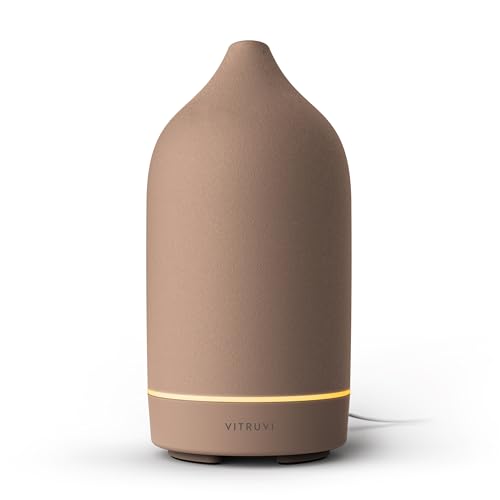
Our top-rated vaporizers
Whatever you decide, these are the picks we recommend across every category, ranked on verified output and value. Live price check on each.


As an Amazon Associate we earn from qualifying purchases, at no cost to you.
What you'll need
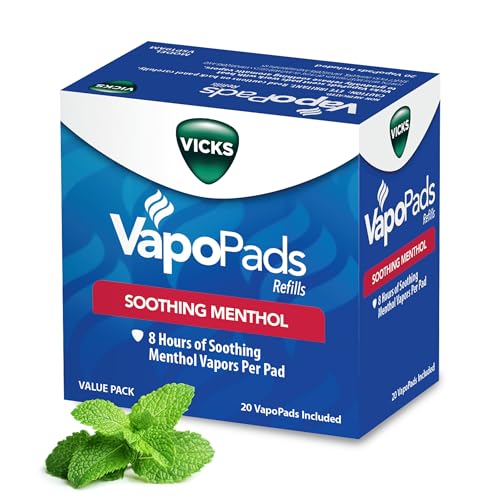
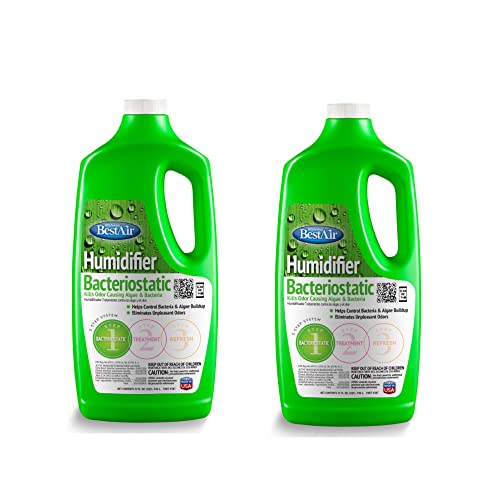
The six things that make a steam vaporizer or humidifier actually work for you: the medicated liquid and pads that turn steam into relief, the treatment and cleaning tools that keep the tank safe, and a meter so you know when the room is right. Prices are approximate at time of writing.




What humidity plausibly does, and what it does not
What it plausibly does. Very dry air is uncomfortable on already-irritated nasal passages and a raw throat, and moving a room out of the low twenties and into a comfortable range removes that additional irritation. Many people report easier breathing at night and less of the dry, cracked feeling that makes a cold worse than it needs to be. That is a comfort effect, it is widely reported, and it costs very little to obtain.
What it does not do. It does not shorten a cold. It does not cure or treat a sinus infection, bronchitis or flu. It does not prevent illness. And it does not replace anything a clinician or a pharmacist would recommend. The evidence base for humidification as a therapy is limited and inconsistent, which is exactly why manufacturers describe these products in terms of comfort and moisture rather than in medical language.
What can make things worse. Overshooting. Pushing a bedroom past roughly 60 percent creates conditions that favor mold growth and dust mites, both of which are common respiratory irritants, so an over-humidified room can leave a congested person worse off. And a neglected humidifier is its own problem: cool-mist designs aerosolize whatever is growing in the tank, which is the opposite of helpful in a sick room.
Warm mist, cool mist, or steam for congestion
The category argument gets heated and the practical answer is unromantic: for congestion comfort, the mist temperature matters far less than getting the room to a comfortable humidity and keeping the machine clean. Both warm and cool designs raise humidity. What separates them is safety, noise, upkeep and personal preference for how the air feels.
| Design | How it feels | Safety note | Upkeep |
|---|---|---|---|
| Cool mist, ultrasonic | Cool plume, near silent | No hot water; AAP choice for children's rooms | Strictest cleaning; wants distilled water |
| Cool mist, evaporative | Invisible moisture, fan noise | No hot water; self-limiting output | Wick filters are a running cost |
| Warm mist | Warm, cozy in winter | Holds hot water; keep away from children | Descale the heating element weekly |
| Steam vaporizer | Visible hot steam, medicine cup for VapoSteam | Scald risk; keep out of reach of children | Descale electrodes weekly or output stops |
For an adult who likes the sensation of warm, damp air when stuffy, a warm-mist unit such as the Vicks Warm Mist Humidifier V745 at $39.49 or a steam vaporizer such as the Vicks Warm Steam Vaporizer V150 at $19.79 is a sensible, cheap choice, with the standing caution that both hold genuinely hot water. For a quiet bedroom without that concern, an ultrasonic unit such as the Levoit 2.5 L top fill at $29.79 is near silent, and a Levoit LV600S at $109.00 offers both modes plus a humidistat (prices verified via the Amazon Creators API on September 5, 2026). The full comparison is in warm mist vs cool mist.
Children: the rule that is not negotiable
The American Academy of Pediatrics recommends cool-mist humidifiers rather than warm-mist or steam units in children's rooms, because heated designs contain hot water and release hot steam and represent a burn risk to a child who reaches, pulls or tips the unit. That guidance sits above any preference about how the air feels, and we repeat it on every page where a nursery appears.
With a cool-mist unit chosen, the placement rules follow: out of a child's reach, never in or on the crib, on a stable surface well away from the crib rails, with the cord secured so it cannot be pulled or fall inside. Nursery-oriented units such as the Frida Baby 3-in-1 at $43.49 and the Crane Adorables at $50.99 are cool mist by design; the field is ranked in best humidifiers for a baby, and placement is covered in where to place a humidifier in a bedroom.
Two more child-specific cautions. Topical products have their own age limits printed on the label, and those labels are the authority, not us: Vicks VapoRub at $22.41 is labeled as not for children under 2, and Vicks BabyRub at $7.47 is a non-medicated product labeled for ages 3 months and up. And an infant with congestion, poor feeding, unusual sleepiness or any breathing difficulty is a clinician question immediately, not a humidifier question.
VapoSteam, VapoPads and what never goes in a tank
This is the most common way people damage a humidifier while trying to feel better, so it is worth being exact. Vicks VapoSteam at $9.98 is a medicated liquid formulated for steam vaporizers that have a medicine cup, such as the V150. It goes in the cup, not in the water, and never in any other kind of machine.
VapoPads at $14.97 for a 20-pack are scent pads for units that have a dedicated pad slot, including several Vicks humidifiers and the Vicks Sinus Inhaler at $42.98. They belong in the slot and nowhere else.
Nothing oily goes in a water tank. Not VapoRub, not essential oils, not any scented liquid, unless the manual for that specific unit explicitly permits it. Oil degrades plastics, gums up ultrasonic transducers, is extremely difficult to clean out and voids warranties. Putting VapoRub in a tank is the single most common self-inflicted humidifier failure, and it is covered fully in can you put Vicks in a humidifier. Prices verified via the Amazon Creators API on September 5, 2026.
Setting one up so it actually helps
Measure the room. Human perception of humidity is unreliable, especially when you are ill and everything feels wrong. Put a hygrometer across the room at roughly sleeping height: a Govee H5075 is $11.69 or a TempPro TP50 is $10.99. Aim for 30 to 50 percent and stop there.
Place it properly. Raised a couple of feet on a hard, waterproof surface, roughly three feet or more from your head, a foot or more from walls, outlet aimed at open room. Close the bedroom door so the unit is humidifying a room rather than a house. Expect a few hours before the room settles, as covered in how long a humidifier takes to work.
Keep it clean, especially in a sick room. Empty, rinse and dry the tank and base every day, never top off standing water, and descale weekly with white vinegar followed by whatever sanitizing step your manual specifies, never mixing the two. A humidifier running dirty during an illness is working against you. The routine is in how to clean a humidifier.
Consider a personal steam inhaler instead, or as well. If what you want is warm damp air on your face for five or ten minutes rather than a humidified bedroom, that is a different machine and it does that job better: the Vicks Personal Steam Inhaler V1200 is $49.99. Same framing applies, comfort rather than treatment, and the same scald caution applies more strongly still. Our rankings are in best steam inhalers.
When to stop adjusting appliances and call a clinician
This is the part of the page that matters most, and no humidifier changes any of it. Seek medical advice if there is a high or persistent fever, symptoms lasting beyond about ten days without improvement, symptoms that improved and then got noticeably worse, severe facial or sinus pain, ear pain, chest pain, coughing up blood, or any difficulty breathing, wheezing or shortness of breath.
Lower the threshold considerably for infants and young children, for older adults, for anyone pregnant, for anyone with asthma, COPD or another chronic lung condition, and for anyone with a compromised immune system. Congestion in an infant that affects feeding or sleep, or any breathing difficulty at any age, is an immediate call rather than a wait-and-see.
None of that is a reason not to run a humidifier. Comfort while you recover is a legitimate goal, and a clean unit holding a bedroom at a sensible humidity is a perfectly good thing to have. It simply is not medicine, and the moment the situation looks like it needs medicine, the appliance is not the thing to be adjusting. For the wider category context, see is a vaporizer good for a cough.
Ready to buy? Start with our top picks
Whatever this guide steered you toward, here's where most readers land, ranked on verified output and value. Live price check on each.
As an Amazon Associate we earn from qualifying purchases, at no cost to you.
Key terms
- Comfort measure
- Something that makes symptoms easier to live with without treating the underlying cause. The correct and complete description of what humidity offers a congested person.
- Relative humidity target
- The commonly cited EPA band of 30 to 50 percent. Below it, dry air adds irritation; above roughly 60 percent, mold and dust mites are favored.
- Cool mist (AAP guidance)
- The design the American Academy of Pediatrics recommends for children's rooms, because warm-mist and steam units hold hot water and carry a burn risk.
- Medicine cup
- The small reservoir on a steam vaporizer designed to hold VapoSteam. It is the only place a medicated liquid belongs, and it is separate from the water tank.
- Scent pad slot
- The dedicated compartment on some humidifiers and inhalers that accepts VapoPads. Like the medicine cup, it exists so that nothing scented ever enters the water.
Questions, answered
Do humidifiers actually help with congestion?
Many people find that raising a very dry room into a comfortable humidity range makes a stuffy nose and a raw throat easier to live with, particularly overnight, and that is a fair reason to run one. What we will not tell you is that it treats anything. A humidifier does not cure a cold, shorten one, prevent illness or clear an infection, and the published evidence for benefits beyond symptomatic comfort is limited and mixed. Aim for the commonly cited 30 to 50 percent range, keep the unit clean, and judge it on comfort alone.
Is warm mist or cool mist better for congestion?
For comfort purposes the difference is mostly preference, and both raise humidity equally well. Some adults like the sensation of warm, damp air when they are stuffy, which favors a warm-mist unit or a steam vaporizer. Others sleep better with a silent cool-mist unit. What is not a preference is the safety rule: the AAP recommends cool mist rather than warm-mist or steam units in children's rooms, because heated designs hold hot water and release hot steam. In an adult bedroom, choose on noise, upkeep and how the air feels to you.
Can I put Vicks VapoRub in my humidifier to help congestion?
No. VapoRub is a topical ointment, it is oily, and it does not belong in a water tank of any kind. Oil degrades plastics, gums up ultrasonic transducers, is very hard to clean out and voids warranties. If you want a medicated vapor, the correct product is VapoSteam at $9.98, and it goes in the medicine cup of a steam vaporizer such as the Vicks V150, never in the water and never in a cool-mist unit. Units with a scent pad slot take VapoPads at $14.97 for a 20-pack in the slot only.
What humidity level is best when you are congested?
The same 30 to 50 percent relative humidity range that the EPA commonly cites for indoor air generally. There is no separate sick-room number, and pushing higher is counterproductive: above roughly 60 percent you create conditions that favor mold and dust mites, both common respiratory irritants, and you will usually see condensation on the windows in the morning. Measure across the room with an inexpensive hygrometer rather than judging by feel, since perception of humidity is especially unreliable when you are unwell.
Can a humidifier make congestion worse?
Yes, in two specific ways. Over-humidifying a room past roughly 60 percent favors mold growth and dust mite populations, and for anyone sensitive to either, that can make things worse rather than better. And a neglected humidifier becomes its own problem: standing water grows biofilm within days, and cool-mist designs aerosolize whatever is in the tank into the air of a sick room. Both are avoidable. Hold the 30 to 50 percent band, empty and dry the unit daily, and descale weekly.
Should I run the humidifier all night when I have a cold?
Running it overnight is reasonable, since that is when dry air is most noticeable and when uninterrupted sleep matters most. Two conditions. Keep the room inside the 30 to 50 percent band rather than running the unit flat out, using a humidistat if the model has one, and check the windows in the morning for condensation as a sign you have overshot. And empty and dry the tank in the morning rather than topping it off, because a warm tank of standing water in a sick room is exactly what you do not want.
Is a steam inhaler better than a humidifier for a stuffy nose?
They do different jobs and the choice depends on what you are after. A humidifier changes the whole room over hours and runs overnight. A personal steam inhaler such as the Vicks V1200 at $49.99 delivers warm, damp air directly to the face for a short session, which some people find more immediately comfortable. The same framing applies to both: comfort, not treatment, and no evidence that either shortens a cold. Steam inhalers carry a real scald risk, so they are for supervised adult use and are not appropriate for young children.
When should I see a doctor instead of running a humidifier?
Seek medical advice for a high or persistent fever, symptoms lasting beyond about ten days without improvement, symptoms that improved and then worsened, severe facial or sinus pain, ear pain, chest pain, coughing up blood, or any difficulty breathing, wheezing or shortness of breath. Lower that threshold for infants and young children, older adults, anyone pregnant, and anyone with asthma, COPD or a compromised immune system. A humidifier is a comfort appliance, and none of the situations above are appliance problems.
Filed under Explainer
Part of Vaporizer 101
Keep reading
Is a Vaporizer Good for a Cough?
The same honest framing applied to coughs: what steam offers, and what it does not.
Can You Put Vicks in a Humidifier?
VapoRub, VapoSteam and VapoPads: what goes where, and how to rescue a unit you already dosed.
Best Vaporizers for Colds and Congestion
The ranked units for a sick room, on output, tank life, upkeep and safety design.
Ideal Humidity for a Bedroom
The 30 to 50 percent target that decides whether a humidifier helps or backfires.