Our Pick: Vicks
Check price on Amazon →How Long Does a Humidifier Take to Work?
Minutes for the air right beside the unit, several hours for a closed bedroom to settle at a new humidity, and often overnight before you notice the difference where it matters. That spread is not vagueness; it is three different questions wearing one sentence. What decides the answer is room volume, how well the room is sealed, how dry the outside air is, and whether the machine moves enough water per hour to outrun the leaks. Here is what to expect, and how to tell when it never will.
By The Vapor Reviews DeskUpdated 2026-09-05~9 min read Ranked on verified output, never box claimsHow we research
The honest answer in three parts. The air within a foot or two of the outlet is more humid within minutes, which is why people standing over a new humidifier think it is working instantly. A closed bedroom of ordinary size typically needs two to eight hours for a hygrometer on the far wall to settle at a new level, depending on how dry the room started and how leaky it is. And the subjective payoff, waking without a dry throat or a stuffy nose, is usually judged after a full night or two, because comfort is a lagging indicator of humidity.
The reason the range is wide is that a humidifier is not filling a sealed box. It is adding moisture to a room that is continuously losing it: through the gap under the door, through the leaks around windows, through the ventilation the building does whether you asked or not, and into every dry surface in the room, since carpet, drywall, upholstery and books all absorb moisture before the air gets to keep it. A humidifier reaches a new steady state when its output finally matches all of that loss, not when it has emptied a tank.
That framing makes the failure case obvious. If the losses exceed what the machine can add, the room never reaches the target no matter how long it runs, and the owner concludes the humidifier is broken. It usually is not; it is undersized for the space, or the door is open to the rest of a very dry house, and the fix is a bigger unit or a smaller room rather than more patience.
The short version
- Minutes: air near the outlet. Two to eight hours: a closed room settling at a new level. A night or two: how you actually feel.
- A closed door is the single biggest accelerator, because it shrinks the volume the unit is trying to humidify.
- Very dry outside air and heavy heating both increase the loss rate, so the same unit works slower in a cold snap.
- Dry rooms absorb moisture into carpet, upholstery, drywall and wood before the air holds it, which is why the first night is the slowest.
- Measure with a hygrometer placed across the room, not beside the unit. A Govee H5075 is $11.69 and a TempPro TP50 is $10.99.
- The target is the commonly cited EPA range of 30 to 50 percent. Above roughly 60 percent invites mold and dust mites.
- If the reading stalls well under 30 percent while the tank empties nightly, the unit is undersized for the space.
Our top-rated vaporizers
Whatever you decide, these are the picks we recommend across every category, ranked on verified output and value. Live price check on each.


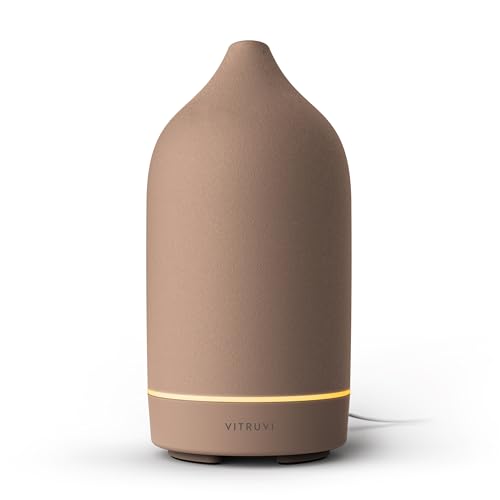
As an Amazon Associate we earn from qualifying purchases, at no cost to you.
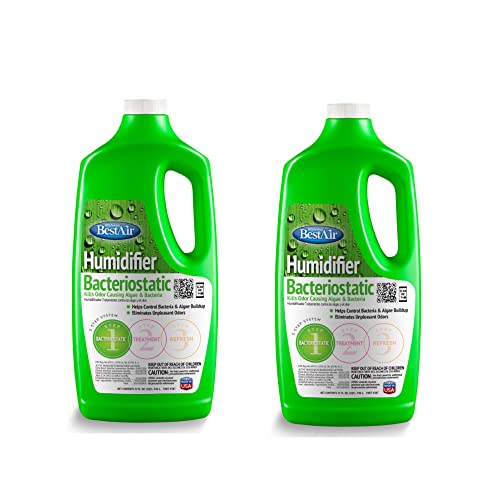
What you'll need
The six things that make a steam vaporizer or humidifier actually work for you: the medicated liquid and pads that turn steam into relief, the treatment and cleaning tools that keep the tank safe, and a meter so you know when the room is right. Prices are approximate at time of writing.





Three timescales, not one
Seconds to minutes: the plume. Mist leaving the outlet raises the humidity of the air immediately around it almost at once. This is genuinely working, and it is also the least useful measurement in the room, because it tells you about a cubic foot of air rather than about the bedroom. Anyone holding a hygrometer next to the nozzle is measuring the machine, not the space.
Hours: the room. The number people actually want is how long until the whole room settles. For a closed bedroom with a unit sized for it, expect a meaningful climb within an hour or two and a stable new level within roughly two to eight hours. A larger, leakier or much drier room sits at the long end of that; a small sealed room at the short end.
A night or two: the feeling. Comfort lags humidity. Dry nasal passages, a scratchy throat and dry skin respond to sustained conditions rather than to an instantaneous reading, so the fair test of whether a humidifier helps is two or three consecutive nights at a stable level, not one evening of watching the plume.
What decides the speed
| Factor | Effect on time to target | What to do about it |
|---|---|---|
| Door open or closed | Largest single factor; an open door can multiply the effective volume | Close the door for the first several hours |
| Room volume | Bigger rooms take proportionally longer at the same output | Match the unit's stated coverage to the room |
| Starting dryness | Very dry rooms absorb moisture into surfaces first | Expect the first night to be slower than the second |
| Outside air and heating | Cold dry air plus forced heat raises the loss rate | Run continuously in a cold snap rather than in bursts |
| Leakiness | Old windows and gaps flush humid air out constantly | Weatherstripping helps more than a bigger humidifier |
| Output per hour | Determines whether the unit can outrun the losses at all | Undersized units never reach target, however long they run |
The closed door deserves its top billing. A humidifier working on a 12 by 12 bedroom with the door shut is solving a small, bounded problem. Open that door onto a dry hallway and the same machine is now trying to humidify the house, which it cannot do, and the bedroom reading barely moves. If you want a fast result on the first night, shut the door.
The absorption effect is the other underrated one. A room that has been dry for weeks has dry carpet, dry upholstery, dry timber and dry drywall, and all of it takes up moisture before the air keeps any. That is why the second night in a newly humidified room usually reaches target faster than the first, and why owners who give up after four hours are quitting during the slowest part of the process.
Measure it properly, or you are guessing
Human perception of relative humidity is poor. People routinely describe a 45 percent room as dry and a 25 percent room as fine depending on temperature, airflow and what they did that day. If you want to know whether a humidifier is working and how fast, buy a hygrometer, because it costs less than a week of distilled water: a Govee H5075 Bluetooth hygrometer is $11.69 and a TempPro TP50 is $10.99 (prices verified via the Amazon Creators API on September 5, 2026).
Place it deliberately: on the far side of the room from the unit, at roughly the height of your head when you sleep, away from the plume, away from vents and away from exterior walls. Take a reading before you switch the humidifier on, then at one hour, at three hours and in the morning. That series answers every question on this page far better than any general rule can, because it is your room and your water and your weather.
The target to aim at is the commonly cited EPA range of 30 to 50 percent relative humidity. Below that, dryness is doing what dryness does; above roughly 60 percent you are creating conditions for mold and dust mites and you will see it as condensation on the windows in the morning. A unit with a built-in humidistat, such as the Levoit LV600S at $109.00, can hold that band for you, which matters more in a small room where a strong unit can easily overshoot. The full picture is in ideal bedroom humidity.
How placement changes the clock
A well-placed humidifier reaches a room target far faster than a badly placed one of identical output, and the difference is not subtle. A unit sitting on the floor in a corner spends the night humidifying the carpet in that corner, so the hygrometer on the far wall crawls. Raise the same unit a couple of feet onto a hard surface, move it out from the corner and aim the outlet at open room, and the same tank of water reaches the whole space.
Two placement errors specifically slow things down. Pointing the outlet at a wall, a headboard or a curtain converts mist into condensation rather than humidity, which is both slow and damaging. And placing the unit directly under a supply vent or in front of a fan blows the plume onto a surface and creates a damp patch instead of a humidified room. The full placement rules, including nursery requirements, are in where to place a humidifier in a bedroom.
Design plays a part in the shape of the curve too. Ultrasonic units put out visible mist immediately and can raise a small room quickly. Evaporative units such as the Honeywell Cool Moisture evaporative at $76.42 or the Vornado Evap40 at $109.99 add invisible moisture and are naturally self-limiting, since a wick releases less water as the air gets more humid, so they approach the target more gradually and overshoot less. Neither is faster in a way that matters over a night; they simply feel different in the first hour.
When it never catches up
There is a real failure case, and it has a clear signature: the tank empties on schedule, the plume is strong, and the hygrometer across the room still reads well under 30 percent in the morning. That is not a defective machine. That is a machine whose output per hour is smaller than the room's loss rate, and no amount of additional running time changes the arithmetic, because the losses continue at the same pace.
Three causes, in order of how often they apply. The unit is undersized for the square footage, which is common when a small desk humidifier is asked to handle a full bedroom or an open-plan space. The room is not really the room, because the door stays open onto a much larger dry area. Or the room leaks hard, through old windows, a poorly sealed exterior door or aggressive forced-air heating that exchanges the air repeatedly per hour.
The fixes follow directly. Close the door. Seal what you can. Or move up in capacity: a large-room unit such as the Dreo 747S 11 L at $99.99, the Levoit OasisMist 1000S 10 L at $149.99, or a whole-house evaporative console such as the AIRCARE Space-Saver at $129.99 covers area a bedside unit never will. Our large-room rankings lay out the coverage figures side by side.
The other direction: when it works too fast
The opposite problem is less discussed and more common than people expect, particularly with a high-output unit in a small sealed bedroom. Signs that you have overshot: condensation running down the inside of the windows in the morning, a damp feel to bedding, a musty smell developing, or a hygrometer reading above 60 percent. That is not extra comfort; that is the beginning of a mold and dust-mite problem, and the room will hold onto it.
The fix is control rather than a smaller machine. Use the humidistat if your unit has one and set it inside the 30 to 50 percent band. If it does not, run the unit on a lower output setting, run it for part of the night rather than continuously, or move it further from the bed so the room averages rather than saturates. Continuing to run a strong humidifier flat out because it is winter is how people end up with condensation stains on the window frames.
And the answer to how long it takes to work applies in reverse: a room that has been over-humidified takes hours to come back down too, especially once soft furnishings have absorbed moisture. Ventilating for a short while, then running at a controlled level, brings it back faster than switching everything off and waiting.
Ready to buy? Start with our top picks
Whatever this guide steered you toward, here's where most readers land, ranked on verified output and value. Live price check on each.
As an Amazon Associate we earn from qualifying purchases, at no cost to you.
Key terms
- Relative humidity
- The percentage of moisture the air holds compared with the maximum it could hold at that temperature. The number a hygrometer reports, and the one the 30 to 50 percent target refers to.
- Steady state
- The point where a humidifier's output matches the room's moisture losses, so the reading stops climbing. Reaching it, not emptying a tank, is what working means.
- Air exchange
- How quickly a room's air is replaced by outside or hallway air, through gaps, ventilation and heating systems. High exchange means humidity leaves as fast as it is added.
- Absorption lag
- The first-night effect where dry carpet, upholstery, drywall and wood take up moisture before the air holds it. It is why night two usually reaches target faster than night one.
- Humidistat
- A built-in sensor and control that holds a set humidity by cycling the unit. The practical defense against overshooting past 60 percent in a small sealed bedroom.
Questions, answered
How long does a humidifier take to humidify a room?
For a closed bedroom with a correctly sized unit, expect a noticeable climb within an hour or two and a stable new level within roughly two to eight hours, measured on a hygrometer placed across the room. The air right next to the outlet changes within minutes, which is why the machine seems to work instantly, but that reading tells you nothing about the space. A very dry, large or leaky room sits at the long end of that range, and the first night is always slower than the second because dry surfaces absorb moisture before the air keeps it.
Should I close the door when using a humidifier?
Yes, especially for the first several hours and overnight. The door is the single biggest factor in how quickly a room reaches target, because an open door effectively asks the humidifier to humidify the hallway and everything beyond it. Closing it shrinks the volume to something a bedroom-sized unit can actually handle, and it stops humid air being continuously flushed out into a drier house. If you cannot close the door, expect the reading to sit lower and consider a unit with more output per hour rather than more running time.
How do I know if my humidifier is actually working?
Measure it. Put an inexpensive hygrometer on the far side of the room at roughly sleeping height, away from the plume and away from vents, and take a reading before you start, at one hour, at three hours and in the morning. A working setup shows a steady climb into the commonly cited 30 to 50 percent EPA band and holds there. A Govee H5075 is $11.69 and a TempPro TP50 is $10.99, verified via the Amazon Creators API on September 5, 2026. Judging by how the air feels is unreliable, since human perception of humidity is poor.
Why is my humidifier not raising the humidity?
Check four things in order. Is the door closed, or is the unit trying to humidify the whole house? Is the hygrometer beside the machine rather than across the room, which understates or overstates depending on placement? Is the unit undersized for the square footage, which shows up as a tank that empties on schedule while the reading never moves? And is output falling because of scale, since a scaled ultrasonic transducer or a loaded wick quietly reduces production long before it looks dirty. Descaling fixes the last case; capacity fixes the third.
How long should I run a humidifier each day?
Run it as long as the room needs to stay inside 30 to 50 percent, which in a dry winter usually means continuously or overnight rather than in short bursts. Bursts perform poorly because the room loses moisture the whole time the unit is off, so it never reaches steady state. The limit is the top of the range rather than the clock: if windows are showing condensation in the morning or the reading is above about 60 percent, cut back, use the humidistat, or drop to a lower output setting. Empty and dry the tank daily regardless of run time.
Does a bigger humidifier work faster?
It moves more water per hour, so it reaches a target faster and, more importantly, it can reach targets a smaller unit cannot in a large or leaky room. That is the real argument for capacity: an undersized unit does not eventually get there, it simply never gets there. The counter-risk is overshooting in a small sealed bedroom, where a high-output unit can push past 60 percent and put condensation on the windows, so if you size up, use a model with a humidistat and set it inside the 30 to 50 percent band.
How long before a humidifier helps with dry throat or congestion?
Give it two or three consecutive nights at a stable level before you judge it, because comfort responds to sustained conditions rather than to a single evening. Keep the room in the 30 to 50 percent range and keep the unit clean, since a dirty tank works against the whole point. And keep expectations properly framed: humidity is a comfort measure, not a treatment, and it does not cure or shorten anything. If symptoms are severe, persistent or worsening, that is a conversation for a clinician rather than an appliance decision.
Do evaporative humidifiers take longer to work than ultrasonic ones?
They feel slower in the first hour and land in much the same place over a night. An ultrasonic unit produces visible mist immediately, which reads as instant progress, while an evaporative unit adds invisible moisture from a wet wick and is naturally self-limiting, releasing less as the air gets more humid. That self-limiting behavior is a feature: evaporative units are much harder to overshoot with, and they never throw white mineral dust. Over a full night in a correctly sized room, judge both by the hygrometer rather than by the plume.
Filed under Explainer
Part of Vaporizer 101
Keep reading
Ideal Humidity for a Bedroom
The 30 to 50 percent target, what sits above and below it, and how to hold the band.
Where to Place a Humidifier in a Bedroom
Placement changes how fast a room responds more than most people expect. The clearances that matter.
Best Humidifiers for a Large Room
When the answer is capacity rather than patience: coverage figures and live prices compared.
Humidifier vs Dehumidifier
If the reading never drops rather than never rises, you may own the wrong machine entirely.