Our Pick: Vicks
Check price on Amazon →How to Clean a Vaporizer: The Routine That Keeps It Working
Empty and dry the tank every day, descale with white vinegar every week, sanitize on the schedule in your manual, and replace wick filters on time. That is the whole routine, and it is the difference between a machine that helps you sleep and a warm reservoir of standing water quietly distributing whatever grew in it overnight. Here is the daily and weekly procedure, the extra step steam vaporizers need on their electrodes, what to use and what never to mix, and the point at which a unit is finished rather than dirty.
By The Vapor Reviews DeskUpdated 2026-09-05~10 min read Ranked on verified output, never box claimsHow we research
A humidifier is a bucket of warm standing water with a mechanism for putting that water into the air you breathe. Stated that plainly, the reason cleaning matters stops being a chore on a checklist and becomes the point of ownership. Biofilm establishes itself in a warm tank within days, and an ultrasonic unit will faithfully atomize whatever is growing in there and distribute it evenly around the bedroom. Every safety notice you have ever seen about humidifiers reduces to that one sentence. The upside is that the routine is genuinely short: a minute a day, ten minutes a week.
There is a second reason to clean, and on steam vaporizers it is the reason the machine still works next winter. Boiling and heating both leave dissolved minerals behind, and on a steam unit those minerals build directly on the electrodes that carry the current through the water. A scaled electrode pair conducts poorly, makes less steam, and eventually makes none, which is far and away the most common explanation for a vaporizer that worked last year and does nothing now. The weekly vinegar descale is not cosmetic maintenance on that design; it is how the machine keeps functioning.
Everything below applies to steam vaporizers, warm-mist humidifiers, ultrasonic units and evaporative units, with the differences called out where they matter. Two rules apply to all of them and to every product mentioned on this page: follow your own manual where it differs from us, because manufacturers specify their own materials and solutions, and never mix cleaning products in a tank.
The short version
- Daily: empty the tank, rinse it, dry it, and leave it dry. Never top off yesterday's water. This one habit prevents most of what goes wrong.
- Weekly: descale with undiluted or lightly diluted white vinegar, then sanitize per your manual, then rinse until no smell remains.
- Steam vaporizers need the descale most, because mineral scale on the electrodes progressively chokes off steam output until the unit stops working.
- Never mix bleach and vinegar, or any two cleaning products, in a tank. Use one, rinse completely, then use the other if your manual calls for both.
- Ultrasonic units are the strictest case: nothing in the machine ever gets hot, so the schedule is unforgiving. Clean the transducer disc gently, without abrasives.
- Evaporative units need the wick replaced on the maker's schedule, not when it looks bad. A Honeywell Filter A 3-pack is $29.21.
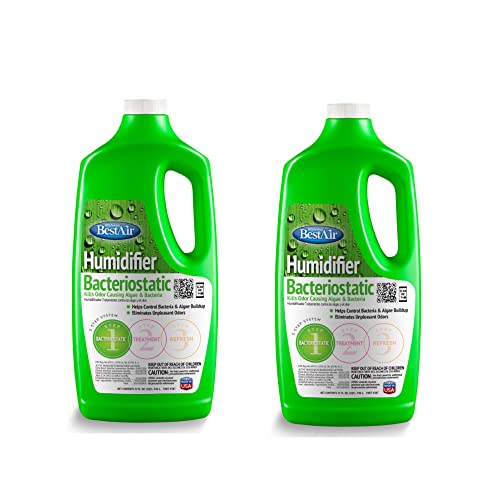
- Treatments such as BestAir 3BT ($22.90) and the Protec cleaning fish ($5.98) slow biofilm between cleanings. They do not replace cleaning.
Our top-rated vaporizers
Whatever you decide, these are the picks we recommend across every category, ranked on verified output and value. Live price check on each.


As an Amazon Associate we earn from qualifying purchases, at no cost to you.
What you'll need
The six things that make a steam vaporizer or humidifier actually work for you: the medicated liquid and pads that turn steam into relief, the treatment and cleaning tools that keep the tank safe, and a meter so you know when the room is right. Prices are approximate at time of writing.





The daily routine: one minute, and it does most of the work
Every morning, do this: unplug the unit, pour out any water left in the tank and base, rinse both with fresh water, wipe them dry with a clean cloth, and leave them apart and dry until the next use. That is it. The single most consequential mistake in this category is topping off yesterday's water and running the machine again, because the water that sat all day in a warm room is precisely where biofilm establishes itself, and adding fresh water to it dilutes nothing that matters.
Two additions worth building into the same minute. Wipe the outside of the mist outlet or steam vent, where mineral crust accumulates and eventually restricts flow. And leave the tank cap off while the unit is idle, because a sealed damp tank stays damp all day and an open dry one does not. If your unit heats water, let it cool fully before you handle the base; there is genuinely hot water in a steam vaporizer for a while after it is switched off.
The weekly deep clean: vinegar, then sanitize, then rinse
Once a week during a season of regular use, take the machine apart as far as the manual allows and work through it properly. White vinegar is the descaling tool, because scale is mineral and vinegar is mildly acidic; it dissolves the chalky deposits that soap and scrubbing will not touch. Fill the base or tank with vinegar, or with a vinegar and water mix if your manual specifies one, and let it sit long enough to soften the deposits, typically twenty minutes to an hour depending on how much scale has built. Then work the softened deposits off with a soft brush and rinse thoroughly.
Sanitizing is a separate step with a separate product, and this is where you follow your manual rather than the internet, because manufacturers specify what their materials tolerate. Many specify a diluted bleach solution, some specify hydrogen peroxide, and some specify a proprietary product. Whatever yours says, observe the one rule that has no exceptions: never mix bleach with vinegar, or with any other cleaner, in a tank. Combining acid with chlorine bleach releases chlorine gas. Do one, rinse the unit out completely, then do the other if your manual calls for both.
Finish by rinsing until there is no residual smell of anything, and then run the unit briefly with plain water in a room you do not mind before putting it back beside the bed. Vinegar smell in a bedroom at 2 a.m. is an avoidable mistake.
Steam vaporizers: the electrodes are the whole machine
A steam vaporizer such as the Vicks Warm Steam Vaporizer V150 at $19.79 (verified via the Amazon Creators API on September 5, 2026) has no heating coil and no fan. It has two electrodes that pass current through the water, and the water's mineral content is what carries that current. Boiling then deposits those same minerals directly onto the electrodes as scale. Over a season of nightly use, that coating thickens, insulates, and progressively strangles the current, so the unit makes less steam, then makes steam slowly, then makes none at all.
The fix is the weekly vinegar treatment applied deliberately to the electrode area, following the manual's procedure for your model, with a soft brush rather than anything abrasive; scratching the electrodes is not an improvement. Hard-water households should expect to do this more often than soft-water households, because the same mineral content that makes the machine work is what fouls it. If a fully descaled unit on ordinary tap water still refuses to steam, the electrodes have reached the end of their service life and the machine is finished.
One counterintuitive note, because people arrive here from the ultrasonic side of the category and apply the wrong fix: do not switch a steam vaporizer to distilled water to reduce scale. Distilled water contains almost nothing to conduct current, so the machine may not boil at all, which is why Vicks' own instructions tell owners with very soft water to add a pinch of salt. Distilled is correct for ultrasonic units and wrong here; the full explanation is in distilled vs tap water, and the mechanism is in how a vaporizer works.
Ultrasonic units: the strictest schedule and one delicate part
Ultrasonic humidifiers never heat anything, which is exactly why their cleaning schedule is the least forgiving of the four designs. Nothing in the machine reaches a temperature that controls microbial growth, and the mechanism is specifically designed to throw the contents of the tank into the air as a breathable aerosol. If you are going to be lax with any humidifier, do not let it be this one.
The delicate part is the transducer, the small metal disc at the bottom of the reservoir that vibrates to atomize the water. It must be clean and in direct contact with water to work. Clean it with a soft cloth or a cotton swab and vinegar to lift scale, and use nothing abrasive: a scratched or pitted transducer produces less mist permanently. The same applies to any oily residue, which needs dish soap rather than vinegar, as covered in can you put Vicks in a humidifier.
The other half of ultrasonic maintenance is upstream of cleaning: use distilled or demineralized water. Tap-water minerals get atomized into the room as white dust and simultaneously build scale on the transducer, so distilled water solves a hygiene problem and a maintenance problem together. A Pure Life 6-gallon case is $29.99, about $5.00 a gallon delivered.
Evaporative units: the filter is the maintenance
On an evaporative unit such as the Honeywell Cool Moisture at $76.42, the wick filter is doing two jobs at once: presenting a large wet surface for the fan to evaporate from, and trapping every mineral in the water so it never enters the room. That second job is why the filter has a finite life. As it loads with mineral deposits it stiffens, wicks less water, and output falls off, often so gradually that owners assume the machine is failing rather than the filter.
Replace wicks on the manufacturer's schedule, not when they look dirty, because a loaded wick looks much the same as a fresh one until it is badly gone. A Honeywell Filter A 3-pack is $29.21; Protec's extended-life replacement filter is $12.32; and premium evaporative units run shorter schedules, with Canopy's 3-pack of six-week filters at $40.00 for the Bedside Humidifier 2.0 at $159.00. Budget that as a real running cost when you choose the design, which is one of the trade-offs weighed in warm mist vs cool mist.
The base and reservoir of an evaporative unit still need the same weekly vinegar and sanitize treatment as any other machine. Filters are additional maintenance, not a substitute for it. Prices verified via the Amazon Creators API on September 5, 2026.
Treatments and cleaning aids: useful, not a substitute
Two categories of product help between cleanings and neither replaces one. Bacteriostatic treatments are liquids added to the tank water to slow microbial growth: BestAir 3BT at $22.90 for two 32 oz bottles, or Essick Air 1970-2 at $18.60. They are worth using if your manual permits them and if you are honest that they are a supplement to the daily empty-and-dry, not a way of skipping it.
Demineralization and cleaning aids sit in the tank to slow scale: the Protec cleaning fish at $5.98 covers about 30 days and is the cheapest thing you can do for an ultrasonic tank in a hard-water house. It reduces how much scale you have to remove; it does not remove it for you.
Prices verified via the Amazon Creators API on September 5, 2026. If you want the full ranking of cleaning products for these machines, see best humidifier cleaners.
End of season, and when to replace rather than clean
Storing it. At the end of the heating season, do a full deep clean, then dry every component completely, which takes longer than people think: leave the parts out overnight rather than packing a tank that feels dry to the touch. Store it disassembled with the cap off, and discard any used filter rather than storing a damp one. A unit put away wet in April is a unit that smells in October.
When to stop cleaning and replace. A machine is finished, not dirty, when a fully descaled steam vaporizer on ordinary tap water still will not produce steam, because the electrodes are spent. When an ultrasonic unit's transducer is visibly scratched, pitted or corroded and output has dropped permanently. When plastics have cracked, gone brittle or crazed, or a gasket no longer seals and the base leaks. When there is a persistent smell that survives a full vinegar and sanitize cycle, which usually means growth in a place the design does not let you reach. And when the tank has a mold stain in a crevice you physically cannot get a brush into.
Given that a V150 is $19.79 and a Levoit 2.5 L top-fill unit is $29.79, the economics of heroic restoration on a cheap humidifier are poor. Replace it and start the daily routine on the new one. If you are replacing anyway, use the opportunity to buy a unit with a wide tank opening and a top-fill design, because those two features are what determine whether the routine on this page is still happening in February. Our decision guide is at how to choose a vaporizer.
How to deep clean a vaporizer or humidifier
- 1
Unplug it and take it apart
Unplug the unit and let it cool completely if it heats water. Empty the tank and base, and separate every component the manual says is removable: tank, cap, base well, mist outlet, and any filter or tray.
- 2
Descale with white vinegar
Fill the base and tank with white vinegar, or a vinegar and water mix if your manual specifies one, and let it sit twenty minutes to an hour so the mineral deposits soften. On a steam vaporizer, make sure the electrodes are covered, since that is where the scale that stops the machine builds.
- 3
Work the softened scale off gently
Use a soft brush or cloth on the tank walls, the base well and around the outlet. Clean an ultrasonic transducer disc with a cotton swab and no abrasives, since scratching it reduces mist output permanently. Never scour electrodes or the transducer.
- 4
Rinse, then sanitize per your manual
Rinse all the vinegar out completely, then sanitize with whatever solution your manual specifies, commonly a diluted bleach or hydrogen peroxide solution. Never mix bleach with vinegar or with any other cleaner in a tank; do one, rinse fully, then the other.
- 5
Rinse again, dry, and run a plain water cycle
Rinse until no smell of vinegar or sanitizer remains, dry the components with a clean cloth, and run the unit briefly on plain water in a room you do not mind before returning it to the bedroom. Replace the wick filter if the unit uses one and it is due.
Ready to buy? Start with our top picks
Whatever this guide steered you toward, here's where most readers land, ranked on verified output and value. Live price check on each.
As an Amazon Associate we earn from qualifying purchases, at no cost to you.
Key terms
- Biofilm
- The slick microbial layer that forms on wetted surfaces in standing water. It is the reason the daily empty-and-dry matters more than any product, because an ultrasonic humidifier will atomize and distribute whatever grows in the tank.
- Scale
- Chalky mineral deposits left behind when water boils or evaporates. Cosmetic on a tank wall, functional on a steam vaporizer's electrodes and an ultrasonic transducer, where it progressively reduces output until the machine stops working.
- Descaling
- Dissolving mineral scale with a mild acid, usually white vinegar, and then rinsing thoroughly. It is the weekly step, and it is distinct from sanitizing, which targets microbial growth with a different product entirely.
- Bacteriostatic treatment
- A liquid added to tank water to slow microbial growth between cleanings, such as BestAir 3BT or Essick Air 1970. A supplement to the routine rather than a replacement, and only where the manufacturer permits tank additives.
- Wick filter
- The absorbent element in an evaporative humidifier that draws water up for the fan to evaporate, trapping minerals as it goes. It has a finite life and should be replaced on the maker's schedule rather than when it looks dirty.
Questions, answered
How often should I clean my vaporizer?
Empty, rinse and dry the tank every day, and do a full descale and sanitize every week during a season of regular use. The daily step does most of the work, because a machine that is dry between uses grows almost nothing, while a tank topped off from yesterday is where biofilm establishes itself. Weekly descaling matters most on steam vaporizers, where mineral scale builds on the electrodes and progressively chokes off steam output, and on ultrasonic units, where scale accumulates on the transducer disc. Follow your own manual where it specifies a different schedule or different solutions.
Can I use vinegar to clean my humidifier?
Yes, and white vinegar is the correct tool for the specific job of dissolving mineral scale. Fill the base and tank, let it sit twenty minutes to an hour depending on how much scale has built, work the softened deposits off with a soft brush, then rinse thoroughly until no vinegar smell remains. What vinegar does not do is sanitize, so it is one step of two: check your manual for the sanitizing solution it specifies. Never mix vinegar with bleach or any other cleaner in a tank, since acid plus chlorine bleach releases chlorine gas.
Can I use bleach in a humidifier?
Only if your manual specifies it, only at the dilution it specifies, and never alongside vinegar. Many manufacturers do call for a diluted bleach solution as the sanitizing step, and others specify hydrogen peroxide or a proprietary product, because they know what their own plastics and seals tolerate. Whichever your manual names, do the vinegar descale first, rinse the unit out completely, then sanitize, then rinse again until nothing can be smelled. Combining bleach and vinegar in a tank releases chlorine gas, so the complete rinse between steps is not optional.
Why did my vaporizer stop making steam?
On a steam vaporizer, almost always mineral scale on the electrodes. The design passes current through the water between two electrodes, and the same minerals that carry that current get deposited on them as the water boils, until the coating insulates them and output falls to nothing. Descale with white vinegar per your manual and use a soft brush rather than anything abrasive. The other cause is water that is too pure to conduct, which happens with distilled or very soft water; Vicks' instructions address this by calling for a pinch of salt. If a descaled unit on tap water still will not steam, it is finished.
How do I clean an ultrasonic humidifier's transducer?
Gently, with a soft cloth or a cotton swab and a little white vinegar to lift scale, and with nothing abrasive at any point. The transducer is the small metal disc at the bottom of the reservoir that vibrates to atomize the water, and it needs to be clean and in direct contact with water to work; a scratched or pitted disc produces less mist permanently. If the residue is oily rather than chalky, use a little dish soap instead, since vinegar does not lift oil. Rinse thoroughly afterward and run a plain water cycle before normal use.
Do humidifier cleaning products and tablets actually work?
They help between cleanings and they do not replace one. Bacteriostatic treatments such as BestAir 3BT ($22.90 for two 32 oz bottles) or Essick Air 1970-2 ($18.60) slow microbial growth in tank water. Demineralization aids such as the Protec cleaning fish ($5.98, about 30 days) slow scale accumulation, which is genuinely useful in a hard-water house. Prices verified via the Amazon Creators API on September 5, 2026. Check your manual before adding anything, since some manufacturers prohibit tank additives outright and adding one can void a warranty.
How often should I change the filter?
On the manufacturer's schedule, not when it looks dirty, because a wick filter loads with mineral deposits gradually and looks much the same until it is badly gone. A loaded wick stiffens, wicks less water, and quietly reduces output, which owners often mistake for the machine failing. A Honeywell Filter A 3-pack is $29.21 and Protec's extended-life filter is $12.32; premium units run shorter schedules, such as Canopy's six-week filters at $40.00 for three. Budget filters as a real running cost when choosing between an evaporative unit and a filterless design.
When should I just replace my humidifier?
When a fully descaled steam vaporizer on ordinary tap water still will not produce steam, since the electrodes are spent. When an ultrasonic transducer is visibly scratched, pitted or corroded and output has dropped for good. When plastics have cracked or crazed, or a gasket no longer seals. When a persistent smell survives a complete vinegar and sanitize cycle, which means growth somewhere the design will not let you reach. And when there is mold in a crevice a brush cannot enter. With a Vicks V150 at $19.79 and a Levoit 2.5 L at $29.79, heroic restoration of a cheap unit rarely makes sense.
Filed under Explainer
Part of Vaporizer 101
Keep reading
Distilled vs Tap Water in a Vaporizer
Which water reduces your cleaning burden, which water stops a steam vaporizer working, and what it costs.
Can You Put Vicks in a Humidifier?
What belongs in a tank, what belongs in a cup or tray, and how to rescue a unit you already dosed.
How Does a Vaporizer Work?
Why electrodes scale, why transducers foul, and why each mechanism fails in its own particular way.
How to Choose a Vaporizer
Buying again? Choose on how easy the tank is to fill and clean, not on the feature list.