Our Pick: Vicks
Check price on Amazon →How to Choose a Vaporizer: A Decision Guide by Problem
Do not start from the product. Start from the problem, because the word vaporizer covers at least six different machines and picking the wrong category is how people end up with a device that cannot do the thing they bought it for. Cold and congestion, a baby's room, a dry bedroom all winter, blocked sinuses, dry skin, a room that should smell like eucalyptus, and dry herb are seven different jobs with seven different answers. This routes you to the right one in about two minutes, with the specific unit and the live price at the end of each path.
By The Vapor Reviews DeskUpdated 2026-09-05~10 min read Ranked on verified output, never box claimsHow we research
Almost every bad vaporizer purchase starts the same way: someone searches for the product name instead of the problem, buys the machine at the top of the results, and discovers a week later that it cannot do the specific thing they wanted. They wanted medicated vapor and bought an ultrasonic humidifier that must never have inhalant in its tank. They wanted a nursery unit and bought a steam vaporizer that holds boiling water. They wanted their sinuses cleared in five minutes and bought a machine designed to humidify a whole room over eight hours. Every one of those is a category error, not a brand error.
So this guide runs the other direction. Name your problem, follow the path, and you will land on the right category, the specific unit we would buy, and the deeper ranking if you want to compare within that category. Two rules override everything else along the way. If a child is in the room, the answer is cool mist, because the American Academy of Pediatrics recommends cool-mist humidifiers in children's rooms to avoid scald injuries from hot water and steam. And if the machine will not be cleaned, do not buy it at all, because a neglected wet tank in a warm room grows biofilm and then distributes it.
One more framing point before the paths. Nothing on this page treats an illness. Added humidity and warm steam are comfort measures for the dryness, congestion and raw throat that come with a cold or a dry heating season, and no unit here is medically proven to shorten anything. Buy for comfort, buy for the room, and buy something you will actually maintain.
The short version
- Cold or congestion, adult: a steam vaporizer, because it is the only room machine with a medicine cup. The Vicks V150 is $19.79 and VapoSteam is $9.98.
- Baby, toddler, or any room a child enters: cool mist, per AAP guidance. The Frida Baby 3-in-1 is $43.49; the Honeywell evaporative unit at $76.42 also cannot easily over-humidify a small room.
- Dry bedroom all winter: a cool-mist humidifier with a humidistat, so it holds 30 to 50 percent relative humidity instead of running blind. The Levoit LV600S is $109.00.
- Blocked sinuses, short sessions: not a room machine at all. A personal steam inhaler like the Vicks Sinus Inhaler at $42.98 puts vapor where you want it in five to fifteen minutes.
- Dry or congested skin: a facial steamer. The Pure Daily Care NanoSteamer Large is $39.95.
- You want scent, not moisture: a diffuser. It is a fragrance appliance with a tiny water output, not a humidifier substitute.
- Dry herb: a different machine entirely, and not sold on Amazon, so we cover the grinder, humidity and cleaning kit rather than the devices.
Our top-rated vaporizers
Whatever you decide, these are the picks we recommend across every category, ranked on verified output and value. Live price check on each.


As an Amazon Associate we earn from qualifying purchases, at no cost to you.
What you'll need
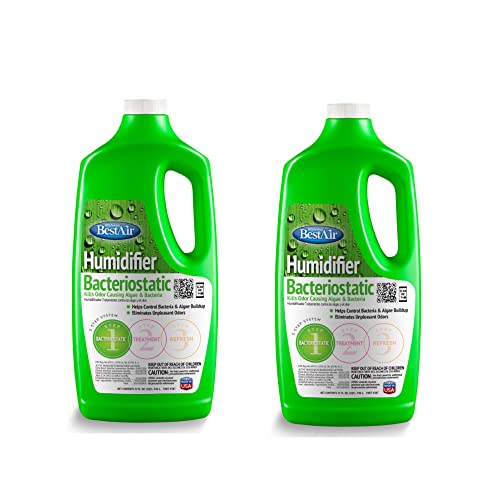
The six things that make a steam vaporizer or humidifier actually work for you: the medicated liquid and pads that turn steam into relief, the treatment and cleaning tools that keep the tank safe, and a meter so you know when the room is right. Prices are approximate at time of writing.





Start here: the routing table
Find your row. Each one names the category you actually need, the unit we would buy today, and where to compare inside that category.
| Your problem | The machine you need | What we would buy | Compare further |
|---|---|---|---|
| Adult with a cold, wants medicated vapor | Steam vaporizer with a medicine cup | Vicks V150, $19.79, plus VapoSteam, $9.98 | Best for colds and congestion |
| Baby or toddler's room | Cool mist only (AAP) | Frida Baby 3-in-1, $43.49 | Best humidifier for a baby |
| Dry bedroom, whole heating season | Humidifier with a humidistat | Levoit LV600S, $109.00 | Best humidifier for a bedroom |
| Large or open-plan room | High-capacity cool mist | Levoit OasisMist 1000S, 10 L, $149.99 | Best for a large room |
| Light sleeper, noise is the issue | Ultrasonic cool mist | Levoit 2.5 L top fill, 25 dB (maker), $29.79 | Best quiet humidifiers |
| Blocked sinuses, short sessions | Personal steam inhaler | Vicks Sinus Inhaler, $42.98 | Best steam inhalers |
| Skin: pores, prep, dryness | Facial steamer | NanoSteamer Large 3-in-1, $39.95 | Best facial steamers |
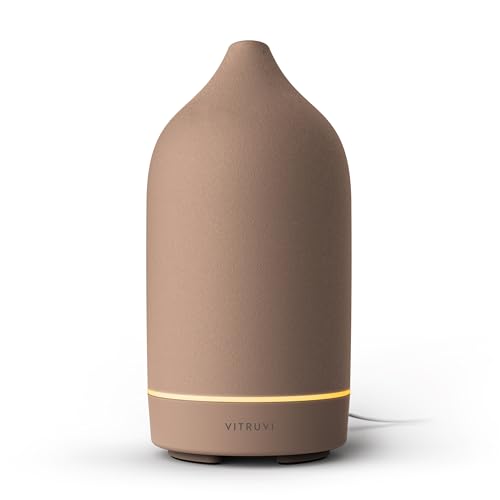
| You want the room to smell good | Essential-oil diffuser | Vitruvi Stone, $129.99, or ASAKUKI 500 mL, $19.99 | Best diffusers |
| Dry herb | Not sold on Amazon; we cover the kit | Grinder, humidity packs, cleaning | Best herb grinders |
All prices verified live via the Amazon Creators API on September 5, 2026, and Amazon pricing moves, so read them as the figure at time of writing. The sections below explain each path in enough detail to be sure you are on the right one.
Path 1: a cold, a cough, congestion
If an adult in the house has a cold and you want the classic medicated-steam experience, buy a steam vaporizer, and buy it for the medicine cup rather than for the humidity. Every machine in this guide can put water into the air. Only a steam vaporizer, and warm-mist units in the Vicks V745 class at $39.49, has a cup positioned to carry a medicated inhalant into the vapor stream. The Vicks V150 at $19.79 is the cheapest correct answer, with a 1.5 gallon tank and a maker-stated 24 hours per fill; add VapoSteam at $9.98, or buy the V150 and VapoSteam bundle at $29.77.
Set expectations honestly. Warm medicated vapor is a comfort measure for congestion and a raw throat; it is not a treatment, and there is no good evidence that it shortens a cold. If the person coughing is an infant, if the cough is the barking kind associated with croup, or if there is any difficulty breathing, that is a call to a clinician, not a purchase. We work through what the evidence does and does not support in is a vaporizer good for a cough.
Path 2: a baby, a toddler, a child's room
Cool mist, and this one is not a preference. The American Academy of Pediatrics recommends cool-mist humidifiers in children's rooms because steam vaporizers and warm-mist units hold hot or boiling water and can scald a child who reaches for, tips or unplugs them. That guidance decides the category before any other feature enters the conversation, and every steam unit's manual carries the same caution in its own words.
Within cool mist, three shapes work. The Frida Baby 3-in-1 at $43.49 combines cool mist with a diffuser and a night light, which is the practical nursery configuration, and there is an XL top-fill version at $79.99 if you are tired of carrying tanks. The Crane Adorables at $50.99 is the 1 gallon animal-shaped ultrasonic that has been a nursery staple for years. And the Honeywell Cool Moisture evaporative unit at $76.42 has a property the other two lack: because evaporation slows as the air gets damp, it is very hard to over-humidify a small closed room with it, at the cost of an audible fan and a wick filter you will replace.
Place the unit out of reach and off the floor beside a crib, run the cord where it cannot be pulled, and hold the room in the 30 to 50 percent band rather than running the machine wide open all night. Above roughly 60 percent relative humidity you are creating an environment that favors mold and dust mites, which is the opposite of the goal. Full ranking in best humidifier for a baby.
Path 3: a dry house and a long winter
If nobody is sick and the real problem is a heating season that dries the house out, you are not shopping for a vaporizer at all. You want a humidifier sized to the room, and the single feature that matters most is a humidistat: a built-in sensor that runs the unit to a target percentage and then stops. Without one you are guessing, and the failure mode of guessing is condensation on the windows and a room sitting above the mold line rather than in the 30 to 50 percent band the EPA commonly cites.
For a bedroom, the Levoit LV600S at $109.00 is the default: 6 L, both warm and cool mist, app control and a humidistat, so it can run cool in a shared room and warm in a cold one. If you want the same capability without the app, the LV600HH is $99.99. For a large or open-plan space the constraint becomes tank size and output rather than features: the Levoit OasisMist 1000S is a 10 L unit at $149.99, and the Dreo 747S is 11 L at $99.99 with a maker-stated 100 hour run time and 21 dB figure.
Whatever you buy, buy a hygrometer with it. A Govee H5075 at $11.69 or a TempPro TP50 at $10.99 turns the whole exercise from a feeling into a number, and it is the cheapest thing on this page. The targets and the reasoning are in ideal humidity for a bedroom. Prices verified via the Amazon Creators API on September 5, 2026.
Path 4: sinuses, skin and scent are three different machines
Sinuses. If the goal is concentrated warm vapor at your nose for a few minutes, a room humidifier is the wrong instrument entirely; it is designed to move a bedroom's worth of air over hours. A personal steam inhaler puts vapor where you want it in a five to fifteen minute session. The Vicks Sinus Inhaler at $42.98 has a face mask and a VapoPad slot; the Vicks Personal Steam Inhaler V1200 at $49.99 adds variable steam control; the cordless Mypurmist Free at $179.95 is the specialist option. Steam here is comfort, not medicine, and the scald caution is stronger than anywhere else in this guide because your face is inches from the source. See best steam inhalers.
Skin. A facial steamer is a small kettle with a directed nozzle, tuned for a fine plume at a comfortable distance rather than for room coverage. The Pure Daily Care NanoSteamer Large 3-in-1 at $39.95 is the category's volume leader, the Vanity Planet Aira at $51.00 is the design-led alternative, and True Glow by Conair at $22.88 is the budget entry. Ranked at best facial steamers.
Scent. A diffuser is a fragrance appliance, not a humidity appliance. Its water output is a fraction of a humidifier's and it will not move a room's relative humidity meaningfully; buying one for dry air is the single most common substitution error in this category. If scent is what you want, the Vitruvi Stone at $129.99 is the design pick and the ASAKUKI 500 mL at $19.99 is the value staple. The full distinction is in diffuser vs humidifier.
Path 5: dry herb, and the four questions that decide it
If you arrived here meaning the other kind of vaporizer, the category splits on four questions rather than one. Portable or desktop? Desktops trade pocketability for consistency and session capacity; portables trade the reverse. Convection, conduction or hybrid? Convection heats air passing through the material, giving even extraction and cleaner flavor at a slower, costlier design; conduction heats the chamber wall for speed and simplicity with more risk of uneven heating; hybrids do both, which is how most current portables behave. How much temperature control do you want? Presets are simpler, full digital control lets you work the range commonly discussed as roughly 160 to 220 C (320 to 430 F), where lower favors flavor and higher favors vapor density. How much maintenance will you actually do? This is the question that decides satisfaction over a year.
These devices are not sold on Amazon, and Vapor Reviews only covers what is, so we do not review or rank them. What we do cover, with verified live pricing, is the kit that keeps any of them working: a Santa Cruz Shredder 3-piece medium at $59.90, Boveda 62 percent packs at $23.99 for four, and 99 percent isopropyl at $9.99 for cleaning. Prices verified via the Amazon Creators API on September 5, 2026. Start at the best herb grinders, and read convection vs conduction before you commit to a heating style.
The three specs worth checking, and the ones that are noise
Worth checking. Tank size against run time, because a big tank on a high output setting is not a long-running machine; the useful number is hours per fill at the setting you will actually use, and makers publish it (the V150 at about 24 hours, the Canopy Bedside 2.0 at 36 hours, the Dreo 747S at 100 hours). Whether it has a humidistat, because that is the difference between a machine you set once and a machine you supervise. How it fills and how it opens for cleaning, because a top-fill tank and a wide opening you can get a hand into are the two features that determine whether the unit is still being cleaned in February.
Mostly noise. Coverage-area claims in square feet, which depend on ceiling height, air sealing and outdoor conditions in ways no single number captures. Decibel figures compared across brands, which are maker measurements taken on maker terms and are useful for ranking models within a line rather than predicting your bedroom. And feature counts generally: an extra light, an extra mist mode or an app changes very little about whether the machine solves your problem.
How to choose the right vaporizer in five steps
- 1
Name the problem, not the product
Write down what you actually want to change: medicated vapor during a cold, a safe nursery, a dry bedroom all winter, blocked sinuses in five minutes, skin, scent, or dry herb. That sentence selects the category, and the category selects the machine.
- 2
Apply the child rule first
If a child will be in the room, the answer is a cool-mist humidifier, per American Academy of Pediatrics guidance, because steam and warm-mist units hold hot water and can scald. This overrides every other preference before you compare anything else.
- 3
Measure the room before you size the machine
Put a hygrometer in the room for a day and note the actual relative humidity. If it already sits in the 30 to 50 percent range, you may not need a humidifier at all. If it sits well below, note the room size so you can match tank capacity and output.
- 4
Choose the mechanism that fits the room
Steam vaporizer for a medicine cup in an adult room. Ultrasonic cool mist for silence, with distilled water. Evaporative cool mist for self-regulation, accepting fan noise and filters. Warm mist for a cold adult bedroom. Prefer any unit with a humidistat.
- 5
Budget the upkeep, then buy
Add the recurring costs to the purchase price: wick filters for evaporative units, distilled water for ultrasonic, inhalant or scent pads if you will use them, and cleaning supplies for everything. If that total or that routine is unrealistic for you, choose a simpler machine rather than a better-specified one.
Ready to buy? Start with our top picks
Whatever this guide steered you toward, here's where most readers land, ranked on verified output and value. Live price check on each.
As an Amazon Associate we earn from qualifying purchases, at no cost to you.
Key terms
- Humidistat
- A built-in humidity sensor and control that runs the unit to a target percentage and then stops. The one feature that reliably separates a humidifier you set once from a machine you keep adjusting, and the practical way to hold 30 to 50 percent.
- Medicine cup
- The small well beside the outlet on a steam vaporizer or warm-mist unit that holds a medicated inhalant so its vapor joins the stream. It is the reason to choose a steam vaporizer over a cool-mist humidifier, and nothing goes in the tank instead.
- Output rate
- How much water a unit puts into the air per hour, usually stated in millilitres per hour or gallons per day. More meaningful than tank size on its own, since hours per fill is output rate divided into capacity.
- Coverage area
- The square footage a maker claims a unit can humidify. Treat it as a rough sizing hint rather than a spec, because ceiling height, air sealing and outdoor conditions change the real answer more than the number does.
- Top fill
- A tank design you refill by pouring water in from above, without carrying the tank to a sink and inverting it. A small convenience that has an outsized effect on whether a humidifier is still being used and cleaned by midwinter.
- Personal steam inhaler
- A handheld or benchtop unit that concentrates warm vapor at the nose and mouth through a mask for a short session, typically five to fifteen minutes, rather than humidifying a room. A different tool from a humidifier, for a different job.
Questions, answered
What kind of vaporizer should I buy for a cold?
A steam vaporizer, chosen specifically for its medicine cup. The Vicks Warm Steam Vaporizer V150 at $19.79 with VapoSteam at $9.98 is the cheapest correct answer, and the V150 plus VapoSteam bundle is $29.77 (prices verified via the Amazon Creators API on September 5, 2026). If you want the same medicated-vapor capability with a gentler plume, the warm-mist Vicks V745 at $39.49 also carries a medicine cup. Any humidifier will add moisture, which helps a raw throat, but only a unit with a cup can carry a medicated inhalant into the vapor. None of this treats a cold; it is a comfort measure.
What size humidifier do I need for my room?
Work from hours per fill rather than tank capacity, because a large tank on a high setting can empty in a night. Small bedroom units in the 2 to 3 L range, like the Levoit 2.5 L at $29.79 or the Dreo 3 L at $29.97, cover a nightstand-sized job. Mid-size 6 L units like the Levoit LV600S at $109.00 handle a full bedroom with a humidistat holding the level. Large or open-plan rooms want 10 L or more, such as the Levoit OasisMist 1000S at $149.99 or the Dreo 747S at $99.99. Coverage claims in square feet ignore ceiling height and air sealing, so treat them as hints.
Do I need a humidifier at all?
Measure before you buy. The commonly cited indoor target is 30 to 50 percent relative humidity (EPA), and plenty of homes sit inside that range without help, particularly outside the heating season. A hygrometer such as the Govee H5075 at $11.69 or the TempPro TP50 at $10.99 will tell you in a day, and it is the cheapest purchase in this whole category. If the room already reads in the 40s, adding a humidifier moves you toward the zone above roughly 60 percent where mold and dust mites do well, which is a worse problem than the dryness you were trying to fix.
Is a humidifier or a diffuser better?
They are different appliances. A humidifier exists to raise a room's relative humidity and moves enough water to do it. A diffuser exists to distribute scent and moves a small fraction of that volume, which is why it will not meaningfully change how dry a room feels. Buy a humidifier for dry air and a diffuser for scent, and if you want both in one unit, choose a humidifier that provides a dedicated essential-oil tray rather than adding oil to a plain tank. Our diffuser versus humidifier guide covers the output difference and which units legitimately do both.
What is the safest vaporizer for a child's room?
A cool-mist humidifier, per American Academy of Pediatrics guidance, because steam vaporizers and warm-mist units hold hot or boiling water and can scald a child who reaches for or tips them. Good options include the Frida Baby 3-in-1 at $43.49, the Crane Adorables 1 gallon ultrasonic at $50.99, and the Honeywell Cool Moisture evaporative unit at $76.42, which has the additional property of being difficult to over-humidify a small room with (prices verified via the Amazon Creators API on September 5, 2026). Place it out of reach, route the cord safely, and hold the room at 30 to 50 percent rather than running it wide open.
How much should I spend?
Less than you think for a sick-room machine and more than you think for a season-long one. A steam vaporizer at $19.79 does the medicated-vapor job as well as anything, and spending more there mostly buys a night light and a pad slot. For a humidifier you will run for four months, the money is well spent on a humidistat and an easy-to-clean tank, which is roughly the $100 to $110 band where the Levoit LV600S and LV600HH sit. Budget the consumables too: filters at $29.21 for a Honeywell 3-pack, or distilled water at about $5.00 a gallon delivered if you run ultrasonic.
Can one machine do everything?
One machine can cover two jobs well and no machine covers all of them. Dual warm and cool mist units like the Levoit LV600S at $109.00 or the Honeywell HWC775B at $114.99 genuinely cover both mist types with a humidistat. Units like the Frida Baby 3-in-1 at $43.49 combine cool mist with a diffuser function. But a room humidifier will never do what a personal steam inhaler does in a five minute session, a diffuser will never humidify a room, and a dry-herb vaporizer is an unrelated machine. Buy for the job you have most often.
What should I look for that reviews usually skip?
How the unit fills and how it opens for cleaning. A top-fill tank you can refill under a tap without carrying it, and a wide opening you can get a hand and a brush into, are the two design details that determine whether a humidifier is still being maintained in February rather than sitting in a closet. Every machine in this category fails the same way, through a tank that stopped getting washed, so a unit that makes the routine easy will outperform a better-specified unit that makes it awkward. After that, check for a humidistat and confirm the maker's hours per fill at the setting you will actually run.
Filed under Explainer
Part of Vaporizer 101
Keep reading
Vaporizer vs Humidifier
The category question in full: hot steam versus mist that is never hot, and which one your problem calls for.
How Does a Vaporizer Work?
Electrode boiling, heating elements, ultrasonic diaphragms and wick evaporation, and what each mechanism costs you.
Ideal Humidity for a Bedroom
Measure before you buy: the 30 to 50 percent target, the mold line, and the $11 tool that answers the question.
Diffuser vs Humidifier
Why a diffuser will not fix dry air, and the handful of units that legitimately do both jobs.