Our Pick: Vicks
Check price on Amazon →Is a Vaporizer Good for a Cough? An Honest Answer
A vaporizer can make a cough more bearable and it does not make a cough go away. That is the whole answer, and most of the internet will not give it to you straight. Added humidity genuinely helps a dry, raw, irritated airway feel better, especially in a house dried out by winter heating, and medicated steam adds a sensation of an open nose that many people find worth the twenty dollars. What the evidence does not support is that any of it shortens an illness. Here is what humidity actually does, what it does not, when a cough is a reason to call a doctor instead of shop, and how to set a unit up safely.
By The Vapor Reviews DeskUpdated 2026-09-05~10 min read Ranked on verified output, never box claimsHow we research
The honest answer is a qualified yes, and the qualification is the important part. A vaporizer or humidifier is a comfort measure. Dry indoor air makes an already irritated throat and airway feel worse, and bringing a bedroom from the parched single-digit humidity of a hard winter night up into the 30 to 50 percent relative humidity band the EPA commonly cites makes coughing and a stuffy nose less miserable to live with overnight. That is a real benefit and it is worth the price of the machine. It is not a treatment, it does not shorten a cold, and no manufacturer in this category is permitted to claim that it does.
The medicated version is the same story with a stronger sensation attached. A steam vaporizer's medicine cup carries a camphor and menthol inhalant into the vapor, and the effect people describe is the feeling of a suddenly open airway. That subjective effect is why the category still exists, and it is genuinely pleasant when you are miserable at 2 a.m. What it is not is a decongestant working on your sinuses in any measured sense, and a guide that tells you otherwise is selling rather than informing.
The part that deserves more space than the shopping advice is knowing when a cough is not a comfort problem at all. A harsh barking cough in a small child, any difficulty breathing, a cough in a very young infant, a high fever, or symptoms that keep getting worse rather than better are all reasons to contact a clinician rather than open a browser tab. A humidifier is not the intervention in any of those situations, and buying one instead of making the call is the actual risk of a page like this one.
The short version
- Humidity is comfort, not cure. It makes a dry, irritated cough and a stuffed nose easier to live with; it does not shorten a cold or treat the cause.
- The strongest case is a dry house: if your bedroom sits well below 30 percent relative humidity in winter, simply getting it into the 30 to 50 percent range does more for how you feel than any additive.
- Medicated steam via a medicine cup (VapoSteam, $9.98) produces a real sensation of an open airway. That sensation is the product; treat it as comfort, not decongestion.
- For children, cool mist only, per AAP guidance, because steam and warm-mist units hold hot water and can scald.
- Call a clinician rather than shop for: a barking, croup-like cough, any difficulty breathing, a cough in a young infant, high fever, or symptoms that keep worsening.
- Over-humidifying makes things worse. Above roughly 60 percent relative humidity you favor mold and dust mites, both of which irritate airways.
- A dirty tank is the one way a humidifier can actively hurt. Empty and dry daily, descale weekly.
Our top-rated vaporizers
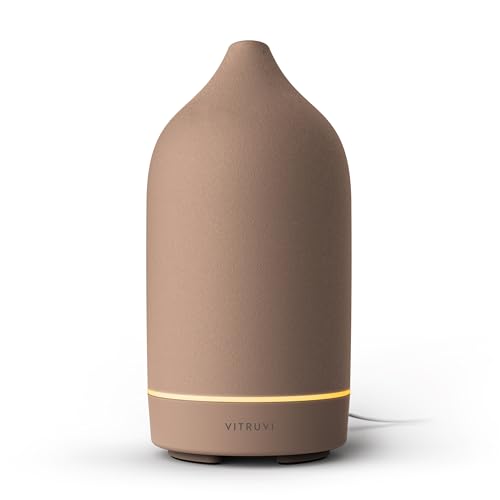
Whatever you decide, these are the picks we recommend across every category, ranked on verified output and value. Live price check on each.


As an Amazon Associate we earn from qualifying purchases, at no cost to you.
What you'll need
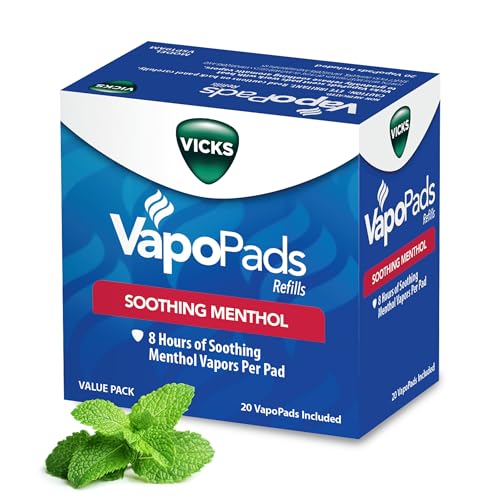
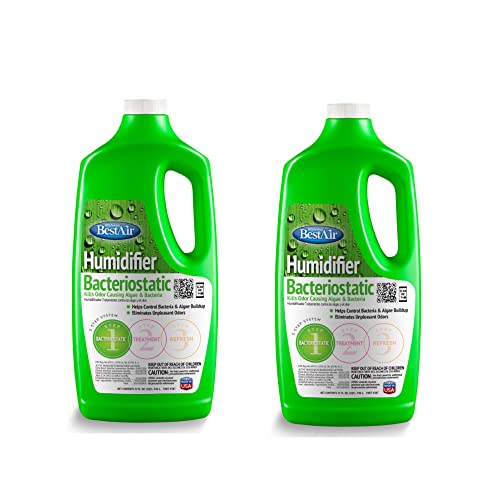
The six things that make a steam vaporizer or humidifier actually work for you: the medicated liquid and pads that turn steam into relief, the treatment and cleaning tools that keep the tank safe, and a meter so you know when the room is right. Prices are approximate at time of writing.




What added humidity actually does for a cough
Start with the mechanism, because it explains both the benefit and its limits. A cough that comes with a cold is usually a response to an airway that is inflamed and irritated. Dry air makes that worse in a direct, boring way: it pulls moisture from the surfaces of the nose and throat, which is why the classic winter experience is waking at 3 a.m. with a throat like sandpaper and a cough that has nothing left to do but rasp. Raising the humidity of the room removes that additional irritation. The cough is still there, the illness is unchanged, and the experience of both is meaningfully less unpleasant.
The same logic explains why the benefit is largest in exactly one situation and small in the others. If your bedroom is genuinely dry, and in a heated house in January it very often is, moving it into the 30 to 50 percent band is a real change to the environment your airway is sitting in for eight hours. If your bedroom is already at 45 percent, adding a humidifier changes very little, and if it pushes the room above roughly 60 percent you have created a better environment for mold and dust mites, both of which are airway irritants in their own right. This is why we keep telling people to measure before they buy: a Govee H5075 hygrometer at $11.69 (verified via the Amazon Creators API on September 5, 2026) answers the question in a day, and the targets are laid out in ideal humidity for a bedroom.
What the evidence does and does not show
We will be precise, because this is where most pages in this category get loose. Steam inhalation is a long-standing comfort measure for congestion, and it is not established that it shortens or cures a cold. That is the state of the evidence, and it is why every reputable steam inhaler and vaporizer is marketed on relief and comfort rather than on treatment. When you see a product page implying otherwise, you are reading marketing that has drifted past what the manufacturer can actually support.
Two more distinctions matter. First, comfort is not nothing. Sleeping better through a cold because your throat is not being sandblasted is a genuine, valuable outcome, and it is a perfectly good reason to own a $19.79 machine. The problem is not the benefit, it is the overclaim. Second, a cough is a symptom with many causes, and humidity is aimed at only one narrow contributor, the dryness. A cough driven by asthma, by reflux, by a bacterial infection, by croup or by anything else is not a humidity problem, and treating it as one delays the thing that would actually help.
The medicated inhalants sit in the same frame. Vicks VapoSteam at $9.98 is a camphor-based liquid designed for the medicine cup of a steam vaporizer, and VapoPads at $14.97 for twenty are menthol scent pads for units with a pad slot. Both produce a strong sensation of clearer breathing. Read that sensation as what it is, and follow the product's own label rather than any dosing advice from a website, including this one. Where each product may and may not go is covered in can you put Vicks in a humidifier.
When to stop shopping and call a clinician
This is the section we would keep if we had to delete every other one. A humidifier is the wrong response to all of the following, and reaching for it instead of a phone is the real hazard.
- A harsh, barking cough, often described as seal-like, particularly in a young child and particularly at night. That pattern is associated with croup and needs a clinician's assessment, not a purchase.
- Any difficulty breathing: fast breathing, visible effort, the skin pulling in between or below the ribs, wheezing, noisy breathing at rest, or a bluish tinge to the lips. This is urgent.
- A cough in a young infant, especially with feeding difficulty or fewer wet diapers. Infants are not small adults and warrant a lower threshold for a call.
- High or persistent fever, or symptoms that keep worsening after several days rather than gradually easing.
- A cough that will not go away over weeks, a cough that brings up blood, chest pain, or a cough alongside a known lung condition such as asthma or COPD.
Which machine, if you are buying one
Adult who wants medicated vapor: a steam vaporizer, chosen for the medicine cup rather than for the humidity, because a cup is the one thing a cool-mist humidifier cannot replicate. The Vicks Warm Steam Vaporizer V150 at $19.79 holds 1.5 gallons with a maker-stated run time of about 24 hours per fill, and the V150 with an 8 oz VapoSteam bundle is $29.77. If you want the medicine cup with a gentler plume, the warm-mist Vicks V745 is $39.49 with a 1 gallon tank, two speeds and auto shut-off.
Child in the room: cool mist, per AAP guidance, with no exceptions for how bad the cough is. The Frida Baby 3-in-1 is $43.49 and the Crane Adorables 1 gallon ultrasonic is $50.99. If you want a unit that cannot easily over-humidify a small room, the evaporative Honeywell Cool Moisture at $76.42 self-limits by design. Full ranking at best humidifier for a baby.
You want short, targeted sessions rather than an all-night machine: a personal steam inhaler is the right instrument. The Vicks Sinus Inhaler at $42.98 uses a face mask and a VapoPad slot for five to fifteen minute sessions; the Vicks Personal Steam Inhaler V1200 at $49.99 has variable steam control. These are adult tools, held close to the face, and the scald risk is correspondingly higher; young children should not use them unattended. Prices verified via the Amazon Creators API on September 5, 2026, and our ranking is at best steam inhalers.
If you are still deciding between the machine types themselves rather than between models, vaporizer vs humidifier settles the category and best vaporizer for colds and congestion ranks the field.
The ways a humidifier can make a cough worse
Three, and all three are avoidable.
A dirty tank. This is the one that matters. A warm reservoir of standing water grows biofilm quickly, and an ultrasonic humidifier will atomize whatever is in there and distribute it evenly around the room where the person with the cough is sleeping. That is a straightforwardly bad outcome for an already irritated airway. Empty and dry the tank every day rather than topping off yesterday's water, descale weekly with white vinegar, and sanitize on the schedule in the manual. A Protec cleaning fish at $5.98 or a BestAir 3BT treatment at $22.90 slows biofilm between cleanings but does not replace cleaning. The full routine is in how to clean a vaporizer.
Over-humidifying. Running a machine wide open in a closed bedroom all night can push the room well past 60 percent relative humidity, which favors mold growth and dust mites and leaves condensation on cold windows. Both are airway irritants, so the machine you bought to help the cough starts contributing to it. The fix is a humidistat unit, or a hygrometer plus the discipline to turn it down.
White dust. An ultrasonic unit running on tap water atomizes dissolved minerals along with the water, and that fine particulate settles on surfaces and is in the air of the room. It is a strong reason to use distilled or demineralized water in an ultrasonic unit, or to choose an evaporative or warm-mist design instead. The cost comparison is in distilled vs tap water.
Setting one up so it actually helps
Placement does more work than people expect. Put the unit on a hard, stable surface a few feet from the bed, not on carpet, not on a soft nightstand runner, and not aimed directly at the bed, because a mist plume pointed at bedding wets the sheets rather than the room. Keep it away from walls and furniture that will absorb the moisture, and keep the cord where it cannot be pulled. If the unit heats water, treat it as if it contains hot water, because it does.
Run it while the room is closed, and stop chasing the highest setting. The goal is a room reading between 30 and 50 percent on a hygrometer, not the largest visible plume. On a steam vaporizer, remember that the medicine cup takes the inhalant and the tank takes water only; on an ultrasonic unit, nothing but water goes in the tank at all unless the maker provides a dedicated essential-oil tray. Clean the machine in the morning rather than at night, so it is dry when it sits idle during the day, which is the single habit that keeps a tank from turning into a problem.
How to set up a vaporizer safely for a cough
- 1
Measure the room first
Put a hygrometer in the bedroom for a day. If it reads 30 to 50 percent already, a humidifier will not do much for the cough and you can skip the purchase. If it reads well below 30 percent, dryness is genuinely contributing and the machine has a job to do.
- 2
Choose by who is in the room
For an adult who wants medicated vapor, use a steam vaporizer with a medicine cup. For any room with a child in it, use a cool-mist humidifier instead, per American Academy of Pediatrics guidance, because steam and warm-mist units hold hot water and can scald.
- 3
Fill it correctly for its mechanism
Steam vaporizers need ordinary tap water, because the minerals carry the current that boils it. Ultrasonic units want distilled or demineralized water to avoid throwing mineral dust into the room. Put medicated inhalant only in a medicine cup, never in any tank.
- 4
Place it well away from the bed
Set the unit on a hard, stable surface a few feet from the bed, not on carpet or fabric, not aimed at the bedding, and out of reach of children and pets. Route the cord where it cannot be pulled or tripped over.
- 5
Hold 30 to 50 percent, then clean it in the morning
Run it to a hygrometer reading between 30 and 50 percent rather than to the biggest visible plume, and turn it down if the windows fog. Each morning, empty the tank, rinse and dry it rather than topping it off, and descale with white vinegar once a week.
Ready to buy? Start with our top picks
Whatever this guide steered you toward, here's where most readers land, ranked on verified output and value. Live price check on each.
As an Amazon Associate we earn from qualifying purchases, at no cost to you.
Key terms
- Comfort measure
- An intervention that makes symptoms easier to live with without acting on the illness causing them. Added humidity and medicated steam are comfort measures for a cough and congestion, which is a real benefit and a different thing from a treatment.
- Relative humidity (RH)
- The water vapor in the air as a percentage of what the air could hold at that temperature. The commonly cited indoor target is 30 to 50 percent (EPA). Below it, dryness irritates an already raw airway; above roughly 60 percent, mold and dust mites do well.
- Medicine cup
- The small well beside the outlet of a steam vaporizer or warm-mist humidifier that holds a medicated inhalant such as VapoSteam so its vapor joins the stream. Inhalant goes in the cup, never in the tank, and never in an ultrasonic unit.
- Croup
- A childhood condition associated with a harsh, barking, seal-like cough, often worse at night. It is a reason to contact a clinician rather than to buy a humidifier, and no device on this site is an appropriate response to it on its own.
- Biofilm
- The slick microbial layer that establishes itself in standing water in a warm room. It is the specific mechanism by which a neglected humidifier can make a cough worse, because an ultrasonic unit will atomize and distribute whatever grows in the tank.
Questions, answered
Does a vaporizer help a cough?
It helps how a cough feels, not how long it lasts. Dry indoor air irritates an already inflamed airway, so raising a bedroom from very dry into the 30 to 50 percent relative humidity range the EPA commonly cites makes a dry, raw cough and a stuffed nose noticeably easier to live with overnight. That is a genuine benefit and a good reason to own a machine. It is not a treatment: there is no good evidence that added humidity or steam shortens a cold, and no manufacturer in this category claims it does. If the room is already in that humidity range, expect little.
Is a vaporizer or humidifier better for a cough?
For an adult, a steam vaporizer has one real advantage, its medicine cup, which lets it carry a medicated inhalant such as VapoSteam ($9.98) into the vapor for the sensation of an open airway. The Vicks V150 is $19.79 (prices verified via the Amazon Creators API on September 5, 2026). If you only want more moisture in the air, a humidifier does that job equally well and the cheaper or quieter machine wins. For any room with a child in it the answer is a cool-mist humidifier regardless, because the AAP recommends cool mist in children's rooms to avoid scalds from hot water and steam.
Can a humidifier make a cough worse?
Yes, in three specific ways, all avoidable. A dirty tank grows biofilm, and an ultrasonic unit will atomize and distribute it into the air of the room where the person is sleeping. Over-humidifying past roughly 60 percent relative humidity favors mold and dust mites, both airway irritants. And an ultrasonic unit run on tap water throws fine mineral dust into the room. The fixes are a daily empty-and-dry routine with weekly vinegar descaling, a humidistat or hygrometer to hold 30 to 50 percent, and distilled water in ultrasonic units.
Is a vaporizer safe for a baby with a cough?
A cool-mist humidifier is the appropriate choice; a steam vaporizer is not. The American Academy of Pediatrics recommends cool-mist units in children's rooms because steam and warm-mist machines hold hot or boiling water and can scald a child who reaches for or tips them. Suitable options include the Frida Baby 3-in-1 at $43.49 and the Crane Adorables 1 gallon ultrasonic at $50.99 (verified via the Amazon Creators API on September 5, 2026). Separately, a cough in a young infant, or any cough with breathing difficulty, warrants contacting a clinician rather than relying on a device.
How long should I run a vaporizer for a cough?
Run it to a humidity level rather than to a clock. The target is a hygrometer reading of 30 to 50 percent in the room; a unit with a humidistat will hold that on its own and shut down, while a unit without one needs you to turn it down when the room gets there or the windows start to fog. Overnight is a reasonable window because that is when dryness is most noticeable, but running a machine wide open for eight hours in a small closed bedroom is how rooms end up above 60 percent, which trades one irritation for another.
Should I put Vicks in the vaporizer for a cough?
Only the correct product, and only in the correct place. VapoSteam is a liquid inhalant made for the medicine cup of a steam vaporizer and it goes in the cup, never in the tank. VapoPads are scent pads for units that have a pad slot. VapoRub, the ointment, does not belong in any tank of any machine: it is petroleum-based, does not disperse properly, can damage internal components, and the maker says not to. Ultrasonic humidifiers take water only unless the manufacturer provides a dedicated essential-oil tray. Follow each product's own label rather than any website's dosing advice.
When should I see a doctor about a cough instead of buying a humidifier?
Contact a clinician rather than shopping if there is a harsh barking or seal-like cough, particularly in a child at night, any difficulty breathing such as fast or labored breathing, wheezing, the skin pulling in around the ribs or a bluish tinge to the lips, a cough in a young infant, a high or persistent fever, symptoms that keep worsening after several days, a cough lasting weeks, coughing up blood, chest pain, or any cough alongside a known lung condition. None of the devices on this site diagnose, treat, prevent or cure anything, and a humidifier sits alongside medical care rather than replacing it.
Does steam inhalation actually clear congestion?
It is a long-standing comfort measure for congestion, and the honest position is that it is not established to shorten or cure a cold. Many people find that a five to fifteen minute session with a personal steam inhaler, such as the Vicks Sinus Inhaler at $42.98 or the V1200 at $49.99, makes their nose feel temporarily clearer and their throat less raw, which is worth something when you are miserable. Treat that as the product. Keep the scald risk in mind, since your face is close to the source, and do not let young children use one unattended.
Filed under Explainer
Part of Vaporizer 101
Keep reading
Vaporizer vs Humidifier
Which machine you actually need for a cold, and why only one of them has a medicine cup.
Can You Put Vicks in a Humidifier?
VapoRub, VapoSteam, VapoPads and essential oils: what goes where, and what will damage your unit.
Ideal Humidity for a Bedroom
The 30 to 50 percent target, the mold line above 60 percent, and the $11 tool that tells you where you stand.
How to Clean a Vaporizer
The daily and weekly routine that keeps a machine from becoming part of the problem it was bought to solve.