Our Pick: Vicks
Check price on Amazon →Vaporizer vs Humidifier: What the Difference Actually Is
A vaporizer boils water and releases hot steam. A humidifier releases mist that is cool, or warmed and then cooled before it leaves the machine. That single mechanical difference decides everything else: burn risk, filters, noise, what you can add to the water, how much it costs to run, and which one belongs in a nursery. This is the full decision, with a side-by-side table, the running-cost math, and the specific unit to buy for a cold, a baby, and a dry winter bedroom.
By The Vapor Reviews DeskUpdated 2026-09-05~11 min read Ranked on verified output, never box claimsHow we research
Here is the answer in one sentence: a vaporizer boils water and puts hot steam into the room, while a humidifier puts out mist that is never hot when it reaches you, either because it was nebulized cold or because it was heated and then cooled on the way out. Everything people argue about downstream, filters, white dust, burn risk, whether you can add Vicks, how loud it is, what it costs to run, follows directly from that one difference. If you want the short shopping answer: for an adult with a cold, buy the steam vaporizer, the Vicks Warm Steam Vaporizer V150 at $19.79 (verified via the Amazon Creators API on September 5, 2026), because it is the only common unit with a medicine cup. For a child's room, buy cool mist instead, because the American Academy of Pediatrics recommends cool-mist units around children specifically to avoid scald injuries from hot water and steam.
The confusion is not your fault. In American English "vaporizer" is doing at least three jobs at once. It is the drugstore steam kettle in the sick room. It is the personal steam inhaler you hold to your face. And it is also the dry-herb device, a completely different machine. Manufacturers make it worse: Vicks sells a Warm Steam Vaporizer and a Warm Mist Humidifier that look almost identical on a shelf and do genuinely different things inside. This guide is about the first two meanings, the room machines, and it draws the line precisely enough that you will never buy the wrong one again.
One thing both machines share, and it matters more than any spec on either box: neither one is a treatment. Added humidity and warm steam are comfort measures for the dryness, the raw throat, and the stuffed nose that come with a cold or a dry heating season. They do not shorten an illness, and no unit on the market is medically proven to. What they can do, if you neglect them, is grow mold and bacteria in a warm wet tank and blow it into the room you sleep in. Which is why the cleaning section below is not filler; it is the section that decides whether either machine is worth owning.
The short version
- Mechanically: a vaporizer BOILS water into steam (hot at the outlet, no filter, medicine cup for VapoSteam). A humidifier releases mist that is cool when it leaves the unit, either ultrasonic, evaporative, or warm mist that is cooled before release.
- For a cold or congestion in an adult's room: the steam vaporizer wins, because it is the only one of the two that accepts a medicated inhalant in a medicine cup. The Vicks V150 is $19.79 and holds 1.5 gallons.
- For a baby, a toddler, or any room a child can reach: cool mist, per the AAP, because boiling water and hot steam are a scald hazard. This is the one recommendation on this page that is not a preference.
- For everyday dry air rather than a specific illness: a humidifier, sized to the room, ideally with a humidistat so it holds 30 to 50 percent relative humidity (the EPA's commonly cited indoor range) instead of running blind.
- Running cost is mostly consumables, not electricity: filters for evaporative units, VapoSteam or VapoPads if you use them, distilled water if you run ultrasonic, and treatment or cleaning supplies for every unit.
- Both machines fail the same way. An unwashed tank grows biofilm. Empty it daily, descale weekly, and never let water sit in a warm room between uses.
Our top-rated vaporizers
Whatever you decide, these are the picks we recommend across every category, ranked on verified output and value. Live price check on each.


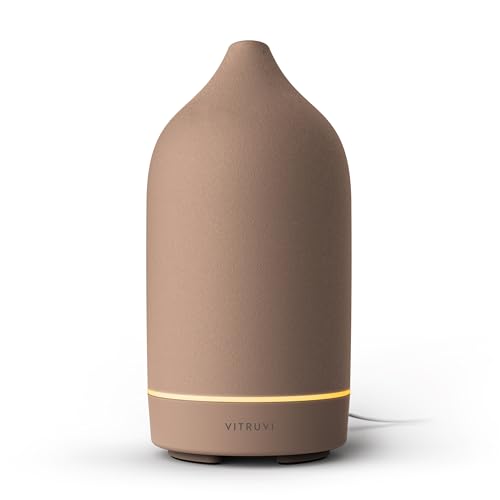
As an Amazon Associate we earn from qualifying purchases, at no cost to you.
What you'll need
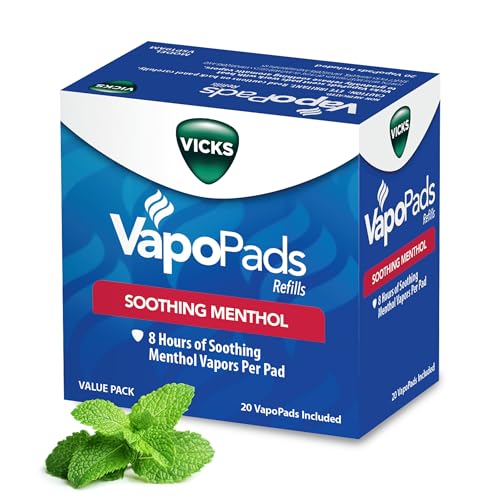
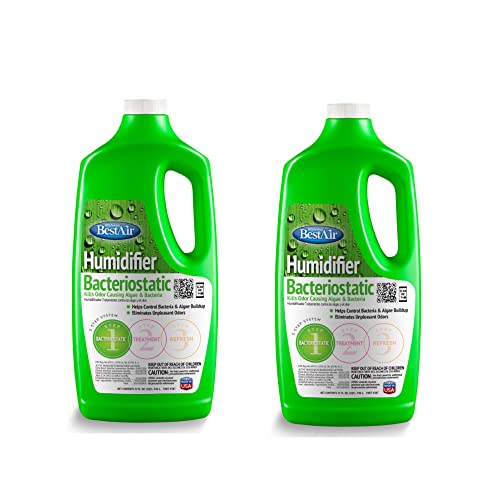
The six things that make a steam vaporizer or humidifier actually work for you: the medicated liquid and pads that turn steam into relief, the treatment and cleaning tools that keep the tank safe, and a meter so you know when the room is right. Prices are approximate at time of writing.




The one mechanical difference everything else follows from
A steam vaporizer is, functionally, a covered kettle with a vent. Two electrodes sit in the tank; current passes between them through the water, the water boils, and steam rises out of the top of the unit. That is the whole design, and it has three consequences you can predict from the physics alone. First, there is no filter and no wick, because boiling leaves minerals behind in the tank rather than throwing them into the air, so a steam unit never produces the fine white dust that ultrasonic units can. Second, the water is boiling, which means the unit is self-sanitizing at the moment of vaporization but is also a genuine burn hazard: hot water in the base, hot steam at the vent. Third, steam units have a medicine cup, a small well near the steam outlet where a medicated inhalant sits and gets carried into the vapor stream. That cup is the entire reason people still buy steam vaporizers in 2026.
A humidifier is any machine whose output is not hot when it reaches you, and it gets there one of three ways. Ultrasonic units vibrate a metal diaphragm at high frequency and shear the water into a cold visible fog. They are the quietest design and the most common, and because they atomize whatever is in the tank, tap-water minerals go into the air as white dust that settles on furniture. Evaporative units pull room air through a wet wick filter with a fan; the air leaves carrying invisible moisture and the minerals stay trapped in the filter. They cannot over-humidify a room easily, because evaporation slows down on its own as the air gets damper, which is why they are described as self-regulating. The Honeywell Cool Moisture unit at $76.42 is the archetype here. Warm-mist humidifiers, like the Vicks V745 at $39.49, do heat the water, but they cool the mist before it exits, so what reaches the room is warm-to-neutral rather than scalding.
Two labels cause almost all the remaining confusion. Vicks sells the Warm Steam Vaporizer V150 and the Warm Mist Humidifier V745 under nearly the same visual identity. The V150 boils, holds 1.5 gallons, and runs about 24 hours per fill by the maker's figure. The V745 heats and cools, holds 1 gallon, has two speeds and an auto shut-off, and costs about twice as much at $39.49 (both prices verified via the Amazon Creators API on September 5, 2026). We settle that specific matchup in detail in Vicks V150 vs V745.
Vaporizer vs humidifier, side by side
Every row below is either a mechanical fact of the design or a figure from the maker's published spec. Where a maker does not publish a number, we say so rather than estimate it.
| Steam vaporizer (V150 class) | Warm-mist humidifier (V745 class) | Cool-mist ultrasonic | Cool-mist evaporative | |
|---|---|---|---|---|
| How it works | Electrodes boil the water; steam exits | Heats water, cools the mist before release | Vibrating diaphragm shears water into cold fog | Fan pulls air through a wet wick filter |
| Output temperature | Hot steam | Warm, not hot | Cool | Room temperature, invisible |
| Burn risk | Yes: boiling water and hot steam | Lower, but the unit heats water internally | None from heat | None from heat |
| Filter | None | None on the V745 | None (some add a demineralization cartridge) | Wick filter, a recurring cost |
| White mineral dust | No: minerals stay in the tank as scale | No | Yes with tap water; use distilled | No: minerals stay in the wick |
| Medicine cup / VapoSteam | Yes, this is the point of the design | Yes on the V745 | No, never put inhalant in an ultrasonic tank | No |
| Noise | Quiet, with boiling and bubbling sounds | Quiet | Quietest class | Audible fan, the loudest of the four |
| Self-regulating | No | No | No, easy to over-humidify without a humidistat | Yes, evaporation slows as the air gets damp |
| AAP position for a child's room | Not recommended, burn risk | Not preferred, it heats water | Recommended | Recommended |
| Representative unit and live price | Vicks V150, $19.79 | Vicks V745, $39.49 | Vicks Filter-Free Ultrasonic, $68.97 | Honeywell Cool Moisture, $76.42 |
All four prices were verified live via the Amazon Creators API on September 5, 2026, and Amazon pricing moves, so treat them as the figure at time of writing rather than a promise. The deeper mist-type decision, warm against cool, gets its own full treatment in warm mist vs cool mist.
Which one for a cold, a cough, or congestion
Buy the steam vaporizer, and buy it for one specific reason: the medicine cup. If all you want is more moisture in the air, any of these machines will supply it and the cheapest one wins. What a steam vaporizer alone can do is carry a medicated inhalant into the vapor stream, because Vicks VapoSteam at $9.98 for 8 ounces is formulated for the medicine cup of a steam unit and belongs nowhere else. That camphor and menthol vapor is what most people are actually chasing when they search for a vaporizer during a cold: the sensation of an open airway. It is a comfort effect, and an honest guide says so. There is no good evidence that steam shortens a cold, and we cover exactly what the evidence does and does not support in is a vaporizer good for a cough.
The runner-up case for a humidifier during illness is real, though. Dry indoor air makes a sore throat rawer and a stuffed nose more miserable, and if your house sits well under 30 percent relative humidity in winter, simply getting the room into the 30 to 50 percent band the EPA commonly cites will do more for how you feel overnight than any additive. That is an argument for a humidistat, not a bigger tank: the Levoit LV600S at $109.00 holds a target percentage on its own instead of running until the window fogs. And if what you actually want is concentrated steam on your face for five minutes rather than a damp bedroom all night, the right tool is not a room machine at all: it is a personal unit like the Vicks Sinus Inhaler at $42.98.
Which one for a baby or a child's room
Cool mist. This is not a preference and we will not hedge it. The American Academy of Pediatrics recommends cool-mist humidifiers rather than warm-mist or steam units in children's rooms, for the plainest possible reason: a steam vaporizer holds boiling water and vents hot steam, and a child who pulls one off a nightstand or reaches for the vent can be scalded. Every steam unit's own manual carries the same caution. If there is a child in the room, the mechanical advantage of a medicine cup does not outweigh a tank of boiling water at floor level.
The nursery-appropriate picks follow from that. The Frida Baby 3-in-1 at $43.49 combines cool mist with a diffuser and a night light, which is the practical shape of a nursery unit. Vicks sells a filter-free ultrasonic line at $68.97 that is marketed as pediatrician-recommended. If you want a machine that cannot over-humidify a small closed room, an evaporative unit like the Honeywell Cool Moisture at $76.42 self-limits as the air gets damper, at the cost of an audible fan and a wick filter you will replace on a schedule. All three prices verified via the Amazon Creators API on September 5, 2026. Our full ranking lives at best humidifier for a baby.
Two safety points that apply regardless of which cool-mist unit you choose. Keep the cord and the unit out of reach and off the floor beside a crib, and keep the room in the 30 to 50 percent band rather than running the machine wide open all night, because a nursery held above roughly 60 percent relative humidity is a good environment for mold and dust mites. A $11.69 Govee hygrometer on the dresser is the cheapest way to know rather than guess, and we walk through the targets in ideal humidity for a bedroom.
Which one for plain dry air, and what each costs to run
If nobody is sick and the problem is a heating season that dries your house to cracked-lip territory, you want a humidifier, and specifically you want one sized to the room with some form of humidity control. A steam vaporizer will absolutely raise the humidity of a bedroom, but it does so by boiling water continuously with no sense of when to stop, which is a poor fit for a machine you intend to run for four months rather than four nights. Cool mist with a humidistat, or an evaporative unit that self-regulates by design, is the correct shape of tool for the season-long job.
On running cost, we will be straight with you about what we can and cannot verify. Wattage is not published for most of these units, so any electricity figure we gave you would be invented, and we do not invent numbers. What we can price precisely is the consumables, which is where the real difference between these machines shows up anyway.
| Ongoing cost | Applies to | Live price (September 5, 2026) |
|---|---|---|
| Wick filter replacement | Evaporative units only | Honeywell Filter A, 3-pack, $29.21 |
| Distilled water | Ultrasonic units, to avoid white dust | Pure Life distilled, 6 x 1 gal, $29.99, about $5.00 a gallon delivered |
| Medicated inhalant | Steam vaporizers with a medicine cup | VapoSteam, 8 oz, $9.98 |
| Scent pads | Units with a VapoPad slot | VapoPads, 20-pack, $14.97 |
| Tank treatment | Any unit, to slow biofilm between cleanings | BestAir 3BT, 32 oz x2, $22.90 |
| Cleaning aid | Any unit | Protec cleaning fish, 30 days, $5.98 |
Read that table as the true cost comparison. A $19.79 steam vaporizer with no filter is the cheapest machine to own outright if you skip the inhalant. An ultrasonic unit is cheap to buy and quietly expensive to run correctly, because doing it right means buying distilled water rather than filling from the tap; the case for and against is laid out in distilled vs tap water. An evaporative unit trades filter money for the fact that it will never dust your nightstand.
Cleaning: the part that decides whether either one helps
This is the section most buying guides bury, and it is the one that matters most, because a neglected humidifier of any type is a warm reservoir of standing water with a fan or a mister attached to it. Biofilm establishes itself fast in a tank left full in a warm room, and an ultrasonic unit in particular will atomize whatever is growing in there and distribute it evenly around the room you sleep in. The machine that helps you is the one you are willing to maintain.
The routine is short and non-negotiable. Empty and dry the tank every single day, do not top off yesterday's water. Descale weekly with white vinegar, which matters more on a steam vaporizer than anywhere else, because boiling deposits minerals directly onto the electrodes and a scaled electrode pair stops producing steam properly. Sanitize per the manual on whatever schedule the maker gives, and replace wick filters on time rather than when they look bad, because a loaded wick is both a performance problem and a hygiene one. The full procedure, including what not to put in a tank, is in how to clean a vaporizer.
So which do I buy?
Adult with a cold, wants medicated vapor: the Vicks Warm Steam Vaporizer V150 at $19.79, plus VapoSteam at $9.98. Nothing else at this price does the medicine-cup job, and the 1.5 gallon tank is rated for about 24 hours per fill by the maker. Keep it on a hard surface, out of reach, and away from anything that can be knocked over.
Baby, toddler, or any room a child enters: cool mist, per the AAP. The Frida Baby 3-in-1 at $43.49 is the nursery-shaped choice; the Honeywell Cool Moisture at $76.42 is the choice if you want a unit that cannot easily over-humidify a small room.
Dry house, whole heating season, bedroom: a humidistat humidifier. The Levoit LV600S at $109.00 does both warm and cool mist and holds a target percentage rather than running blind, which is the single feature that separates a machine you set once from a machine you keep fiddling with. Pair it with a Govee hygrometer at $11.69 so you can confirm what the room is actually doing. Prices verified via the Amazon Creators API on September 5, 2026.
Still not sure which category your problem belongs to? Work through how to choose a vaporizer, which routes by symptom rather than by product name, or read how a vaporizer works if you want the mechanics in more depth before you spend anything.
Ready to buy? Start with our top picks
Whatever this guide steered you toward, here's where most readers land, ranked on verified output and value. Live price check on each.
As an Amazon Associate we earn from qualifying purchases, at no cost to you.
Key terms
- Steam vaporizer
- A unit that boils water with submerged electrodes and vents hot steam. No filter, no wick, minerals stay behind as scale, and it carries a medicine cup for a medicated inhalant. Hot water and hot steam make it a scald hazard around children.
- Warm-mist humidifier
- A unit that heats water internally but cools the mist before it leaves the machine, so the output is warm rather than hot. The Vicks V745 class. Still heats water inside, so it is not the AAP-preferred choice for a nursery.
- Ultrasonic (cool mist)
- A humidifier that vibrates a diaphragm at high frequency to shear water into a cold visible fog. The quietest design, and the one that throws white mineral dust if you fill it from the tap instead of with distilled water.
- Evaporative (cool mist)
- A humidifier that draws room air through a wet wick filter with a fan. Output is invisible, minerals stay trapped in the wick, and the design is self-regulating because evaporation slows as the air gets damper. The trade-offs are fan noise and a recurring filter cost.
- Medicine cup
- The small well beside the steam outlet on a steam vaporizer, designed to hold a medicated inhalant such as VapoSteam so its vapor joins the steam stream. It is the one capability a cool-mist humidifier cannot replicate, and inhalant never goes in a tank.
- Relative humidity (RH)
- How much water vapor the air holds as a percentage of what it could hold at that temperature. The commonly cited indoor target is 30 to 50 percent (EPA). Below that, dryness; above roughly 60 percent, an environment that favors mold and dust mites.
Questions, answered
What is the difference between a vaporizer and a humidifier?
A vaporizer boils water and releases hot steam into the room. A humidifier releases mist that is not hot when it reaches you, either because it was nebulized cold (ultrasonic), evaporated off a wet wick (evaporative), or heated and then cooled before release (warm mist). Both raise a room's relative humidity. The practical differences that follow are that a steam vaporizer has no filter, leaves minerals behind as scale rather than throwing white dust, carries a medicine cup for a medicated inhalant, and poses a burn risk from boiling water and hot steam, while humidifiers pose no heat hazard at the outlet and, in the evaporative case, regulate themselves.
Which is better for a cold, a vaporizer or a humidifier?
For an adult, the steam vaporizer has one genuine advantage: it is the only common room unit with a medicine cup, which means it can carry a medicated inhalant such as Vicks VapoSteam ($9.98 for 8 ounces, verified via the Amazon Creators API on September 5, 2026) into the vapor. That menthol and camphor vapor is what most people are after during a cold. If you only want more moisture in the air, either machine does that job and the cheaper one wins. Be clear about what you are buying, though: added humidity and medicated steam are comfort measures for congestion and a raw throat, not a treatment, and there is no good evidence that either shortens a cold.
Is a vaporizer or a humidifier better for a baby?
A cool-mist humidifier. The American Academy of Pediatrics recommends cool-mist units in children's rooms specifically because warm-mist and steam machines hold hot or boiling water and can scald a child who reaches or tips them. That guidance settles it regardless of any other feature comparison. Good nursery-appropriate options include the Frida Baby 3-in-1 at $43.49 and the Honeywell Cool Moisture evaporative unit at $76.42 (prices verified via the Amazon Creators API on September 5, 2026). Keep the unit and its cord out of reach, and keep the room between 30 and 50 percent relative humidity rather than running it wide open all night.
Can I put Vicks VapoRub in a humidifier?
No. VapoRub is a petroleum-based ointment and does not belong in the tank of any humidifier or vaporizer; it does not disperse properly, it coats and can damage internal components, and the maker says not to. The product designed for the job is VapoSteam, a liquid inhalant made for the medicine cup of a steam vaporizer, and it goes in the cup, never in the tank. Units with a scent-pad slot take VapoPads instead. Ultrasonic tanks take water and nothing else unless the manufacturer explicitly provides an essential-oil tray. We cover every version of this question in detail in our guide to putting Vicks in a humidifier.
Do vaporizers use a lot of electricity?
A steam vaporizer boils water continuously, so it draws meaningfully more power than an ultrasonic unit that simply vibrates a diaphragm, with evaporative units in between because they run a fan. We will not give you a dollar figure, because most makers in this category do not publish wattage and we do not invent numbers. The cost that is verifiable is consumables: wick filters (a Honeywell Filter A 3-pack is $29.21), distilled water for ultrasonic units (a Pure Life 6-gallon case is $29.99, about $5.00 a gallon delivered), VapoSteam at $9.98, and tank treatments. Prices verified via the Amazon Creators API on September 5, 2026.
Why does my humidifier leave white dust on the furniture?
Because it is an ultrasonic unit running on tap water. Ultrasonic humidifiers atomize everything in the tank, including dissolved calcium and magnesium, so those minerals leave with the mist and settle as a fine white film. Steam vaporizers do not do this, because boiling leaves minerals behind in the tank as scale, and evaporative units do not either, because the minerals stay trapped in the wick filter. The fixes for an ultrasonic unit are to run distilled or demineralized water, to use a demineralization cartridge if your model accepts one, or to switch designs. Our distilled versus tap water guide works through the cost math.
How often do I need to clean a vaporizer or humidifier?
Empty and dry the tank daily rather than topping off yesterday's water, descale weekly with white vinegar, and sanitize on whatever schedule the manual specifies. On a steam vaporizer, weekly descaling matters extra because boiling deposits mineral scale directly on the electrodes and a scaled pair stops making steam properly. On an ultrasonic unit, the schedule is the least forgiving of any design, because nothing in the machine ever gets hot enough to kill anything and the mister will distribute whatever grows in the tank. Replace evaporative wick filters on the maker's schedule, not when they look dirty.
Is it bad to run a humidifier every night?
Not if you control the humidity and clean the unit. The commonly cited indoor target is 30 to 50 percent relative humidity (EPA); running a machine blind in a closed bedroom can push a room well above that, and sustained humidity above roughly 60 percent favors mold growth and dust mites, plus condensation on cold windows. The two things that make nightly running safe are a hygrometer so you know the actual number (a Govee H5075 is $11.69, verified via the Amazon Creators API on September 5, 2026) and either a humidistat unit that shuts itself off at a target or an evaporative design that self-regulates. The daily empty-and-dry routine still applies.
Filed under Explainer
Part of Vaporizer 101 · Head-to-Head Comparisons
Keep reading
Warm Mist vs Cool Mist Humidifier
Once you have chosen a humidifier, this is the next fork: mechanics, noise, dust, burn risk, and which one suits which room and season.
How Does a Vaporizer Work?
Electrode boiling, heating elements, ultrasonic diaphragms and wick evaporation, explained from the inside out.
Ideal Humidity for a Bedroom
The 30 to 50 percent target, winter versus summer, the mold line above 60 percent, and how to actually measure it.
How to Clean a Vaporizer
The daily, weekly and seasonal routine that decides whether any of these machines is worth owning.