Our Pick: Vicks
Check price on Amazon →Ideal Humidity for a Bedroom: The Number to Aim For
Aim for 30 to 50 percent relative humidity, the range the EPA commonly cites for indoor air, and treat the middle of it as the comfortable target rather than the edges. Below 30 percent you get the dry-throat, cracked-lip, static-shock winter bedroom. Above 60 percent you are running an environment that favors mold and dust mites, which is a worse problem than the one you were solving. Here is why that band exists, how it shifts in winter, how to measure it for about eleven dollars, and which machine holds it without supervision.
By The Vapor Reviews DeskUpdated 2026-09-05~9 min read Ranked on verified output, never box claimsHow we research
The number is 30 to 50 percent relative humidity. That is the indoor range the EPA commonly cites, it is the range most manufacturers print in their manuals, and it is a band rather than a point because comfort, condensation and biology all pull in slightly different directions. If you want a single figure to set a humidistat to and stop thinking about, pick something in the low-to-mid 40s and adjust down if your windows fog.
The band has a hard edge on each side, which is why it is worth understanding rather than memorizing. The lower edge is comfort: below about 30 percent the air is actively pulling moisture out of your nose, throat and skin, which is the mechanism behind waking at 3 a.m. with a raw throat during a cold snap, and it is why a humidifier makes a real difference in a heated house in January. The upper edge is biology: sustained relative humidity above roughly 60 percent is where mold and dust mites do well, and both of those are airway irritants. Running a humidifier hard enough to cross that line does not double the benefit, it reverses it.
The practical problem is that almost nobody knows what their bedroom actually reads. People buy a humidifier because a room feels dry, run it wide open all night because more seems better, and end up with condensation on the windows and a room in the 60s. An $11 hygrometer converts the entire question from a feeling into a number, and it is the highest-value purchase on this whole site.
The short version
- Target 30 to 50 percent relative humidity indoors (the range commonly cited by the EPA). The low-to-mid 40s is a comfortable place to sit.
- Below 30 percent: dry throat, cracked lips, static, and a cough that feels worse than it is. This is the case for a humidifier.
- Above 60 percent sustained: an environment favoring mold growth and dust mites, plus condensation on cold surfaces. This is the case for turning it down.
- In deep winter you often have to aim lower than 40 percent, because cold window glass will condense before the room air is anywhere near saturated.
- In summer most US homes are already at or above target, so the appliance you need is usually a dehumidifier or air conditioning, not a humidifier.
- Measure before you buy anything: a Govee H5075 is $11.69, a TempPro TP50 is $10.99.
- A humidistat unit like the Levoit LV600S ($109.00) holds a set percentage and shuts off, which is the difference between setting a machine and supervising one.
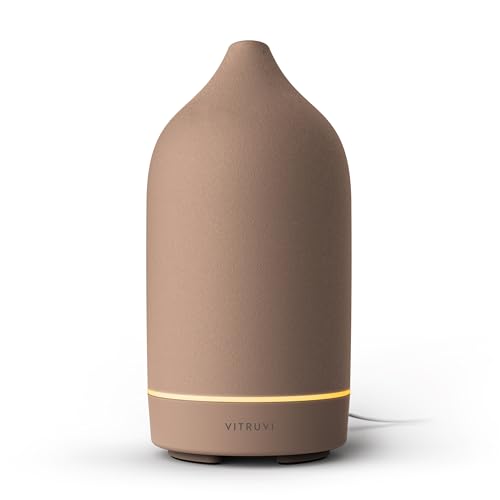
Our top-rated vaporizers
Whatever you decide, these are the picks we recommend across every category, ranked on verified output and value. Live price check on each.


As an Amazon Associate we earn from qualifying purchases, at no cost to you.
What you'll need
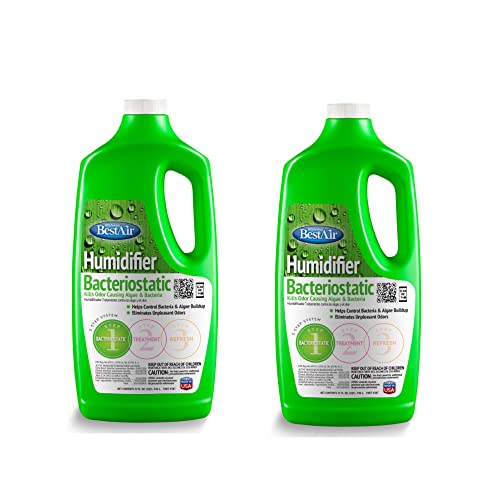
The six things that make a steam vaporizer or humidifier actually work for you: the medicated liquid and pads that turn steam into relief, the treatment and cleaning tools that keep the tank safe, and a meter so you know when the room is right. Prices are approximate at time of writing.




Why 30 to 50 percent, and what happens outside it
Relative humidity is how much water vapor the air holds as a percentage of the maximum it could hold at that temperature. The 30 to 50 percent band is where three separate concerns overlap, which is why it turns up in EPA guidance, in HVAC practice and in humidifier manuals alike. It is dry enough that mold, dust mites and condensation are not being encouraged, and damp enough that human mucous membranes are not being desiccated for eight hours a night.
Below 30 percent, the air behaves like a sponge. It pulls moisture from every exposed surface, which for a sleeping person means the nose and throat, and the results are the familiar ones: a raw throat on waking, chapped lips, dry skin, static shocks off the bedding, and a cough that feels harsher than the underlying illness warrants. Heated houses in a cold climate can drop well below 20 percent, and that is the situation where a humidifier makes an unambiguous difference to how a night feels.
Above 60 percent, the direction of the problem reverses. Sustained high humidity supports mold growth on cool surfaces and creates favorable conditions for dust mites, both of which are common airway irritants and both of which are far harder to fix than dryness. You also start seeing condensation on windows, which is the visible symptom of the same underlying condition. The zone between 50 and 60 percent is a grey band: not a crisis, but drifting the wrong way, and worth correcting.
The target table: room by room, season by season
| Situation | Target relative humidity | What to do |
|---|---|---|
| Bedroom, general year-round target | 30 to 50 percent | Aim for the low-to-mid 40s and adjust to conditions |
| Bedroom, deep winter with cold single-pane windows | 30 to 40 percent | Aim lower; if the glass fogs, you are above what the windows tolerate |
| Bedroom, mild winter or well-insulated windows | 40 to 50 percent | You can sit at the comfortable end without condensation |
| Bedroom, summer | Usually already 45 to 60 percent | No humidifier needed; if above 60 percent, dehumidify or use air conditioning |
| Nursery or child's room | 30 to 50 percent | Same band, cool-mist unit only per AAP guidance |
| Anywhere reading above 60 percent | Reduce | Turn the humidifier off, ventilate, and look for a moisture source |
The winter row is the one people get wrong. In a cold snap, the limiting factor is often not your comfort but your window glass: cold glass condenses moisture out of the air long before the room feels damp, and persistent condensation on a sill is how a bedroom grows mold at a room-average humidity that looks perfectly reasonable on a meter. If your windows are fogging, turn the humidifier down regardless of what the number says.
How to measure it, for about eleven dollars
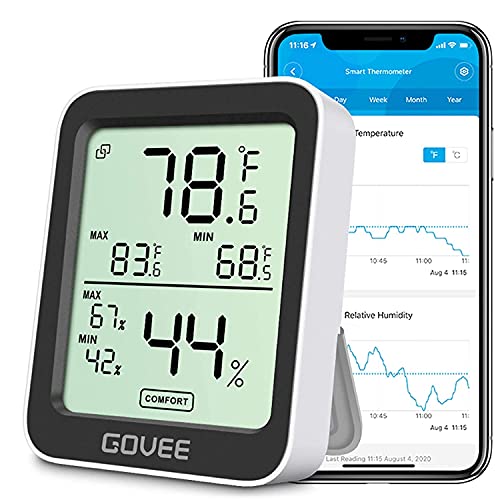
You cannot manage what you do not measure, and the tool is cheap. A Govee H5075 Bluetooth hygrometer is $11.69 and logs to a phone, which is genuinely useful because it lets you see the overnight curve rather than one reading at bedtime. A TempPro TP50 is $10.99 for a straightforward display unit, and a TempPro TP49 3-pack is $22.99, which is the sensible buy if you want to compare a bedroom, a nursery and a living room at the same time. Prices verified via the Amazon Creators API on September 5, 2026.
Place it well. Keep the sensor a few feet from the humidifier, because a meter sitting in a mist plume reads the plume rather than the room and will tell you the bedroom is at 70 percent when it is at 40. Keep it away from exterior walls, heating vents and windows, all of which run at their own local temperature and therefore their own local relative humidity. Waist height or nightstand height, somewhere in the middle of the room, is representative. Give it a few hours to settle after moving it, and read the overnight trend rather than a single number, because a room drifts as it cools and as the heating cycles.
Do this before you buy a humidifier, not after. Plenty of rooms turn out to be sitting comfortably at 42 percent while their owner is convinced they are dry, in which case the money is better spent elsewhere. Our decision guide covers what to buy once you know the number: how to choose a vaporizer.
Holding the number without supervising the machine
Once you know the target, the appliance question becomes narrow: what will hold it while you sleep? Three answers, in ascending order of reliability.
A humidistat unit. This is the right answer for most people. A built-in sensor runs the machine to a set percentage and then stops, so a full tank does not automatically mean a saturated room. The Levoit LV600S at $109.00 is the reference: 6 L, warm and cool mist, app control and a target you can actually set. The non-smart LV600HH is $99.99, and the Levoit 6 L smart cool mist at $69.98 carries a maker-stated 60 hour run time and a 26 dB figure.
A self-regulating design. An evaporative unit such as the Honeywell Cool Moisture at $76.42 has a natural brake: evaporation slows as the surrounding air gets damper, so the unit tapers off on its own as the room approaches saturation. It will not hold a precise number the way a humidistat does, but it is very hard to turn a small closed room into a rainforest with one, which is a useful property in a nursery.
A dumb machine and a hygrometer. Perfectly workable and requires you to participate: run it, check the meter, turn it down. The failure mode is the obvious one, which is falling asleep. If that describes you, spend the extra money on a humidistat rather than on a bigger tank.
Winter, summer, and the appliance you might actually need
Winter is when a bedroom humidifier earns its keep. Cold outdoor air holds very little moisture, and heating that air indoors drops its relative humidity further, which is why heated houses in January read in the teens and twenties. This is the season for the machine, and the season to watch your windows, since condensation on cold glass is the constraint that often forces you to sit at 35 percent rather than 45.
Summer usually calls for the opposite appliance. Across most of the United States, summer indoor air is already at or above 50 percent, and in humid regions it runs well past 60 without anyone adding water on purpose. If your bedroom reads in the 60s in July, adding a humidifier is straightforwardly counterproductive; what you want is air conditioning, which dehumidifies as a side effect of cooling, or a dedicated dehumidifier. We do not sell dehumidifiers here and we are not going to pretend a humidifier is the answer to a damp room.
Shoulder seasons are the interesting case, because a room can cross the band in both directions within a week. This is where a logging hygrometer such as the Govee earns its $11.69: seeing the curve tells you whether you have a persistent problem or a two-cold-nights problem, and it stops you buying an appliance for weather that is about to change.
Common ways people get the number wrong
Reading the plume, not the room. A hygrometer sitting next to a mist outlet reads a locally saturated pocket of air. Move it several feet away and you will often see a difference of twenty points or more.
Trusting a built-in display without a check. On-board humidity readouts vary in quality, and the sensor sits inside a machine that is actively humidifying the air around itself. Cross-check against an independent meter placed across the room before you trust one to run your night.
Chasing the biggest visible mist. Visible fog is a property of the mechanism, not a measure of the result: an ultrasonic unit produces a dramatic plume and an evaporative unit produces nothing you can see while moving comparable water. Judge by the meter.
Ignoring the windows. Condensation on glass is the earliest warning that you are at the practical ceiling for that room, and it usually appears well before the meter looks alarming.
Assuming humidity fixes a cough. Getting a dry room into the band makes a cough more bearable, which is worth doing. It does not treat anything, and pushing past the band to chase more relief is how people end up above 60 percent with a mold problem on top of a cold. That distinction is worked through in is a vaporizer good for a cough, and the machine-type decision is in vaporizer vs humidifier.
How to set your bedroom to the right humidity
- 1
Put a hygrometer in the room and leave it overnight
Place a hygrometer at nightstand height, in the middle of the room, several feet from any humidifier and away from windows, vents and exterior walls. Let it settle for a few hours and read the overnight trend rather than a single number.
- 2
Compare the reading with the 30 to 50 percent band
If it reads below 30 percent, dryness is real and a humidifier has a job to do. If it reads 30 to 50 percent, you probably do not need one. If it reads above 60 percent, you have the opposite problem and need ventilation, air conditioning or a dehumidifier.
- 3
Set a target in the low-to-mid 40s
On a humidistat unit, set the target rather than the mist level, so the machine stops when the room arrives. On a unit without a humidistat, run it on a moderate setting and check the meter after an hour or two rather than running it wide open.
- 4
Check the windows before you sleep
Look at the coldest glass in the room. If it is fogging or beading, the room is above what those windows tolerate regardless of the meter reading, so reduce the target by five points and check again the next night.
- 5
Re-check as the season changes
A setting that is right in January is often wrong in March. Read the meter weekly through the shoulder seasons, and put the humidifier away, cleaned and fully dried, once the room holds the band on its own.
Ready to buy? Start with our top picks
Whatever this guide steered you toward, here's where most readers land, ranked on verified output and value. Live price check on each.
As an Amazon Associate we earn from qualifying purchases, at no cost to you.
Key terms
- Relative humidity (RH)
- The amount of water vapor in the air expressed as a percentage of the maximum the air could hold at its current temperature. Because it depends on temperature, the same absolute moisture reads as a higher percentage in a cooler room.
- The 30 to 50 percent band
- The indoor relative humidity range commonly cited by the EPA and printed in most humidifier manuals. Dry enough to discourage mold and dust mites, damp enough to avoid desiccating airways and skin overnight.
- Dew point
- The temperature at which air becomes saturated and moisture condenses out. It explains why cold window glass fogs while the room still feels dry: the glass is below the room air's dew point even though the meter reads a modest percentage.
- Humidistat
- A built-in humidity sensor and control that runs a humidifier until the room reaches a set percentage, then stops. The feature that makes holding a target possible without supervising the machine.
- Hygrometer
- A meter that reads relative humidity. The cheapest and most useful purchase in this category, because it converts the entire question from a subjective feeling about a room into a number you can act on.
Questions, answered
What is the ideal humidity for a bedroom?
Between 30 and 50 percent relative humidity, the indoor range the EPA commonly cites, with the low-to-mid 40s a comfortable place to sit for most people. Below 30 percent the air pulls moisture from your nose, throat and skin, which is the source of the raw-throat winter bedroom. Above 60 percent sustained you create conditions that favor mold and dust mites, and you start getting condensation on cold surfaces. In deep winter with cold windows you may have to aim nearer 30 to 40 percent, because the glass will fog before the room feels damp.
Is 60 percent humidity too high for a bedroom?
It is at the edge and it is the wrong direction to be drifting. Sustained relative humidity above roughly 60 percent supports mold growth on cool surfaces and creates favorable conditions for dust mites, both of which are common airway irritants and both far harder to reverse than dryness. You will usually see condensation on windows around the same point. If your bedroom reads 60 percent, turn any humidifier off, ventilate the room, and look for a moisture source. In summer, the appropriate appliance is air conditioning or a dehumidifier rather than anything on this site.
What humidity should a baby's room be?
The same 30 to 50 percent band. What changes for a nursery is the machine, not the number: the American Academy of Pediatrics recommends cool-mist humidifiers in children's rooms because steam and warm-mist units hold hot water and can scald a child who reaches for or tips them. Keep the unit and its cord out of reach, and be particularly careful not to run it wide open all night in a small closed room, because that is exactly the situation in which a nursery ends up above 60 percent. A hygrometer on the dresser is the simplest safeguard.
How do I measure the humidity in my bedroom?
With a hygrometer, which costs about eleven dollars and is the highest-value purchase in this whole category. A Govee H5075 Bluetooth model is $11.69 and logs to a phone so you can see the overnight curve; a TempPro TP50 is $10.99 as a simple display, and a TempPro TP49 3-pack is $22.99 if you want to compare rooms (prices verified via the Amazon Creators API on September 5, 2026). Place it at nightstand height in the middle of the room, several feet from the humidifier and away from windows, vents and exterior walls, and read the trend rather than one number.
Why do my windows fog even though the humidity reads 40 percent?
Because relative humidity depends on temperature, and window glass in winter is much colder than the room. Air in contact with cold glass is chilled below its dew point and condenses there even though the room air, measured at nightstand height, reads a perfectly reasonable percentage. That condensation is the practical ceiling for that room: persistent moisture on sills and frames is how a bedroom grows mold at a room-average number that looks fine on a meter. If the glass is fogging, lower your target by about five points and re-check the next night.
Should I run a humidifier in summer?
Usually no. Across most of the United States, summer indoor air already sits at or above 50 percent relative humidity, and in humid regions it runs well past 60 without anyone adding water on purpose. Measure first: if the bedroom reads inside the 30 to 50 percent band, you need nothing, and if it reads in the 60s you have the opposite problem. The appliance for a damp summer bedroom is air conditioning, which dehumidifies as a side effect of cooling, or a dedicated dehumidifier. Adding a humidifier to a room that is already at 58 percent makes things worse.
What humidifier holds a set humidity level?
One with a humidistat, which is a built-in sensor plus control that runs the unit to a target percentage and then stops. The Levoit LV600S at $109.00 is the reference (6 L, warm and cool mist, app control), the non-smart LV600HH is $99.99, and the Levoit 6 L smart cool-mist unit is $69.98 with a maker-stated 60 hour run time. An evaporative unit such as the Honeywell Cool Moisture at $76.42 achieves something similar by physics rather than electronics, since evaporation slows as the room gets damp. Prices verified via the Amazon Creators API on September 5, 2026.
Does low humidity actually cause a sore throat?
Dry air makes an already irritated throat feel considerably worse, which is why the classic experience of a heated bedroom in January is waking with a throat like sandpaper. Air below about 30 percent relative humidity draws moisture from exposed mucous membranes over a full night of sleep. Bringing the room into the 30 to 50 percent band removes that additional irritation, which is a genuine comfort benefit and a good reason to own a humidifier. It is not a treatment for an illness, and pushing well past the band in search of more relief creates a mold and dust-mite problem instead.
Filed under Explainer
Part of Vaporizer 101
Keep reading
How to Choose a Vaporizer
Measured the room and it is genuinely dry? Here is which machine your specific problem calls for.
Warm Mist vs Cool Mist Humidifier
Which design holds a target without supervision, and which one you have to watch.
Vaporizer vs Humidifier
The category question: hot steam versus mist that is never hot, and which belongs in a bedroom.
Is a Vaporizer Good for a Cough?
Why hitting the humidity band helps how a cough feels, and why going past it makes things worse.