Our Pick: Vicks
Check price on Amazon →Distilled vs Tap Water in a Vaporizer: What to Use
Use distilled or demineralized water in an ultrasonic cool-mist humidifier, and use ordinary tap water in an electrode steam vaporizer. That is not a contradiction, it is two opposite mechanisms: an ultrasonic unit atomizes whatever is dissolved in the tank and sprays it around your bedroom as white dust, while a steam vaporizer needs those same dissolved minerals to conduct the current that boils the water. Here is which machine takes which water, what the long-standing federal consumer guidance actually says, and honest math on what running distilled costs per night.
By The Vapor Reviews DeskUpdated 2026-09-05~9 min read Ranked on verified output, never box claimsHow we research
The answer depends entirely on which machine you own, and the two answers point in opposite directions. If you have a cool-mist ultrasonic humidifier, use distilled or demineralized water, because an ultrasonic unit works by mechanically shearing water into a fog and it cannot tell the difference between water and the calcium dissolved in it. Everything in the tank goes into the room. If you have an electrode steam vaporizer, the Vicks V150 class, use ordinary tap water, because the machine works by passing current between two electrodes through the water itself, and water pure enough to have no minerals in it is water pure enough not to conduct.
That is why you will find confident, contradictory advice all over the internet. Both camps are right about their own machine and wrong about the other one. The tell that someone does not know which they are talking about is a blanket recommendation with no mention of the mechanism. Vicks' own instructions for the V150 tell owners in very soft water areas to add a pinch of salt to get the unit steaming, which is about as clear a statement as a manufacturer can make that mineral content is a functional requirement of that design.
The other two designs sit in between. Warm-mist humidifiers heat water and leave minerals behind as scale rather than atomizing them, so distilled water is optional and reduces descaling work. Evaporative humidifiers trap minerals in the wick filter, so distilled water is also optional and mainly buys you longer filter life. Neither will fail on tap water the way an ultrasonic unit dusts your furniture or a steam vaporizer refuses to boil.
The short version
- Ultrasonic cool mist: use distilled or demineralized water. Tap water produces white mineral dust, because atomization does not separate water from what is dissolved in it.
- Electrode steam vaporizer (Vicks V150 class): use ordinary tap water. Distilled water may not conduct enough current to boil, which is why Vicks' instructions mention adding a pinch of salt in soft-water homes.
- Warm mist: tap water works; distilled reduces the scale you have to descale off the heating chamber.
- Evaporative: tap water works; distilled mainly extends wick filter life, since the wick is the mineral trap.
- The long-standing joint EPA and Consumer Product Safety Commission consumer guidance on home humidifiers advises using distilled or demineralized water in ultrasonic and impeller units and emptying and cleaning the tank daily.
- Cost is real: a verified 6-gallon case of Pure Life distilled is $29.99, about $5.00 a gallon delivered, so a 6 L tank emptied nightly is roughly $7.93 of water per fill at that price.
- Cheaper mitigations exist: a demineralization cartridge if your model takes one, a Protec cleaning fish at $5.98 per 30 days, or switching to an evaporative or warm-mist design.
Our top-rated vaporizers
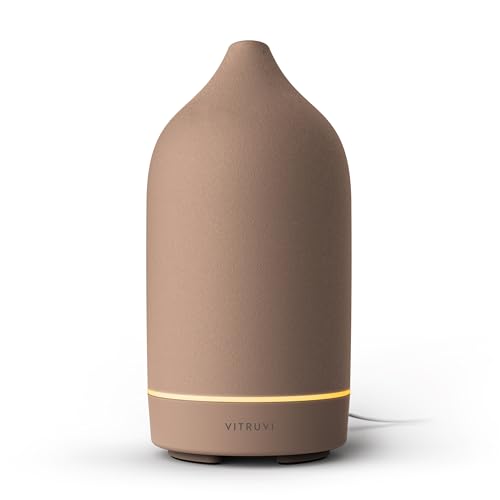
Whatever you decide, these are the picks we recommend across every category, ranked on verified output and value. Live price check on each.


As an Amazon Associate we earn from qualifying purchases, at no cost to you.
What you'll need
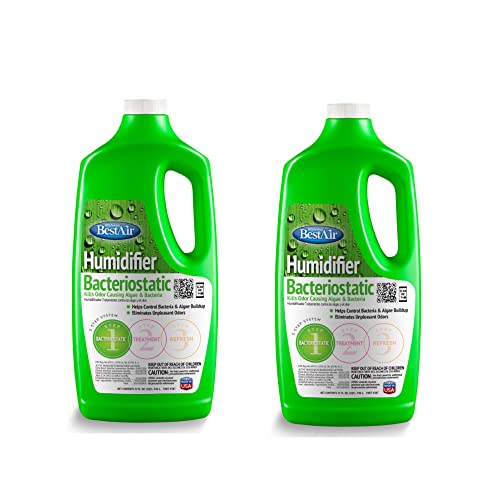
The six things that make a steam vaporizer or humidifier actually work for you: the medicated liquid and pads that turn steam into relief, the treatment and cleaning tools that keep the tank safe, and a meter so you know when the room is right. Prices are approximate at time of writing.




Why ultrasonic units need distilled water
An ultrasonic humidifier contains a piezoelectric disc that vibrates at a frequency far above hearing and shears the water surface into droplets fine enough to hang in the air. It is a purely mechanical process, and mechanical processes do not discriminate. Whatever is dissolved in the water gets thrown into the air along with it: calcium, magnesium, whatever else your municipal supply carries. Those droplets dry in flight, and the dissolved solids they were carrying land on your nightstand, your dresser and your dark furniture as a fine pale film. That film is white dust, and it is not a defect in your humidifier. It is the machine working exactly as designed on the wrong water.
Two consequences follow. The visible one is the housekeeping problem, which in a hard-water house can appear within a single night. The less visible one is that the same minerals build scale directly on the transducer disc, and a scaled transducer atomizes less water, so output falls off over a season in a way that looks like the machine wearing out. Distilled water solves both problems at the same source.
The verified option we track is Pure Life distilled water in a 6-gallon case at $29.99 (verified via the Amazon Creators API on September 5, 2026), which works out to about $5.00 a gallon delivered to your door. Distilled water bought locally is typically cheaper per gallon than delivered water, but we do not have a verified figure for that, so every number in this guide uses the price we can actually stand behind.
Why a steam vaporizer needs tap water instead
Open a Vicks Warm Steam Vaporizer V150 at $19.79 and there is no heating element inside. There are two electrodes, and the machine boils water by passing current between them through the water itself. Pure water is a poor conductor; it is the dissolved mineral content that carries the current and generates the resistive heat that does the boiling. Fill that machine with distilled water, which has had essentially all of its dissolved solids removed, and there may not be enough conductivity to complete the circuit. The unit sits there, plugged in, doing nothing at all.
This is not an inference on our part. Vicks' own instructions address soft-water homes directly by telling owners to add a pinch of salt to the water when the unit will not produce steam, which is the manufacturer stating in plain terms that conductivity is a functional requirement of the design. Follow the wording in your own manual for how much, and be sparing, because salt increases conductivity quickly and too much makes a unit boil harder than intended.
The cost of using tap water in this design is scale, and it lands on the electrodes rather than on your furniture. That is what the weekly white vinegar descale is for, and on this machine it is functional maintenance rather than housekeeping: a scaled electrode pair conducts poorly, produces less steam, and eventually produces none. The full procedure is in how to clean a vaporizer, and the mechanism is explained in how a vaporizer works.
The water chart: which machine takes what
| Machine | Recommended water | What tap water costs you | What distilled buys you |
|---|---|---|---|
| Ultrasonic cool mist | Distilled or demineralized | White dust on surfaces and in the air, scale on the transducer, falling output | No dust, cleaner transducer, less frequent descaling |
| Electrode steam vaporizer | Ordinary tap water | Scale on the electrodes, needs weekly vinegar descaling | Nothing good: the unit may not boil at all |
| Warm-mist humidifier | Tap water is fine, distilled optional | Scale in the heating chamber | Less descaling work, no other change |
| Evaporative cool mist | Tap water is fine, distilled optional | Wick filter loads with minerals faster | Longer filter life, and filters are the running cost |
| Essential-oil diffuser | Follow the maker's manual, often tap or filtered | Scale in a small reservoir | Less cleaning of a small, fiddly tank |
The pattern to remember: machines that atomize water want it pure, machines that boil water using the water as a conductor want it ordinary, and machines that heat or evaporate water do not much care. If you can name your machine's mechanism, you already know the answer.
What distilled water actually costs to run
Here is the math nobody does before buying an ultrasonic humidifier, using the only distilled price we have verified: $29.99 for a 6-gallon case, or about $5.00 a gallon delivered.
| Tank | Capacity in gallons | Cost per full tank at $5.00 a gallon | 30 nights, one full tank a night |
|---|---|---|---|
| Levoit 2.5 L top fill, $29.79 | about 0.66 | about $3.30 | about $99 |
| Dreo HM311 4 L, $35.99 | about 1.06 | about $5.28 | about $158 |
| Levoit LV600S 6 L, $109.00 | about 1.59 | about $7.93 | about $238 |
| Levoit OasisMist 1000S 10 L, $149.99 | about 2.64 | about $13.21 | about $396 |
Two honest caveats before anyone panics. First, most people do not empty a full tank every single night; the maker figures on these units run to 36, 60 and 100 hours precisely because they are not being run flat out. Second, distilled water bought locally by the gallon is typically cheaper than the delivered case price used here, sometimes considerably, but we do not publish figures we have not verified, so the table above is the worst realistic case rather than the likely one. Treat it as the ceiling.
The cheaper ways out
A demineralization cartridge, if your model accepts one, treats the water on the way through rather than requiring you to buy it. Availability is model-specific, so check your manual before assuming yours takes one.
A tank aid such as the Protec cleaning fish at $5.98 for about 30 days slows scale accumulation in the tank. It is worth having in a hard-water house, and it does not eliminate white dust, because the minerals are still dissolved in the water the transducer is atomizing.
Change the mechanism. This is the underrated answer. An evaporative unit at $76.42 traps minerals in its wick and produces no dust at all on ordinary tap water; the trade is fan noise and a filter cost, with a Honeywell Filter A 3-pack at $29.21, which compares favorably with a winter of distilled water. A warm-mist unit at $39.49 leaves minerals behind as scale rather than atomizing them, and it runs on tap water without dusting anything. The full design comparison is in warm mist vs cool mist.
Run the machine less. The cheapest gallon of distilled water is the one you never needed, and most people run humidifiers harder than the room requires. Put a Govee H5075 hygrometer at $11.69 in the room, aim for 30 to 50 percent relative humidity rather than the largest visible plume, and let a humidistat shut the unit off when it gets there. Many people find they are running a machine for eight hours to do a job that takes three. The targets are in ideal humidity for a bedroom. Prices verified via the Amazon Creators API on September 5, 2026.
What about filtered, boiled, softened or bottled water?
Filtered water from a pitcher or a fridge filter removes taste, chlorine and some contaminants, and it leaves most dissolved minerals in place, so it does very little about white dust in an ultrasonic unit. It is fine for a steam vaporizer, which wants those minerals anyway.
Boiled and cooled water does not help either. Boiling drives off water and concentrates the minerals that remain, so what you are left with is, if anything, slightly harder than what you started with. It is a common piece of internet advice and it is backwards.
Softened water from a household softener is the one to be careful with. Ion-exchange softeners typically replace calcium and magnesium with sodium, so the water is still conductive and still full of dissolved solids: it will not stop white dust in an ultrasonic unit, and several humidifier manufacturers advise against it. It is generally acceptable in a steam vaporizer, since conductivity is what that machine wants.
Bottled drinking water is not distilled water. Spring water and most bottled waters retain a full mineral profile, which is often the entire selling point, so it behaves like tap water in every machine here at several times the price. If you are buying water for an ultrasonic humidifier, the label needs to say distilled or demineralized, not purified, spring or mineral.
Ready to buy? Start with our top picks
Whatever this guide steered you toward, here's where most readers land, ranked on verified output and value. Live price check on each.
As an Amazon Associate we earn from qualifying purchases, at no cost to you.
Key terms
- Distilled water
- Water that has been boiled to vapor and condensed back to liquid, leaving essentially all dissolved solids behind. The recommended water for ultrasonic humidifiers, and the wrong water for an electrode steam vaporizer, which needs dissolved minerals to conduct current.
- Demineralized water
- Water with its dissolved mineral ions removed, typically by ion exchange or reverse osmosis. Functionally interchangeable with distilled for humidifier purposes, and the term used alongside distilled in the standing federal consumer guidance.
- White dust
- The fine pale film an ultrasonic humidifier leaves on nearby surfaces when run on tap water: dissolved minerals atomized with the water, dried in flight and settled out. Neither warm-mist nor evaporative units produce it.
- Water hardness
- The concentration of dissolved calcium and magnesium in a water supply. High hardness means faster white dust in ultrasonic units, faster scale on steam electrodes and heating chambers, and shorter wick filter life.
- Demineralization cartridge
- An in-tank consumable offered for some humidifier models that reduces the dissolved mineral content of the water in use, cutting white dust without the cost of buying distilled water. Availability is model-specific, so check your manual.
Questions, answered
Should I use distilled water in a vaporizer?
Not in an electrode steam vaporizer like the Vicks V150. That design boils water by passing current between two electrodes through the water itself, and distilled water has had essentially all of its dissolved solids removed, so it may not conduct enough to boil at all. Vicks' own instructions for soft-water homes address this by telling owners to add a pinch of salt. Use ordinary tap water there and descale the electrodes weekly with white vinegar. The picture reverses for ultrasonic cool-mist humidifiers, where distilled or demineralized water is exactly what you should be using.
Do I have to use distilled water in a humidifier?
In an ultrasonic cool-mist unit, effectively yes if you do not want white dust: the machine atomizes whatever is dissolved in the tank and puts it into the room. The long-standing joint EPA and Consumer Product Safety Commission consumer guidance on home humidifiers advises distilled or demineralized water for ultrasonic and impeller units, along with emptying and cleaning the tank daily. In a warm-mist unit or an evaporative unit, tap water is fine, because heating leaves minerals behind as scale and a wick filter traps them; distilled there simply reduces descaling work or extends filter life.
What happens if I use tap water in an ultrasonic humidifier?
You get white dust. Dissolved calcium and magnesium leave the tank with the mist, dry in flight and settle as a fine pale film on furniture, which in hard-water areas can be visible after a single night. The same minerals also build scale on the transducer disc, which gradually reduces mist output in a way that looks like the machine wearing out. Neither effect damages the unit immediately, and neither goes away on its own. The remedies are distilled or demineralized water, a demineralization cartridge if your model takes one, or switching to an evaporative or warm-mist design.
Why does my Vicks vaporizer say to add salt?
Because the V150 boils water by passing current between two electrodes through the water, and the water's dissolved mineral content is what carries that current. In homes with very soft water, or if someone has filled it with filtered or distilled water, there may not be enough conductivity for the unit to boil, so it sits there doing nothing. Vicks' instructions address that case by calling for a pinch of salt to restore conductivity. Use the wording in your own manual and be sparing, because conductivity rises quickly with added salt and too much makes the unit boil more aggressively than intended.
How much does running distilled water actually cost?
Using the one price we have verified, a Pure Life 6-gallon case at $29.99 (about $5.00 a gallon delivered, verified via the Amazon Creators API on September 5, 2026), a 2.5 L tank is about $3.30 per fill, a 4 L tank about $5.28, a 6 L tank about $7.93 and a 10 L tank about $13.21. At one full tank a night for thirty nights, that ranges from roughly $99 to roughly $396. Two caveats: almost nobody empties a full tank nightly, and distilled bought locally by the gallon is usually cheaper than delivered water. Treat those figures as a ceiling rather than a forecast.
Can I use filtered or boiled water instead?
Neither substitutes for distilled in an ultrasonic unit. Pitcher and fridge filters remove taste, chlorine and some contaminants while leaving most dissolved minerals in place, so white dust continues. Boiling is actively counterproductive, since it drives off water and concentrates the minerals that remain, leaving water that is if anything slightly harder. Softened water from an ion-exchange system typically swaps calcium for sodium, so it is still full of dissolved solids and several manufacturers advise against it. Bottled spring or purified water is not distilled either; the label has to say distilled or demineralized.
Does distilled water stop me having to clean the humidifier?
No, and this is the most common misunderstanding about it. Distilled water addresses minerals: white dust, transducer scale, heating-chamber scale, filter loading. It does nothing about microbial growth, because biofilm forms in warm standing water regardless of how pure that water started out. The daily empty, rinse and dry, and the weekly descale and sanitize, apply exactly the same whether you fill from a jug or a tap. What distilled water buys you is less scale to remove, not fewer cleanings.
Which humidifier types work fine on tap water?
Warm-mist and evaporative units both run on ordinary tap water without producing dust. A warm-mist unit like the Vicks V745 at $39.49 heats the water, so minerals precipitate out inside the machine as scale you descale weekly rather than travelling into the room. An evaporative unit like the Honeywell Cool Moisture at $76.42 traps minerals in the wick filter, which is exactly why the filter is a scheduled replacement at $29.21 for a Honeywell Filter A 3-pack. If you dislike buying water, one of those two designs is the structural fix rather than a workaround.
Filed under Explainer
Part of Vaporizer 101
Keep reading
How to Clean a Vaporizer
Distilled water reduces scale, not cleaning. Here is the daily and weekly routine every one of these machines needs.
Warm Mist vs Cool Mist Humidifier
The structural fix for white dust: which designs never produce it, and what they cost you instead.
How Does a Vaporizer Work?
Why the same advice reverses between two machines: electrode conduction versus mechanical atomization.
Ideal Humidity for a Bedroom
The cheapest gallon of distilled water is the one you never needed. Measure the room and run the machine less.