Our Pick: Vicks
Check price on Amazon →How Does a Vaporizer Work? The Mechanics, Explained
A steam vaporizer passes electric current between two electrodes through the water itself, which boils it and vents steam. That is a genuinely different machine from a warm-mist humidifier with a heating element, from an ultrasonic unit that shears water into fog with a vibrating disc, and from an evaporative unit that simply blows air through a wet filter. Understanding which of those four is inside the box explains everything you will ever wonder about your unit: why it needs salt, why it dusts your furniture, why it stopped making steam, and why one of them belongs nowhere near a crib.
By The Vapor Reviews DeskUpdated 2026-09-05~11 min read Ranked on verified output, never box claimsHow we research
The short answer depends on which machine Americans are calling a vaporizer, and there are four common designs. A steam vaporizer, the drugstore unit in the Vicks V150 class, has no heating element at all: two electrodes sit in the tank and pass current through the water, the water's own mineral content carries that current, and the resistance boils the water into steam. A warm-mist humidifier uses a conventional heating element and then cools the vapor before it leaves the housing. An ultrasonic humidifier never heats anything; a disc vibrates at a frequency well above hearing and shears the water surface into a cold fog. An evaporative humidifier is the simplest of all: a fan, a wet wick, and physics.
Those four mechanisms are not trivia. Every practical question people ask about these machines is answered by which one is inside. Why does the Vicks manual tell you to add a pinch of salt? Because electrode boiling needs conductive water and very soft or distilled water will not carry current. Why does my humidifier leave white powder on the dresser? Because it is ultrasonic and it atomizes dissolved minerals along with the water. Why did my vaporizer stop steaming after two winters? Because scale built up on the electrodes. Why is the evaporative one the only one that never over-humidifies? Because evaporation slows down on its own as the air approaches saturation.
There is a fifth machine that shares the name and shares almost nothing else: the dry-herb vaporizer. It heats plant material below combustion rather than boiling water, using convection, conduction, or a hybrid of the two. We give it its own short section at the end and hand off to the deep dive, because mixing the two categories is exactly what makes the word so confusing in the first place.
The short version
- Steam vaporizer: electrodes pass current through the water itself, boiling it. No filter, no fan, no heating element, and a medicine cup for medicated inhalant. The Vicks V150 is the reference at $19.79.
- That electrode design is why very soft or distilled water can stop a steam vaporizer working, and why Vicks' own instructions call for a pinch of salt to restore conductivity in soft-water homes.
- Warm-mist humidifier: a real heating element boils or near-boils water, then the vapor is cooled before release, so the output is warm rather than scalding. The Vicks V745 at $39.49 is the reference.
- Ultrasonic: a disc vibrating above the range of hearing shears water into cold fog. Silent and filterless, but it atomizes dissolved minerals too, which is what white dust is.
- Evaporative: a fan pulls room air through a wet wick. The moisture leaves invisibly, minerals stay in the filter, and the design is self-regulating because damp air evaporates less.
- Dry-herb vaporizers are a separate machine entirely: convection heats air passing through the material, conduction heats the chamber wall, and hybrids do both.
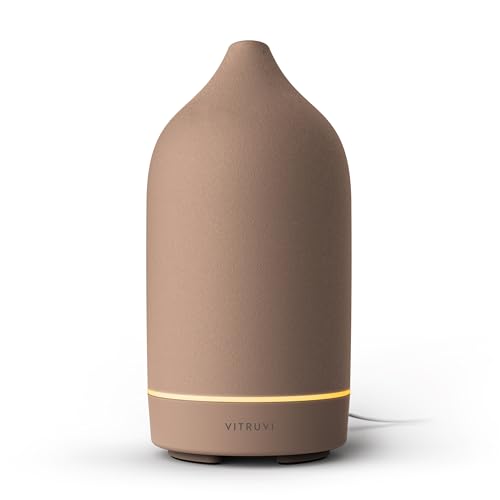
Our top-rated vaporizers
Whatever you decide, these are the picks we recommend across every category, ranked on verified output and value. Live price check on each.


As an Amazon Associate we earn from qualifying purchases, at no cost to you.
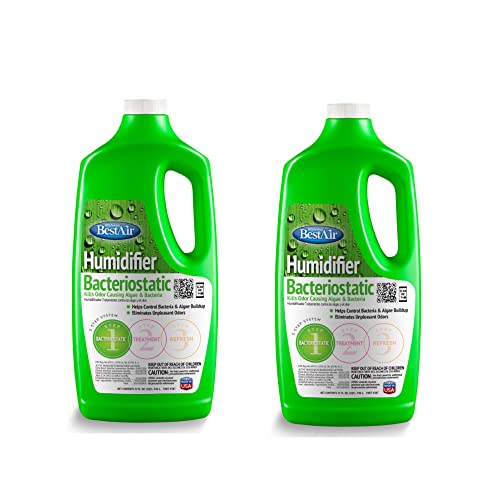
What you'll need
The six things that make a steam vaporizer or humidifier actually work for you: the medicated liquid and pads that turn steam into relief, the treatment and cleaning tools that keep the tank safe, and a meter so you know when the room is right. Prices are approximate at time of writing.





The steam vaporizer: boiling water with the water itself
Open a Vicks Warm Steam Vaporizer V150 and the thing that surprises people is how little is inside. There is no heating coil, no fan, no filter, no pump. There are two metal electrodes projecting into the water and a vent above them. When the unit is plugged in, current flows from one electrode to the other through the water, and because water with dissolved minerals in it is a mediocre conductor, that resistance dumps energy into the water as heat. Bring a small volume of water to a boil that way and it steams continuously. That is the entire machine, which is why it can be sold at $19.79 (verified via the Amazon Creators API on September 5, 2026) with a 1.5 gallon tank and a maker-stated run time of about 24 hours per fill.
Three consequences follow directly, and every one of them is something owners notice. First, the water must conduct. Ordinary tap water contains enough dissolved mineral content to carry current, but very soft water, filtered water, or distilled water can be too pure to complete the circuit, and the unit will sit there doing nothing. This is why Vicks' own instructions tell owners in soft-water homes to add a pinch of salt to the water to get the unit steaming, and why distilled water, which is the correct choice in an ultrasonic humidifier, is the wrong choice here. If you have ever wondered why the advice differs between two machines that look similar on the shelf, this is why, and we work through it fully in distilled vs tap water.
Second, minerals never leave the tank. Boiling drives off pure water vapor and leaves calcium and magnesium behind, which is why a steam vaporizer cannot produce white dust the way an ultrasonic unit can, and also why the electrodes gradually crust over with scale. A scaled electrode pair conducts worse, produces less steam, and eventually produces none, which is the single most common reason a steam vaporizer that worked last winter does nothing this winter. Descaling with white vinegar is not optional maintenance on this design; it is how the machine keeps working, and the routine is in how to clean a vaporizer.
The medicine cup is the design's reason to exist in 2026. It is a small well beside the steam outlet, positioned so that vapor from a medicated inhalant such as Vicks VapoSteam at $9.98 joins the steam stream on its way into the room. It is a cup, not an additive port: nothing goes in the tank. What may and may not go where is the whole subject of can you put Vicks in a humidifier.
Warm mist: a heating element, then a deliberate cool-down
A warm-mist humidifier such as the Vicks Warm Mist Humidifier V745 at $39.49 looks like a steam vaporizer's sibling and works differently in one important way. Water is heated in a chamber, usually by a conventional element rather than by passing current through the water itself, and the resulting vapor is then routed through the housing in a way that cools it before it exits. What leaves the machine is warm and damp rather than hot and scalding. The V745 pairs that with a 1 gallon tank, two speeds, an auto shut-off, and its own medicine cup.
Because the water is heated, this design shares the steam vaporizer's good habit of leaving minerals behind rather than atomizing them, so warm-mist units do not dust your furniture. It also shares the scale problem: the heating chamber accumulates deposits and needs descaling. And it retains enough of the safety concern that it is not the AAP-preferred design for a nursery, because hot water still exists inside the housing even though the output is only warm.
Dual-mode units bolt both worlds together. The Levoit LV600S at $109.00 is a 6 L smart unit that will run cool ultrasonic mist or push that mist past a heater for warm output, with a humidistat and app control on top. That is the modern shape of the category: one tank, two mechanisms, a sensor deciding when to stop. Prices verified via the Amazon Creators API on September 5, 2026. The full warm-versus-cool decision is in warm mist vs cool mist.
Ultrasonic: shaking water apart at 1.7 megahertz
An ultrasonic humidifier contains a small piezoelectric disc at the bottom of a water reservoir. Apply an alternating voltage and the disc flexes at a frequency far above human hearing, commonly cited in the low megahertz range, which is why the unit is effectively silent. That vibration does something mechanically interesting to the water directly above it: it throws up a standing column and shears the surface into a mist of droplets fine enough to hang in the air. A small fan then nudges that cold fog out into the room. Nothing is heated at any point in the process.
Two consequences, one great and one annoying. The great one is silence and efficiency: no element to heat, no fan working hard against a wet filter, which is why makers publish figures like 25 dB for the Levoit 2.5 L top-fill unit at $29.79 and 21 dB for the Dreo 747S 11 L at $99.99. Treat those as maker measurements for ranking models, not as a promise about your bedroom.
The annoying consequence is that mechanical atomization does not discriminate. Whatever is dissolved in the tank gets thrown into the air along with the water, so dissolved calcium and magnesium from tap water ride the mist out, dry in flight, and settle on nearby surfaces as the fine pale film known as white dust. It is also why an unclean ultrasonic tank is the least forgiving of these designs: nothing in the machine ever gets hot, so anything growing in there is distributed intact around the room. The fixes are distilled or demineralized water, a demineralization cartridge where the model accepts one, and a cleaning schedule you actually keep. A 6-gallon case of Pure Life distilled water runs $29.99, about $5.00 a gallon delivered.
Evaporative: a fan, a wet wick, and physics doing the work
The evaporative design is the oldest and the least glamorous. A wick filter sits partly submerged in the reservoir and wicks water up by capillary action; a fan pulls room air through the damp wick; the air leaves carrying water vapor. There is no mist, visible or otherwise, which is why Honeywell markets the Cool Moisture unit at $76.42 on the phrase invisible moisture. The HCM-350 class also includes UV treatment in the water path, which is the maker's answer to the hygiene problem every wet-tank machine has.
Two properties make this design behave unlike the other three. It is self-regulating. Evaporation rate depends on how much moisture the passing air can still absorb, so as a room approaches the humidity you want, the machine's output naturally falls off. You can leave an evaporative unit running in a small closed room without turning it into a rainforest, which no ultrasonic or warm-mist unit can claim without a humidistat. And the wick is a mineral trap. Everything dissolved in the water stays in the filter rather than entering the room, which is why evaporative units never dust furniture, and why the filter is a genuine recurring cost: a Honeywell Filter A 3-pack is $29.21, and premium units such as the Canopy Bedside Humidifier 2.0 at $159.00, a 2.5 L evaporative unit with a maker-stated 36 hour run time, take six-week filters at $40.00 for three.
The cost of all that is noise. An evaporative unit is the only design here whose core mechanism is a fan pushing air through a wet obstruction, and it is audibly the loudest of the four. Prices verified via the Amazon Creators API on September 5, 2026.
How steam inhalers and facial steamers differ
A personal steam inhaler is a room vaporizer's mechanism pointed at your face instead of your ceiling. A small heater boils a modest volume of water and a mask or cone concentrates the vapor at the nose and mouth for a short session rather than dispersing it into a room over hours. The Vicks Sinus Inhaler at $42.98 adds a VapoPad slot so a scent pad can join the steam, and the Vicks Personal Steam Inhaler V1200 at $49.99 offers variable steam control. Sessions are short by design, commonly five to fifteen minutes, and the same scald caution applies with extra force because your face is inches from the source. Steam here is comfort for congestion, not a treatment.
A facial steamer is the same idea aimed at skin rather than sinuses, usually with a finer plume produced by a nozzle at higher velocity, marketed as nano-ionic. The Pure Daily Care NanoSteamer Large at $39.95 is the category's volume leader. Mechanically it is still a small kettle with a directed outlet; the differences that matter are plume fineness, warm-up time and runtime, and whether the safety cutoff works. Prices verified via the Amazon Creators API on September 5, 2026.
The other vaporizer: how dry-herb devices work
None of the above describes a dry-herb vaporizer, and it is worth saying plainly because the shared name creates most of the confusion in this category. A dry-herb device does not boil water. It heats plant material to a temperature high enough to release aromatic compounds as vapor but below the point of combustion, commonly discussed in the range of roughly 160 to 220 C (320 to 430 F), with lower settings favoring flavor and higher settings producing denser vapor.
There are two ways to deliver that heat and a third that mixes them. Convection heats air and passes it through the material, so the material itself never touches a hot surface; extraction is even and flavor tends to be cleanest, at the cost of a slower and usually more expensive design. Conduction heats the chamber walls and the material cooks against them; it is faster, simpler and cheaper to build, with a greater risk of uneven heating and scorching at the contact points. Hybrids use a conduction-heated chamber with convective airflow drawn through it, which is how most modern portables actually behave. Which one a device uses predicts almost everything about how it draws, how fast it is ready, and how it tastes.
That is the summary; the full treatment, including which devices sit where and what it means for session length and battery life, is the herbal desk's convection vs conduction guide, with practical settings in the temperature guide. These devices are sold by their makers and authorized retailers rather than on Amazon, so we link them to the maker directly.
Why the mechanism decides the machine
Put the four side by side and the whole product category stops being confusing. Electrode boiling gives you the cheapest machine, no filter, no dust, a medicine cup, a dependence on mineral content in the water, scale on the electrodes, and a real burn risk. Heated element with cooled output gives you the same dust-free behavior and the medicine cup, with a gentler plume and still-hot internals. Ultrasonic gives you silence and low power draw, at the price of white dust on tap water and the strictest cleaning schedule of the four. Evaporative gives you self-regulation and invisible output, at the price of fan noise and a filter subscription.
If you can name which of those four is in the box, you can predict its failure modes, its upkeep, its water requirements and its placement rules without reading another review. That is the whole point of this page. To turn the mechanism into a purchase, work through how to choose a vaporizer, which routes by the problem you are actually trying to solve, or go straight to the category question in vaporizer vs humidifier.
Ready to buy? Start with our top picks
Whatever this guide steered you toward, here's where most readers land, ranked on verified output and value. Live price check on each.
As an Amazon Associate we earn from qualifying purchases, at no cost to you.
Key terms
- Electrode boiling
- The steam vaporizer's mechanism: current passes between two submerged electrodes through the water itself, and the water's resistance heats it to boiling. No element, no fan, no filter. It requires water with enough dissolved mineral content to conduct.
- Piezoelectric transducer
- The vibrating disc at the bottom of an ultrasonic humidifier. Driven at a frequency above hearing, it shears the water surface into a fine cold fog. Silent by nature, and indiscriminate: it atomizes dissolved minerals along with the water.
- Wick filter
- The absorbent element in an evaporative humidifier that draws water up by capillary action so a fan can evaporate it off a large wet surface. It traps minerals, which is why these units produce no dust, and it is a scheduled replacement cost.
- Scale
- Mineral deposits left behind when water is boiled or evaporated. On a steam vaporizer it builds directly on the electrodes and progressively chokes off steam output, which is why weekly descaling with white vinegar is a functional requirement rather than cosmetic care.
- Convection (dry herb)
- Heating the material by passing hot air through it rather than touching it to a hot wall. Even extraction and cleaner flavor, generally slower to be ready and more expensive to build.
- Conduction (dry herb)
- Heating the material by direct contact with a heated chamber wall. Fast and mechanically simple, with a greater risk of uneven heating and scorching where the material touches the surface. Most modern portables blend both approaches.
Questions, answered
How does a Vicks vaporizer work?
The Vicks Warm Steam Vaporizer V150 works by electrode boiling. Two metal electrodes project into the tank, current passes between them through the water, and the water's own resistance heats it until it boils and vents as steam. There is no heating coil, no fan and no filter, which is why the unit is simple and cheap at $19.79 (verified via the Amazon Creators API on September 5, 2026) and why the maker states about 24 hours of run time from its 1.5 gallon tank. A medicine cup beside the steam outlet lets a medicated inhalant such as VapoSteam join the vapor. Because there is boiling water inside, keep it out of reach of children.
Why does my vaporizer need salt?
Because electrode boiling depends on the water conducting electricity, and very soft, filtered or distilled water can be too pure to complete the circuit between the electrodes, so the unit simply will not steam. Vicks' own instructions address this directly and tell owners in soft-water homes to add a pinch of salt to restore conductivity. Add it sparingly and follow the manual's wording for your model, because too much salt increases conductivity sharply, which can make the unit boil aggressively. Note that this advice is specific to steam vaporizers; never add salt to a warm-mist humidifier, an ultrasonic unit or an evaporative unit.
Why did my vaporizer stop producing steam?
The two usual causes both trace to the electrode design. Either the water is too pure to conduct, which happens after switching to filtered or distilled water or in a home with very soft water, or the electrodes have accumulated mineral scale that insulates them and chokes off current. The first is fixed with ordinary tap water or, per Vicks' instructions, a pinch of salt. The second is fixed by descaling with white vinegar per the manual, which needs doing weekly during a season of heavy use rather than once a winter. If a fully descaled unit on ordinary tap water still does nothing, the unit has reached the end of its service life.
How does an ultrasonic humidifier work?
A piezoelectric disc at the bottom of the reservoir vibrates at a frequency far above human hearing, which shears the water surface into droplets fine enough to stay airborne, and a small fan carries that cold fog into the room. Nothing is heated at any stage, which makes ultrasonic the quietest and lowest-draw design, with maker figures such as 25 dB on the Levoit 2.5 L top-fill unit at $29.79. The trade-off is that mechanical atomization is indiscriminate: dissolved tap-water minerals leave with the mist and settle as white dust, and nothing in the machine ever gets hot enough to control what grows in a neglected tank.
What is the difference between an evaporative and an ultrasonic humidifier?
An evaporative unit uses a fan to pull room air through a wet wick filter, so the water leaves as invisible vapor and the minerals stay trapped in the filter. An ultrasonic unit uses a vibrating disc to atomize water directly into a visible cold fog, minerals included. In practice the evaporative unit is self-regulating (it slows down as the room gets damper), never dusts furniture, and is the noisier design with a recurring filter cost, while the ultrasonic unit is nearly silent and filterless but needs distilled water to avoid dust and has the strictest cleaning schedule of the two.
Do vaporizers actually kill germs in the water?
Boiling handles waterborne microbes in the water at the moment it is vaporized, which is a real property of the steam design and not a claim about the room. It does not sanitize your air, it does not treat an illness, and it does not excuse you from cleaning the machine, because the tank, the base and the surfaces around the electrodes are all still places where deposits and biofilm accumulate between fills. Cool-mist units heat nothing at all, which is why their cleaning schedule matters even more. Some evaporative units in the Honeywell HCM-350 class add UV treatment in the water path as the maker's answer to the same problem.
How does a dry-herb vaporizer work, and is it the same thing?
It is a completely different machine that shares a name. A dry-herb vaporizer heats plant material below the point of combustion so aromatic compounds are released as vapor rather than smoke, in a range commonly discussed as roughly 160 to 220 C (320 to 430 F). Convection designs heat air and pass it through the material for even extraction and cleaner flavor; conduction designs heat the chamber wall and cook the material against it, which is faster and simpler but risks uneven heating; hybrids combine both, which is how most current portables behave. Nothing about water, humidity or steam applies. See our convection versus conduction guide for the full treatment.
Which mechanism should I buy?
Match it to the job. Electrode boiling (a steam vaporizer) if you want a medicine cup and the cheapest possible machine, in a room with no small children. A heated element with cooled output (warm mist) if you want the medicine cup with a gentler plume in a cold adult bedroom. Ultrasonic if silence is the priority and you will buy distilled water or accept white dust. Evaporative if you want a machine that cannot easily over-humidify a room and you will tolerate a fan and buy filters. Our decision guide walks through this by symptom and room rather than by mechanism.
Filed under Explainer
Part of Vaporizer 101
Keep reading
Vaporizer vs Humidifier
The category question, settled: hot steam versus mist that is never hot, and what each one is for.
How to Choose a Vaporizer
Route by the problem instead of the product: cold, baby, dry bedroom, sinuses, skin, scent, or dry herb.
Distilled vs Tap Water in a Vaporizer
Why distilled is right for ultrasonic and wrong for a steam vaporizer, plus the real cost per gallon.
Convection vs Conduction Vaporizer
The dry-herb side of the word: how each heating method draws, tastes and behaves, and which devices use which.