Our Pick: Vicks
Check price on Amazon →Dry-Herb Vaporizer Temperature Guide (2026): Every Band
The band commonly discussed for dry herb runs from roughly 160 to 220 C, which is about 320 to 430 F. Lower means more flavour and lighter, cooler vapour; higher means denser, warmer vapour and faster extraction. Start in the middle, around 180 to 190 C or 356 to 374 F, and step up as the session goes. Grind and moisture change what any given number actually delivers.
By The Herbal Vaporizer DeskUpdated 2026-09-05~9 min read Ranked on verified output, never box claimsHow we research
Start at 180 to 190 C, which is 356 to 374 F, and step up from there. That is the middle of the range commonly discussed for dry herb, it produces visible vapour without effort, and it leaves enough flavour intact that you can tell what you are working with. Once you know how your device behaves at that setting, moving in either direction becomes an informed decision rather than a guess.
The full band people talk about runs from roughly 160 C to 220 C, or about 320 F to 430 F, and the trade across it is consistent. Lower temperatures favour the lighter, more volatile aromatic compounds, so vapour is cooler, thinner and more flavourful. Higher temperatures drive off the heavier fractions too, so vapour is denser and warmer and the load exhausts faster, at the cost of some of the delicate character. Neither end is correct. They produce different sessions, and most experienced owners move through the range within a single load rather than picking one number.
Two things quietly change what any given number delivers, and they are worth naming up front because people chase temperature when the real problem is elsewhere. The first is grind: an uneven bed lets hot air channel through the gaps, so parts of the load run far hotter than the display says while the rest stays cool. The second is moisture: damp material spends the early part of a session driving off water before vapour production begins, which reads as a device that is underpowered. Fix both and the numbers on this page become reliable. As always, we run a research and verification desk rather than a test lab: these bands are the ranges makers publish and that owners consistently converge on, and your manufacturer's stated range for your specific device outranks anything here.
The short version
- The commonly discussed band is roughly 160 to 220 C, or about 320 to 430 F. Lower for flavour and lighter vapour, higher for density and speed.
- Start around 180 to 190 C (356 to 374 F). It is the middle ground that produces visible vapour without stripping flavour, and the right place to learn a new device.
- Step up during a session rather than picking one number. Raising the temperature ten to fifteen degrees as vapour production drops extracts progressively and lasts longer.
- Session and on-demand devices behave differently at the same setting. A session device holds a whole chamber hot; an on-demand device heats only while you draw, so the number means something slightly different.
- Grind and moisture change the result more than a ten degree adjustment does. Even medium-fine material and stable storage humidity make any setting behave predictably.
Our top-rated vaporizers
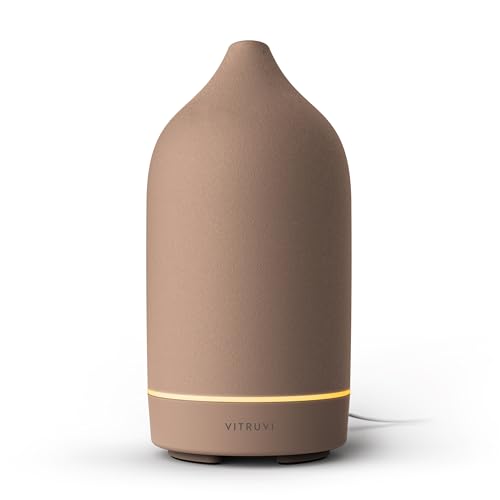
Whatever you decide, these are the picks we recommend across every category, ranked on verified output and value. Live price check on each.


As an Amazon Associate we earn from qualifying purchases, at no cost to you.
What you'll need
The six things that do the real work around a dry-herb vaporizer: a grinder that produces an even, fluffy grind, humidity control so the material vaporizes properly, and the cleaning supplies that keep flavor honest. Prices are approximate at time of writing.



The bands, in Celsius and Fahrenheit
Here is the whole range in one table. These are the bands the makers publish and that owners consistently converge on across the sources we track, not measurements of ours, and there is nothing magical about the boundaries: the transitions are gradual and the numbers are approximate.
| Band | Celsius | Fahrenheit | What it delivers |
|---|---|---|---|
| Low | 160 to 175 C | 320 to 347 F | Maximum flavour, very light and cool vapour, often nearly invisible. Slow extraction, and a load lasts a long time. |
| Low to middle | 175 to 185 C | 347 to 365 F | The flavour-forward working range. Visible vapour, still cool, character largely intact. |
| Middle | 185 to 195 C | 365 to 383 F | The balanced default. Reliable vapour production with most of the flavour retained. Start here. |
| Middle to high | 195 to 205 C | 383 to 401 F | Noticeably denser and warmer. Faster extraction, flavour starting to flatten out. |
| High | 205 to 220 C | 401 to 428 F | Maximum density and speed, warm on the throat, load exhausts quickly, delicate character mostly gone. |
Above roughly 220 C, or about 430 F, you are past the range most makers publish for dry herb and into territory where material begins to scorch rather than vaporize. That produces harshness and no benefit, and most devices simply do not offer settings up there. If your device's own published range is narrower than this table, follow your device.
What changes as you go up: flavour against density
The mechanism behind the whole range is straightforward. Plant material contains a spread of aromatic and active compounds with different boiling points. At the low end of the range, only the lightest and most volatile of those come off, which is why low-temperature vapour tastes the most like the material smells and why it is so thin. As you raise the temperature, progressively heavier compounds join in, so the vapour gets denser and warmer while the delicate top notes get buried under everything else.
That is the entire trade, and it explains a set of observations that otherwise seem contradictory. Low temperature sessions produce almost no visible vapour and yet plenty of flavour, which convinces many new owners that their device is broken. High temperature sessions produce impressive clouds and a flat, slightly toasted taste. Neither is a defect, and both are useful for different reasons on different evenings.
The other thing that changes across the range is how fast a load exhausts. At the low end you can get a long, slow session out of one chamber. At the high end the same chamber is finished in a handful of draws. If you find yourself refilling constantly, running cooler is the fix, and it costs nothing to try.
Stepping up through a session: the technique most owners settle on
The single most useful habit in this whole guide is not picking a number, it is moving through several. Start at the low end of your intended range, take a few draws, then raise the temperature ten to fifteen degrees when vapour production drops off. Repeat until the material is evenly browned. A typical progression might be 180 C, then 190 C, then 200 C, or 356 F, 374 F, 392 F.
This works because different compounds come off at different points, so a fixed setting is always leaving something behind. Stepping up harvests the light material first, while it can still be tasted, then goes back for the heavier fractions once the lighter ones are spent. Owners consistently report that this produces a longer, more consistent and better tasting session than picking one setting and staying there, and the reasoning is sound: a chamber that has stopped producing at 180 C has not stopped producing, it has stopped producing at 180 C.
The finishing cue is visual rather than numerical. Material is done when it is an even light-to-medium brown all the way through. Green patches mean there is more to be had, and often mean the load needs stirring as well as heating. Dark brown or black means you have gone past the useful range and are now heating spent material, which adds harshness and nothing else. The full session routine is in how to use a dry-herb vaporizer.
Session versus on-demand: why the same number behaves differently
Two devices set to 190 C can deliver noticeably different sessions, and the reason is usually architecture rather than accuracy.
A session device brings a whole chamber up to temperature and holds it there across a series of draws over several minutes. The material sits in a hot environment continuously, so extraction proceeds between draws as well as during them, and a load progresses steadily whether you are drawing or not. This is why session devices reward a steady rhythm and why leaving one running while you get distracted wastes material.
An on-demand device heats only while you are drawing. Between draws nothing is happening, so nothing is lost, and a chamber can sit half-used for an hour without degrading. The practical effect is that the number on the display describes the air arriving during a draw rather than the environment the material lives in, which usually means an on-demand device at a given setting feels a little more intense per draw and a lot less wasteful overall.
Heating method layers on top of this. Convection devices generally track their displayed temperature more closely at the material, because hot air arrives at a controlled temperature. Conduction devices show a chamber temperature while the centre of the load runs cooler, which is why a conduction device at a given setting often behaves like a convection device at a lower one, and why stirring changes the result so much. The mechanics are broken down in convection vs conduction.
Why grind and moisture change what a temperature setting delivers
Two variables sit upstream of the temperature dial, and both will make a perfectly good setting behave badly.
Grind. A vaporizer moves hot air through packed material, so the bed is part of the machine. When the grind is uneven, air channels through the loose spots: the material along that channel is exposed to far more hot air than the display setting implies, while the rest of the load barely warms. The result is a session that tastes scorched at the start and produces nothing by the fourth draw, at a setting that would have been fine with an even bed. The target is medium-fine and uniform, roughly coarse-ground-coffee texture, which is what a good grinder such as the Santa Cruz Shredder 3-piece medium at $59.90 produces. The full field is ranked in best herb grinders.
Moisture. Water absorbs heat. A damp load spends the early part of a session having its moisture driven off before vapour production really begins, which reads exactly like an underpowered device or a setting that is too low, and it tempts people into running hotter than they need to. Material that has dried out too far causes the opposite problem: it crumbles to powder in the grinder, and powder packs into a dense plug that blocks airflow entirely.
The fix for both is stable storage: a container that seals, with a two-way humidity pack inside it. Boveda 58 percent size 67 four-packs are $23.99, and many dry-herb vaporizer owners report preferring that drier setting on the reasoning that drier material grinds and vaporizes more evenly, while 62 percent at the same $23.99 is the more common general-storage choice. That is owner consensus rather than a manufacturer recommendation, and it is argued out fully in Boveda 58 vs 62.
Picking your starting point, by what you want
If flavour is the point: start at 175 to 185 C, or 347 to 365 F, and step up slowly. Expect light, cool vapour and accept that the visible cloud is not the measure of anything. A good grind matters most here, because at low temperatures there is no excess heat to paper over an uneven bed.
If you want a balanced default: 185 to 195 C, or 365 to 383 F. This is where we would tell anyone to begin with a new device, because it produces reliable results without being at either extreme, and it gives you a clear reference point to move away from in either direction.
If you want density: 200 to 210 C, or 392 to 410 F. Warmer on the throat, faster to exhaust a load, and noticeably flatter in taste. Perfectly reasonable if that is what you are after, though most owners who start here end up drifting downward once they have tried the lower bands.
If a load is nearly finished: a final push toward 215 to 220 C, or 419 to 428 F, extracts the last of the heavy fraction before the material is spent. Watch the colour rather than the clock, and stop at even brown. Beyond that you are heating ash.
Whatever you settle on, the supporting kit does more for consistency than the last ten degrees ever will. The grinder, the sealed jar and the humidity pack are covered in best vaporizer accessories, and keeping the airpath clear, which quietly changes how a device performs at any setting, is covered in how to clean a dry-herb vaporizer.
Ready to buy? Start with our top picks
Whatever this guide steered you toward, here's where most readers land, ranked on verified output and value. Live price check on each.
As an Amazon Associate we earn from qualifying purchases, at no cost to you.
Key terms
- The dry-herb band
- The range commonly discussed for dry-herb vaporizers, roughly 160 to 220 C or about 320 to 430 F. Below it very little vaporizes; above it material begins to scorch rather than vaporize, which most makers do not support.
- Stepping up
- Starting a session at the lower end of your range and raising the temperature ten to fifteen degrees as vapour production drops. It harvests the lighter compounds while they can still be tasted, then goes back for the heavier ones.
- Session device
- A vaporizer that brings a whole chamber to temperature and holds it across several minutes of draws. Extraction continues between draws, which is why leaving one running wastes material.
- On-demand device
- A vaporizer that heats only while you draw. Nothing is lost between draws, so a chamber can sit part-used, and the displayed temperature describes the air arriving during a draw rather than the material's environment.
- Evenly browned
- The finishing cue for a load: a uniform light-to-medium brown throughout. Green means more is available and the load may need stirring; dark brown or black means the useful range has been passed.
Questions, answered
What is the best temperature for a dry-herb vaporizer?
There is no single best temperature, but the best place to start is the middle of the range, around 180 to 190 C or 356 to 374 F. That produces visible vapour without effort while leaving flavour largely intact, and it gives you a reference point to move from. The full band commonly discussed for dry herb runs roughly 160 to 220 C, about 320 to 430 F, with lower favouring flavour and lighter vapour and higher favouring density and speed. Your device's own published range takes precedence over any general figure.
What temperature is best for flavour?
The lower end, roughly 175 to 185 C or 347 to 365 F, and lower still at 160 to 175 C if you want the maximum. At those temperatures only the lightest and most volatile aromatic compounds come off, which is why the vapour tastes closest to how the material smells. Expect very light and sometimes nearly invisible vapour, which is normal rather than a fault. Grind consistency matters most in this band, because there is no excess heat to compensate for an unevenly packed chamber.
What temperature gives the thickest vapour?
The upper end of the band, roughly 200 to 210 C or 392 to 410 F, with 215 to 220 C available for a final push on a nearly spent load. Higher temperatures drive off the heavier compounds along with the light ones, so vapour is denser and warmer on the throat, and the chamber exhausts in far fewer draws. The trade is flavour: the delicate top notes get buried, and most owners who start at the top end drift downward once they have tried the middle bands.
Should I change the temperature during a session?
Most experienced owners do, and it is the single most useful technique in this guide. Start at the low end of your intended range, take a few draws, then raise the setting ten to fifteen degrees when vapour production drops off, repeating until the material is evenly browned. A fixed setting always leaves something behind, because different compounds come off at different points. Stepping up harvests the light fraction while it can still be tasted, then returns for the heavier ones, which produces a longer and more consistent session.
What temperature in Fahrenheit should I use?
The commonly discussed dry-herb band is about 320 to 430 F. Start around 356 to 374 F, which is the 180 to 190 C middle ground. For reference, 180 C is 356 F, 190 C is 374 F, 200 C is 392 F and 210 C is 410 F. Devices sold in North America usually default to Fahrenheit and most can be switched between units, so setting your device to the scale you actually think in is worth doing on day one to avoid conversion errors mid-session.
Why does my vaporizer produce so little vapour at a low temperature?
Because that is what low temperature does. At 160 to 175 C only the lightest volatile compounds are coming off, so the vapour is genuinely thin and often nearly invisible, while the flavour is at its best. If you want to see clouds, that lives at the upper end of the band. But before turning the temperature up, check the three things that mimic a weak device: drawing too fast, an uneven grind letting air channel through the chamber, and damp material spending the first minute driving off water.
Does moisture content change the right temperature?
It changes what a given temperature delivers, which amounts to the same thing. Water absorbs heat, so a damp load spends the early part of a session having moisture driven off before vapour production properly begins, and that reads as a setting that is too low. The temptation is to run hotter to compensate, which is treating a symptom. Stable storage in a sealed container with a two-way humidity pack, from $23.99 for a Boveda four-pack, removes the variable so a setting means the same thing week to week.
Can you set a dry-herb vaporizer too high?
Yes. Above roughly 220 C, or about 430 F, you are past the range most makers publish for dry herb, and material starts to scorch rather than vaporize. That produces harshness and no benefit, which is why many devices do not offer settings that high at all. Watch the material rather than the display: once a load is an even dark brown it is spent, and continuing to heat it adds nothing. Follow your manufacturer's published range for your specific device over any general figure.
Filed under Explainer
Part of Dry-Herb Accessories & Care
Keep reading
How to Use a Dry-Herb Vaporizer
The full six-step method: grind, pack, temperature, draw, stir and clean.
Convection vs Conduction Vaporizers
Why the same setting behaves differently on different architectures, and which makers publish which.
Boveda 58 vs 62
Moisture is the variable that makes a temperature setting mean the same thing every week.
Best Herb Grinders (2026)
An uneven bed makes any setting behave badly. Six grinders ranked on output consistency.