Our Pick: Vicks
Check price on Amazon →Warm Mist vs Cool Mist Humidifier: Which to Buy
Buy cool mist. It is the safer machine, the cheaper machine to run, and the one the American Academy of Pediatrics recommends around children, and for the great majority of rooms it puts the same water into the air. Warm mist earns its place in exactly three situations: a cold adult bedroom where the mist itself is part of the comfort, a unit with a medicine cup you actually intend to use, and a house where fan noise is the thing keeping you awake. Here is the full mechanical comparison, the noise and dust reality, and the room-by-room, season-by-season call.
By The Vapor Reviews DeskUpdated 2026-09-05~10 min read Ranked on verified output, never box claimsHow we research
The verdict first: for most people, in most rooms, buy cool mist. Both types put the same water into the same air and both will move a dry bedroom toward the 30 to 50 percent relative humidity band the EPA commonly cites. What separates them is everything around the water: warm mist heats it, which costs energy, introduces a hot component inside the machine, and rules the unit out of a nursery under the American Academy of Pediatrics guidance; cool mist does not heat anything, which makes it safer around children, cheaper to run, and available in the quietest designs on the market. If you are buying one humidifier and you want the answer without the reasoning, buy a cool-mist unit with a humidistat and stop reading.
The reasoning still matters, because there are three real cases where warm mist is the better machine and a blanket recommendation would steer you wrong. The first is a cold bedroom in an adult house, where warm mist raises the perceived comfort of the room and cool mist can make a chilly room feel chillier. The second is when you actually want a medicine cup: warm-mist units in the Vicks V745 class carry one, cool-mist ultrasonic units do not, and no inhalant ever belongs in an ultrasonic tank. The third is noise sensitivity in a specific direction, because evaporative cool-mist units run an audible fan while warm-mist units are near-silent.
One clarification before the comparison, because the vocabulary here is genuinely bad. A warm-mist humidifier is not a steam vaporizer. Both heat water; the humidifier cools the mist before it leaves the machine, and the vaporizer vents live steam and carries a medicine cup by design. If you are not yet sure which of those two categories you are shopping in, start with our guide to vaporizer vs humidifier and come back here once you have settled on a humidifier.
The short version
- Default answer: cool mist. Safer around children (AAP recommends cool mist in kids' rooms), no heating element, lower energy draw, and available in the quietest designs sold.
- Buy warm mist when the room is cold and the warmth is part of the comfort, when you want the medicine cup that units like the Vicks V745 ($39.49) carry, or when fan noise from an evaporative unit is the problem.
- Cool mist splits into two very different machines: ultrasonic (silent, throws white mineral dust on tap water) and evaporative (self-regulating, no dust, audible fan, recurring filter cost).
- Warm mist is naturally dust-free, because heating leaves minerals behind in the tank as scale instead of atomizing them into the room.
- Season is a weak tiebreaker and room temperature is a strong one: a cold room favors warm mist, a warm or shared room favors cool mist, and a child's room is cool mist regardless of season.
- Whichever you buy, get a humidistat or a hygrometer. Holding 30 to 50 percent relative humidity matters more than which mist type produced it.
Our top-rated vaporizers
Whatever you decide, these are the picks we recommend across every category, ranked on verified output and value. Live price check on each.


As an Amazon Associate we earn from qualifying purchases, at no cost to you.
What you'll need
The six things that make a steam vaporizer or humidifier actually work for you: the medicated liquid and pads that turn steam into relief, the treatment and cleaning tools that keep the tank safe, and a meter so you know when the room is right. Prices are approximate at time of writing.





What each machine is actually doing
A warm-mist humidifier heats water with an internal element or electrodes, then cools the resulting vapor before it exits, so what reaches the room is warm rather than scalding. The Vicks Warm Mist Humidifier V745 at $39.49 is the archetype: a 1 gallon tank, two speeds, auto shut-off, and a medicine cup. Because the water is heated, minerals precipitate out inside the machine and collect as scale rather than leaving with the mist, which is why warm-mist units never dust your furniture. It also means the tank and heating chamber get hot, which is the safety consideration that follows the design everywhere it goes.
Cool mist is not one machine, it is two, and the difference between them is larger than the difference between cool and warm. Ultrasonic units vibrate a diaphragm at high frequency and shear water into a cold visible fog. They are the quietest humidifiers made, they have no filter, and they atomize whatever is dissolved in the tank, which is exactly why tap water leaves white dust on nearby surfaces. The Levoit 2.5 L top fill at $29.79 is rated by the maker at 25 dB, which is the noise floor of this whole category. Evaporative units pull room air through a wet wick with a fan; moisture leaves invisibly, minerals stay trapped in the wick, and the process slows down on its own as the air gets damper, which is why an evaporative unit is very hard to over-humidify a room with. The Honeywell Cool Moisture at $76.42, a 1.1 gallon unit in the HCM-350 class, is the reference design.
Some units refuse to choose. The Levoit LV600S at $109.00 is a 6 L smart unit that does both warm and cool mist with app control and a humidistat, and the Honeywell HWC775B Dual Comfort at $114.99 does the same in Honeywell's idiom. Prices verified via the Amazon Creators API on September 5, 2026. If you genuinely cannot decide, a dual unit is a legitimate way to buy the argument rather than settle it, and we rank that field in best warm and cool mist humidifiers.
Warm mist vs cool mist, side by side
Cool mist is split into its two designs below, because averaging them together hides the decision. Every figure is the maker's published spec or a mechanical fact of the design.
| Warm mist | Cool mist, ultrasonic | Cool mist, evaporative | |
|---|---|---|---|
| Mechanism | Heats water, cools the mist before release | High-frequency diaphragm atomizes water | Fan pulls air through a wet wick filter |
| Output temperature | Warm | Cool | Room temperature, invisible |
| Noise | Near-silent, occasional heating sounds | Quietest class, 25 dB on the Levoit 2.5 L (maker figure) | Audible fan, the loudest of the three |
| White mineral dust | No, minerals stay behind as scale | Yes with tap water, use distilled | No, minerals stay in the wick |
| Consumable filter | None on the V745 | None | Wick filter, replaced on a schedule |
| Self-regulating | No | No, over-humidifies easily without a humidistat | Yes, evaporation slows as air gets damp |
| Medicine cup | Yes on the V745 | No, never add inhalant to the tank | No |
| Energy draw | Highest, it heats water | Lowest | Low, fan only |
| Children's rooms | Not the AAP-preferred choice | AAP recommended | AAP recommended |
| Cleaning burden | Descale the heating chamber | Highest, nothing in the machine gets hot | Filter changes plus base cleaning |
| Reference unit and live price | Vicks V745, $39.49 | Levoit 2.5 L top fill, $29.79 | Honeywell Cool Moisture, $76.42 |
All three prices verified live via the Amazon Creators API on September 5, 2026. Read the table by weighting the rows you will actually notice: noise if it sits by your head, dust if you keep a dark nightstand, filter cost if you plan to run it all winter, and the children's-room row if there is a child in the house, because that row is the one that overrides the others.
Noise, dust and the two things you will notice on night one
Noise. The ranking is consistent and it is not close: ultrasonic is quietest, warm mist is close behind, and evaporative is the loud one, because it is the only design with a fan whose whole job is to move air through a wet filter. Levoit publishes 25 dB for the 2.5 L top-fill unit and 26 dB for the 6 L smart model at $69.98; Dreo publishes 21 dB for the 747S 11 L at $99.99. Those are maker figures measured on the maker's terms, so use them to rank models rather than to predict a decibel reading in your bedroom. Warm-mist units make no fan noise at all but do produce intermittent heating and occasional bubbling sounds, which some sleepers find soothing and others find worse than a steady fan. If quiet is your first requirement, our full ranking is at best quiet humidifiers.
White dust. This is an ultrasonic-only problem and it has an ultrasonic-only fix. Because an ultrasonic unit atomizes everything in the tank, dissolved calcium and magnesium from tap water leave the machine with the mist and settle as a fine pale film on nearby surfaces, sometimes within a night in a hard-water house. Warm mist does not do it, because heating precipitates those minerals inside the machine. Evaporative does not do it, because the wick catches them. If you want the silence of ultrasonic without the film, you run distilled or demineralized water, and that is a real recurring cost: a 6-gallon case of Pure Life distilled is $29.99, about $5.00 a gallon delivered. The full cost comparison is in distilled vs tap water.
Burn risk, children, and the rule that is not a preference
Warm-mist and steam units heat water inside the housing. That is the entire safety argument, and it is enough. The American Academy of Pediatrics recommends cool-mist humidifiers in children's rooms because hot water and hot vapor can scald a child who reaches for, tips, or unplugs a unit, and the manuals for these products carry the same caution in their own words. In a nursery or any room a toddler can get into, this decides the question by itself, no matter how much you prefer warm mist elsewhere in the house.
The nursery-appropriate shape of the category is well served. The Frida Baby 3-in-1 at $43.49 pairs cool mist with a diffuser and a night light. The Crane Adorables at $50.99 is the 1 gallon ultrasonic animal-shaped unit that has been in nurseries for years. Vicks sells a filter-free ultrasonic line at $68.97 marketed as pediatrician-recommended. If you want a unit that physically cannot over-humidify a small closed room, an evaporative unit like the Honeywell Cool Moisture at $76.42 self-limits by design, and it trades that for fan noise and a wick you will replace. Prices verified via the Amazon Creators API on September 5, 2026; our ranked list is at best humidifier for a baby.
In an adult bedroom the calculus loosens. A warm-mist unit on a stable hard surface, out of a walkway, away from bedding and out of reach of pets, is a reasonable thing to own, and plenty of people prefer it. Just place it as if it contains hot water, because it does.
Which room, which season
Bedroom, adult, winter. Either works, and room temperature is the real tiebreaker. A cold bedroom favors warm mist, because cool fog in a cold room can make it feel colder still, and the V745's medicine cup is genuinely useful during a cold. A warm bedroom or a light sleeper favors ultrasonic, because it is silent and cannot make the room feel stuffier. Whichever you choose, prioritize a humidistat: the Levoit LV600S at $109.00 will hold a target percentage and shut down rather than running until the windows fog. Our bedroom ranking is at best humidifier for a bedroom.
Nursery or child's room, any season. Cool mist, per the AAP, as covered above. No exceptions and no seasonal override.
Living room or open plan, any season. Cool mist, and specifically the larger tanks, because the constraint here is capacity rather than temperature. The Levoit OasisMist 1000S at $149.99 is a 10 L unit; the Dreo 747S at $99.99 is 11 L with a maker-stated 100 hour run time. A warm-mist unit heating that much water in a large space is the wrong tool. See best humidifier for a large room.
Summer, anywhere. Cool mist if you use one at all, and check the number first. Summer air in most of the United States is already at or above the 30 to 50 percent target, and adding moisture to a room that is already at 55 percent pushes you toward the mold and dust-mite zone above roughly 60 percent. A Govee H5075 at $11.69 answers the question before you buy anything at all. The seasonal targets are laid out in ideal humidity for a bedroom.
Cost of ownership, honestly
Purchase price does not rank these machines the way ownership cost does. Warm mist costs the most in electricity, because heating water is the most energy-intensive thing any of these designs does, though we will not quote you a kilowatt figure because most makers in this category do not publish wattage and we do not invent numbers. Evaporative costs the most in parts: a Honeywell Filter A 3-pack is $29.21, and the premium evaporative units are worse, with Canopy's 3-pack of 6-week filters at $40.00 for the Bedside Humidifier 2.0 at $159.00.
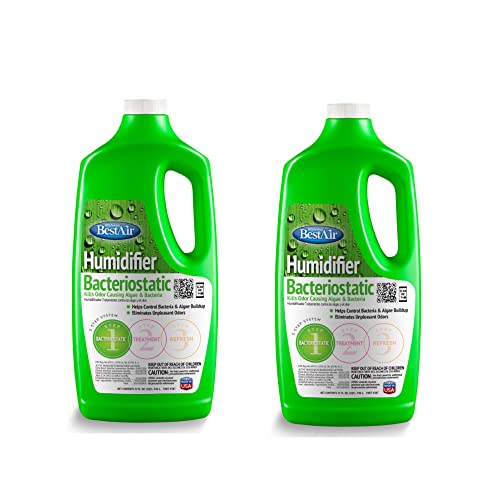
Ultrasonic is the cheapest machine to buy and quietly not the cheapest to run correctly, because running it correctly means distilled water at roughly $5.00 a gallon delivered rather than free water from the tap. Every design shares the small consumables: a BestAir 3BT two-pack at $22.90 or a Protec cleaning fish at $5.98 for 30 days slow biofilm between cleanings but do not replace cleaning. Prices verified via the Amazon Creators API on September 5, 2026, and the full routine is in how to clean a vaporizer.
Ready to buy? Start with our top picks
Whatever this guide steered you toward, here's where most readers land, ranked on verified output and value. Live price check on each.
As an Amazon Associate we earn from qualifying purchases, at no cost to you.
Key terms
- Warm mist
- A humidifier that heats water inside the housing and cools the vapor before it exits, so the output is warm rather than hot. Dust-free because minerals precipitate inside the machine, often equipped with a medicine cup, and not the AAP-preferred design for a child's room.
- Ultrasonic
- A cool-mist design that vibrates a diaphragm at high frequency to shear water into a cold visible fog. The quietest humidifier type, with no filter, and the only one that throws white mineral dust when run on tap water.
- Evaporative
- A cool-mist design that draws air through a wet wick filter with a fan. Output is invisible, minerals stay in the wick, and it is self-regulating because evaporation slows as the air gets damper. Costs you fan noise and replacement filters.
- Humidistat
- A built-in humidity sensor plus control that runs the unit until the room reaches a set percentage and then stops. The single feature that separates a humidifier you set once from one you keep adjusting, and the practical way to hold 30 to 50 percent.
- White dust
- The pale film an ultrasonic humidifier leaves on nearby surfaces when run on tap water: dissolved minerals atomized along with the water. Fixed with distilled or demineralized water, a demineralization cartridge, or a different design.
- Self-regulating
- The property of evaporative humidifiers whereby output naturally falls as the surrounding air approaches saturation, making the room hard to over-humidify. Ultrasonic and warm-mist units have no such brake and rely on a humidistat instead.
Questions, answered
Is warm mist or cool mist better?
Cool mist for most buyers. It does not heat water, so it is safer around children (the AAP recommends cool mist in kids' rooms), it draws less power, and it includes the quietest designs on the market. Warm mist wins in three specific cases: a cold adult bedroom where the warmth adds to the comfort, a unit whose medicine cup you intend to use during a cold, and a household bothered specifically by the fan noise of an evaporative unit. Both types put the same water into the air, so if none of those three cases applies, take the cool-mist machine.
Which humidifier is better for a cold or congestion?
Either one raises the humidity that makes a raw throat and a stuffed nose more bearable, so the mechanical difference matters more than the mist temperature. Warm-mist units in the Vicks V745 class ($39.49, verified via the Amazon Creators API on September 5, 2026) carry a medicine cup, which lets them carry a medicated inhalant into the vapor, and cool-mist ultrasonic units cannot do that and should never have inhalant added to the tank. Be clear about the claim, though: humidity and medicated vapor are comfort measures for cold symptoms, not treatments, and there is no good evidence that either shortens an illness.
Do warm mist humidifiers use more electricity?
Yes. Heating water is the most energy-intensive thing any of these designs does, so warm mist draws more than an evaporative unit running a fan, which in turn draws more than an ultrasonic unit vibrating a diaphragm. We will not give you a dollar figure, because most makers in this category do not publish wattage and inventing one would be worse than saying so. If electricity is your binding constraint, ultrasonic is the lowest-draw design, and the trade you make for it is either white dust or the cost of distilled water.
Which humidifier is safe for a baby's room?
Cool mist. The American Academy of Pediatrics recommends cool-mist humidifiers in children's rooms specifically because warm-mist and steam units hold hot water and can scald a child who reaches for or tips them. Good options include the Frida Baby 3-in-1 at $43.49, the Crane Adorables 1 gallon ultrasonic at $50.99, and the Honeywell Cool Moisture evaporative unit at $76.42, which additionally cannot easily over-humidify a small room (prices verified via the Amazon Creators API on September 5, 2026). Keep the unit and its cord out of reach, and hold the room in the 30 to 50 percent range rather than running it wide open.
Why is my cool mist humidifier leaving white dust everywhere?
Because it is an ultrasonic model and you are filling it from the tap. Ultrasonic units atomize everything dissolved in the water, so calcium and magnesium leave with the mist and settle as a pale film, which appears fastest in hard-water areas. Neither warm mist nor evaporative does this: heating drops the minerals out as scale inside the machine, and a wick filter traps them. Your options are distilled or demineralized water (a Pure Life 6-gallon case is $29.99, about $5.00 a gallon), a demineralization cartridge if your model takes one, or switching to an evaporative unit.
Which type is quieter?
Ultrasonic, then warm mist, then evaporative, and the gap at the bottom is large. Ultrasonic units have no fan and no heater, and makers publish figures in that spirit: 25 dB for the Levoit 2.5 L top-fill unit at $29.79, 26 dB for the Levoit 6 L smart model at $69.98, and 21 dB for the Dreo 747S 11 L at $99.99. Those are maker measurements, useful for ranking models against each other rather than predicting your bedroom. Warm-mist units are near-silent but make intermittent heating and bubbling sounds. Evaporative units run a fan by design and are the loudest of the three.
Can one humidifier do both warm and cool mist?
Yes, and several good ones do. The Levoit LV600S at $109.00 is a 6 L smart unit with app control, a humidistat and both mist modes; the non-smart LV600HH is $99.99; the Honeywell HWC775B Dual Comfort is $114.99; and the Vicks Dual Comfort is $114.61 (all verified via the Amazon Creators API on September 5, 2026). A dual unit is a legitimate answer if you want warm mist in January and cool mist in a child's room later, though note that using the warm mode does not make a heated unit an AAP-appropriate nursery machine; run it in cool mode there or buy a dedicated cool-mist unit.
Does mist temperature change how much humidity I get?
Not in a way you should shop on. Both types are moving liquid water into the air of the same room, and the number that matters is the resulting relative humidity, not the temperature of the plume leaving the machine. What genuinely changes your result is output rate, tank size, room volume, air sealing, and whether the unit has a humidistat to stop at a target. Aim for 30 to 50 percent relative humidity (the commonly cited EPA range), measure with a hygrometer such as the Govee H5075 at $11.69, and pick mist type on safety, noise, dust and running cost instead.
Filed under Explainer
Part of Vaporizer 101 · Head-to-Head Comparisons
Keep reading
Vaporizer vs Humidifier
The prior question: a vaporizer boils water into hot steam, a humidifier's output is never hot. Settle the category before the mist type.
Ideal Humidity for a Bedroom
The 30 to 50 percent target, the mold line above 60 percent, and how to measure a room rather than guess at it.
Distilled vs Tap Water in a Vaporizer
Why ultrasonic units dust your furniture on tap water, what scale does to a heater, and the real cost per gallon.
How to Clean a Vaporizer
Daily, weekly and seasonal upkeep for warm mist, ultrasonic and evaporative units, including when to replace one.