Our Pick: Vicks
Check price on Amazon →Where to Place a Humidifier in a Bedroom
Put it on a hard, waterproof surface at least a couple of feet off the floor, roughly three feet or more from the bed, a foot or more away from walls and furniture, with the mist aimed at open room rather than at bedding, books, wood or electronics. That placement gets the moisture mixing into the whole room instead of soaking one square yard of carpet, and it keeps the two real hazards, damp surfaces and hot water, away from anything that matters. Nurseries have their own rule, and it is not optional.
By The Vapor Reviews DeskUpdated 2026-09-05~9 min read Ranked on verified output, never box claimsHow we research
The short version, then the reasoning. Place a bedroom humidifier on a hard, water-resistant surface such as a nightstand, a low dresser or a tray on a side table, raised at least a couple of feet off the floor. Keep it roughly three feet or more from where your head is when you sleep. Give it a foot or more of clearance from walls, curtains and furniture, and point the mist outlet toward open room, never at a wall, a headboard, a bookshelf or a television.
Two things go wrong when placement is careless, and they are both predictable. The first is wet surfaces: mist that has not had space to disperse condenses on whatever it hits, which means damp drywall behind the unit, water rings on wood, and in bad cases mold on a wall that never dries. The second is inefficiency: a humidifier on the floor in a corner spends the night moistening the carpet in that corner while a hygrometer across the room barely moves, and the owner concludes the machine is undersized when it is only badly placed.
Children's rooms carry a separate rule that overrides everything about convenience. The American Academy of Pediatrics recommends cool-mist rather than warm-mist or steam humidifiers in a child's room, because heated units contain hot water and hot steam and are a burn risk. In a nursery, cool mist, out of reach, and cord secured. That combination is the requirement; everything else on this page is optimization around it.
The short version
- Raise it: a couple of feet off the floor on a hard, waterproof surface, not on carpet and not on bare wood.
- Roughly three feet or more from your head, so you get humidified room air rather than a stream of mist.
- A foot or more of clearance from walls, curtains and furniture, with the outlet aimed at open space.
- Keep it away from electronics, books, paper, artwork and unsealed wood, which are what condensation ruins.
- Warm-mist and steam units need extra distance and a stable base, because they hold genuinely hot water.
- Nurseries: AAP guidance is cool mist, placed out of a child's reach with the cord secured and never in the crib.
- Verify with a hygrometer across the room, not next to the unit. A Govee H5075 is $11.69 and a TempPro TP50 is $10.99.
Our top-rated vaporizers
Whatever you decide, these are the picks we recommend across every category, ranked on verified output and value. Live price check on each.


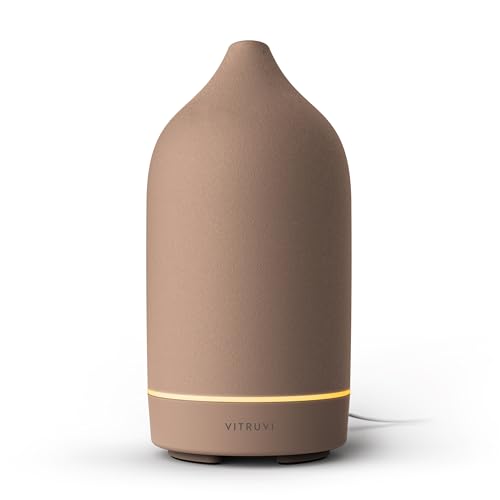
As an Amazon Associate we earn from qualifying purchases, at no cost to you.
What you'll need
The six things that make a steam vaporizer or humidifier actually work for you: the medicated liquid and pads that turn steam into relief, the treatment and cleaning tools that keep the tank safe, and a meter so you know when the room is right. Prices are approximate at time of writing.


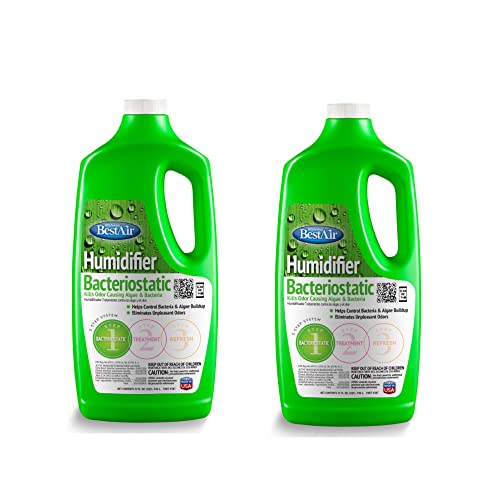



The clearances, in one table
| Dimension | Target | Why it matters |
|---|---|---|
| Height off the floor | At least a couple of feet, on a hard surface | Mist disperses instead of soaking carpet; the unit stays out of kick range |
| Distance from the bed | About three feet or more from your head | You want humidified room air, not a jet of mist on your face and bedding |
| Clearance from walls and furniture | A foot or more, more on the outlet side | Condensation on drywall and wood is the most common placement damage |
| Direction of the outlet | Toward open room | Mist needs distance to mix into the air rather than land on a surface |
| Distance from electronics | As far as the room allows | Moisture and fine mineral dust do not belong on circuit boards or screens |
| Heated units (warm mist, steam) | Extra distance, stable base, out of walkways | Hot water and hot steam; a knocked-over unit is a burn hazard |
Treat those as starting points rather than certified figures, because rooms differ enormously. A small closed bedroom needs less separation than an open-plan space, a unit with a strong directional nozzle needs more, and a top-heavy tank on a wobbly nightstand needs a different plan entirely. The reliable test is empirical: run it a night and look for condensation on the nearest wall and surfaces in the morning. Any moisture film means move it further out or turn the output down.
Height and surface: get it off the floor
Floor placement is the single most common mistake, and it fails for two reasons. Mist leaving a nozzle at ankle height has very little distance to travel before it meets carpet, so a meaningful fraction of your output goes into the flooring rather than the air. And humidity stratifies: moisture introduced low, especially cool mist, tends to stay low, so the air you are actually breathing in bed is drier than the machine's own readout suggests.
Raise it a couple of feet or more and the picture changes. The mist gets room to mix, the unit becomes visible enough not to be kicked, and refilling stops being a floor-level chore. Choose the surface deliberately: a hard, water-resistant top such as a laminate nightstand, a sealed dresser or a plastic or metal tray. Unsealed wood is exactly what a humidifier ruins, in a slow ring that appears after weeks.
Add a waterproof tray or mat under any unit, whatever the surface. Humidifiers drip during refills, tanks weep at the seal, and top-fill designs invite splashes. A $5 tray protects a $500 dresser. If the only available surface is fabric, a bookshelf full of paperbacks, or a shelf above electronics, that is a sign the room needs a different spot rather than a different humidifier.
Distance from the bed, and where to aim it
Roughly three feet from your head is the working rule, and the reason is that a humidifier's job is the room, not your face. Sleeping inside the plume of a cool-mist unit means damp pillowcases, a clammy face and, with tap water, a fine mineral film on the nightstand and on you. It also gives you a misleading sense of the room, since the air near the outlet is far more humid than the air three feet away.
Aim the outlet at open space. If the unit has a rotating nozzle, point it up and away from the bed, ideally toward the middle of the room, so the mist has the longest possible path to fully mix before it meets anything. Never aim it at a headboard, a wall, a curtain, a bookcase or a television. Directional nozzles on larger units such as the Levoit LV600S at $109.00 (verified via the Amazon Creators API on September 5, 2026) throw further than people expect, so give them room.
Airflow matters as much as distance. Do not park a humidifier directly under a supply vent or in front of a ceiling fan blowing down on it, because forced air will drive the plume onto a surface and disperse it unevenly. Equally, do not tuck it into a corner behind a chair, where nothing circulates and the moisture pools. A spot with gentle open airflow across the room is what you want, which usually means somewhere along a wall, out from the corner, on the opposite side of the room from the door.
What to keep it away from
Electronics. Televisions, computers, amplifiers, chargers and anything with vents should be as far from the unit as the room allows and never downstream of the outlet. Two hazards apply: condensation, and, if you are running tap water in an ultrasonic unit, the fine mineral white dust that settles into every ventilation slot.
Wood and paper. Unsealed wood furniture, hardwood floors, musical instruments, books, artwork and framed photographs all react badly to sustained localized moisture. Wood swells and cups, paper wrinkles, and both do it slowly enough that you notice after the damage is done.
Walls and soft furnishings. Drywall, wallpaper, curtains and upholstered headboards absorb what condenses on them, and a wall that stays damp behind a nightstand is a genuine mold risk over a season. This is where the foot-of-clearance rule earns its keep.
Thermostats and hygrostats. A humidifier placed right beside a wall thermostat or a smart-home sensor makes that sensor read the plume rather than the room. If you are automating anything on humidity, keep the sensor well away from the machine.
Warm mist and steam: placement is a safety question
Everything above applies, and then some. A warm-mist humidifier such as the Vicks Warm Mist Humidifier V745 at $39.49 heats water before releasing a cooled mist, and a steam vaporizer such as the Vicks Warm Steam Vaporizer V150 at $19.79 boils water and releases genuine steam. Both hold hot water for a long while after being switched off.
That means three additional placement rules. Put it on a stable, level surface where it cannot be knocked, not on the edge of a nightstand and not on anything wobbly. Keep it out of walkways and away from where someone will reach across it half asleep. And give the steam outlet real vertical clearance, well away from a face, a shelf, a low ceiling slope or a hanging curtain, since the steam is hot at close range.
Cord routing belongs in the same conversation. Run the cord where nobody will catch a foot on it, do not drape it across a walkway, and never run it under a rug. Pulling a tank of hot water off a nightstand by the cord is the failure mode these rules exist to prevent. The wider safety picture is in how to use a Vicks vaporizer.
Nurseries and children's rooms
The rule that overrides convenience: the American Academy of Pediatrics recommends cool-mist humidifiers in children's rooms rather than warm-mist or steam units, because heated units contain hot water and hot steam and represent a burn risk to a child who reaches, pulls or tips. We repeat this on every page where a nursery comes up, and it is the first thing to settle before any placement question.
With a cool-mist unit chosen, place it out of reach and never in or on the crib. That usually means a dresser top or a shelf well away from the crib rails, with the cord secured and routed so it cannot be pulled and cannot fall inside the crib. Keep the same three-foot-plus separation from where the child sleeps and aim the outlet at open room rather than at the crib, bedding or a changing table.
Nursery-oriented units such as the Frida Baby 3-in-1 at $43.49 and the Crane Adorables 1 gal ultrasonic at $50.99 are cool mist by design, which is the right starting point. The rankings, with cleaning burden weighted heavily because a nursery unit runs long hours, are in best humidifiers for a baby. And whatever you use, hold the room in the commonly cited 30 to 50 percent EPA range rather than pushing higher, since an over-humidified nursery grows mold rather than comfort.
Verify the placement with a hygrometer
Placement is not something to judge by feel, because human perception of humidity is poor and the air beside the machine is nothing like the air across the room. Put an inexpensive hygrometer on the far side of the bedroom, at roughly the height of your head when you sleep, and read it in the morning. A Govee H5075 Bluetooth hygrometer is $11.69 and a TempPro TP50 is $10.99 (prices verified via the Amazon Creators API on September 5, 2026).
What you are looking for is the room settling into the 30 to 50 percent band the EPA commonly cites, with no condensation on windows, walls or furniture in the morning. If the far-side reading barely moves while the unit empties its tank nightly, the machine is either too small for the room or is dumping its output into a corner, and moving it out toward the center of the wall usually fixes the second. If windows are running with condensation, you are overshooting and should turn the output down.
The timing question that follows placement, how long the room should take to respond, is covered in how long a humidifier takes to work, and the target numbers are in ideal bedroom humidity.
How to position a humidifier in a bedroom
- 1
Pick a hard, waterproof surface off the floor
Choose a nightstand, low dresser or shelf at least a couple of feet above the floor with a hard, water-resistant top. Add a tray or mat underneath to catch refill drips and tank weep.
- 2
Set it about three feet or more from the bed
Measure roughly three feet from where your head rests. Closer than that and you are misting your face and bedding rather than humidifying the room.
- 3
Give it clearance from walls and furniture
Leave a foot or more of open space around the unit, and more on the outlet side, so mist disperses into air rather than condensing on drywall, curtains or wood.
- 4
Aim the outlet at open room
Point the nozzle up and toward the middle of the room, never at a headboard, wall, bookshelf, television or window. Avoid placing it under a supply vent or directly beneath a ceiling fan.
- 5
Move electronics, books and wood out of the plume
Relocate anything moisture-sensitive that sits downstream of the outlet, including screens, chargers, paperbacks, artwork and unsealed wood surfaces.
- 6
Apply the heated-unit and nursery rules
For warm-mist or steam units, add extra distance, use a stable base out of walkways, and route the cord where it cannot be caught. In a child's room use a cool-mist unit, place it out of reach and never in the crib.
- 7
Verify with a hygrometer across the room
Put a hygrometer on the far side of the room at sleeping height and check it in the morning. Aim for 30 to 50 percent with no condensation on windows, walls or furniture.
Ready to buy? Start with our top picks
Whatever this guide steered you toward, here's where most readers land, ranked on verified output and value. Live price check on each.
As an Amazon Associate we earn from qualifying purchases, at no cost to you.
Key terms
- Plume
- The visible stream of mist leaving the outlet before it mixes into room air. It needs distance to disperse; anything it lands on while still visible gets wet.
- Condensation damage
- The slow harm caused by mist settling on a surface rather than mixing into air: damp drywall, water rings on wood, warped paper, and mold behind furniture.
- Stratification
- The tendency of cool moist air to stay low in a room. It is why a floor-level humidifier can humidify the carpet while the air at head height stays dry.
- Relative humidity target
- The commonly cited EPA band of 30 to 50 percent for indoor air. Above roughly 60 percent invites mold and dust mites, which is what over-humidifying a bedroom produces.
- Out of reach (nursery rule)
- Placement in a child's room where a child cannot touch, pull or tip the unit and cannot reach the cord. Paired with the AAP recommendation to use cool mist rather than heated units.
Questions, answered
How far should a humidifier be from your bed?
About three feet or more from where your head rests is the practical rule. The point of a bedroom humidifier is to raise the humidity of the whole room, not to direct mist at a sleeping person, and sitting inside the plume produces damp bedding, a clammy face and, on tap water, a mineral film on the nightstand. Distance also gives you a truer sense of the room, since air right next to the outlet is far more humid than air a few feet away. Aim the nozzle toward open space rather than at the bed.
Should a humidifier be placed high or low in a room?
Raised, at least a couple of feet off the floor on a hard, waterproof surface. Two reasons. Mist leaving a nozzle at floor level meets carpet almost immediately, so a share of the output goes into the flooring instead of the air. And cool moist air tends to stay low, so a floor-level unit can leave the air at head height noticeably drier than the machine suggests. Elevated placement also keeps the unit out of kick range and makes refilling less of a chore. Do not go so high that a tank of water sits above electronics.
Can I put a humidifier on my nightstand?
Yes, and it is often the best spot in the room, provided three conditions are met. The nightstand has a hard, water-resistant top or a tray under the unit, because refill drips and tank weep are inevitable. The unit sits far enough from the edge that it cannot be knocked off, which matters much more for a warm-mist or steam unit holding hot water. And the outlet points away from the bed and the wall, into open room. If the nightstand also holds a lamp, a charger or a phone, move those or move the humidifier.
Can a humidifier damage walls or furniture?
Yes, when it is placed too close to them. Mist that has not had space to disperse condenses on the first surface it meets, so a unit pushed against a wall can leave drywall or wallpaper persistently damp, which over a season becomes a genuine mold risk. Unsealed wood absorbs moisture and cups or rings, books and artwork wrinkle, and electronics collect both moisture and mineral dust. Leave a foot or more of clearance, more on the outlet side, aim the nozzle at open room, and check the nearest surfaces for a moisture film after the first night.
Where should I put a humidifier in a baby's room?
First, use a cool-mist unit: the American Academy of Pediatrics recommends cool mist rather than warm-mist or steam humidifiers in children's rooms because heated units contain hot water and hot steam and are a burn risk. Then place it out of the child's reach, typically on a dresser or shelf well away from the crib, never in or on the crib, with the cord secured and routed so it cannot be pulled or fall inside. Keep the three-foot-plus separation from where the child sleeps and aim the outlet at open room rather than at bedding.
Can I put a humidifier near a heating vent or radiator?
Avoid it. Air blowing directly across the outlet drives the plume onto whatever is downstream and disperses it unevenly, so you get a wet patch rather than an evenly humidified room. A radiator adds a second problem, since local heat changes the relative humidity the unit and any nearby sensor see, which can make a humidistat behave strangely. Choose a spot with gentle, open circulation instead, generally along a wall and out from the corner, and keep both the humidifier and any humidity sensor away from direct airflow.
Does it matter which side of the room the humidifier goes?
Less than height and clearance, but it helps. A position along a wall and out from the corner, roughly opposite the door, tends to give the best circulation, because corners trap air and doorways vent it. What matters more is that the unit is not tucked behind furniture, not under a vent or fan, and not aimed at a surface. The honest test is a hygrometer on the far side of the room at sleeping height: if it climbs into the 30 to 50 percent band overnight without condensation appearing anywhere, the placement is working.
Should the humidifier run all night in the bedroom?
Usually yes, provided the room stays inside the commonly cited 30 to 50 percent EPA range and nothing is condensing. Overnight is when dry air is most noticeable, and most bedroom-sized tanks are built for a night's run. Two checks. Use a hygrometer across the room rather than trusting how the air feels, and look at the windows in the morning: persistent condensation means you are overshooting and should turn the output down or use a unit with a humidistat. And whatever you run overnight, empty and dry the tank in the morning rather than topping it off.
Filed under Explainer
Part of Vaporizer 101
Keep reading
Ideal Humidity for a Bedroom
The numbers to aim at once the unit is placed, and what happens above and below the range.
How Long Does a Humidifier Take to Work?
What to expect from a correctly placed unit, hour by hour, and when the room never catches up.
Best Humidifiers for a Bedroom
Units ranked on noise, tank life and how easily they fit a nightstand, with live prices.
Best Humidifiers for a Baby
Cool-mist picks for a nursery, with cleaning burden and safety design weighted heavily.