Our Pick: Vicks
Check price on Amazon →Humidifier White Dust: Why It Happens and How to Stop It
White dust is your tap water, minus the water. An ultrasonic humidifier shears the whole contents of the tank into a fine aerosol, the water evaporates in the room, and every dissolved mineral it was carrying lands on your nightstand as powder. That is the entire mechanism, which is why it only happens on ultrasonic units and never on evaporative or warm-mist ones, and why there are exactly three fixes: change the water, filter the minerals, or change the machine.
By The Vapor Reviews DeskUpdated 2026-09-05~9 min read Ranked on verified output, never box claimsHow we research
The fast answer: if a fine white powder is settling on the furniture near your humidifier, you own an ultrasonic cool-mist unit and you are filling it with mineral-rich tap water. Switch to distilled or demineralized water and the dust stops, usually within a day. If buying water is not practical, a demineralization cartridge or aid reduces it, and switching to an evaporative or warm-mist design eliminates it by design rather than by supply run.
The mechanism is worth understanding because it settles every follow-up question. An ultrasonic humidifier uses a disc vibrating at high frequency to shear water into droplets small enough to hang in the air. It does not boil, does not filter and does not select: whatever is dissolved in that water gets launched into the room inside the droplets. The water evaporates on the way to your bookshelf, and the calcium, magnesium and other dissolved solids it carried do not. They land, and they accumulate.
That also explains the geography of the problem. Households on hard water see a lot of dust, households on soft or treated water see less, and two identical machines in two cities can behave completely differently. It is not a defect and it is not a sign that the unit is dirty. It is a faithful readout of what your tap water contains, delivered at high resolution onto every dark surface within about six feet.
The short version
- White dust is dissolved minerals from tap water, aerosolized by an ultrasonic humidifier and left behind when the mist evaporates.
- Only ultrasonic units do it. Evaporative units leave minerals in the wick, and warm-mist and steam units leave them in the tank as scale.
- Fix one: distilled or demineralized water. A Pure Life six-gallon case is $29.99, about $5.00 a gallon.
- Fix two: a demineralization cartridge or aid such as the Protec cleaning fish at $5.98 for about thirty days. It reduces dust rather than eliminating it.
- Fix three: switch designs. An evaporative unit such as the Honeywell Cool Moisture at $76.42 or the Vornado Evap40 at $109.99 cannot produce white dust.
- The same minerals that dust the room also scale the transducer, so solving the dust also protects output.
- Filtered pitcher water and softened water are not solutions: neither removes the dissolved minerals that cause dust.
Our top-rated vaporizers
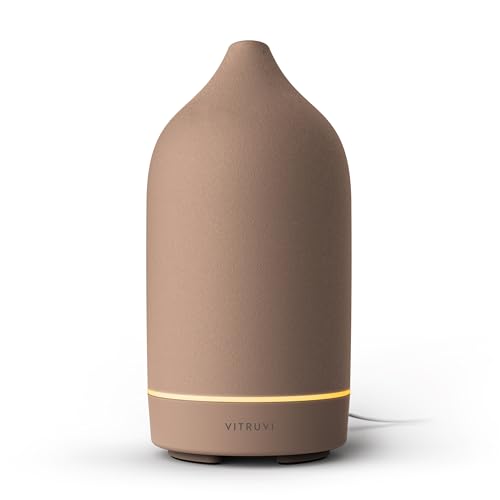
Whatever you decide, these are the picks we recommend across every category, ranked on verified output and value. Live price check on each.


As an Amazon Associate we earn from qualifying purchases, at no cost to you.
What you'll need
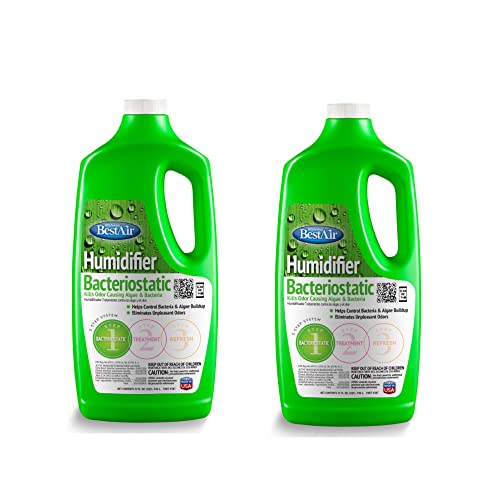
The six things that make a steam vaporizer or humidifier actually work for you: the medicated liquid and pads that turn steam into relief, the treatment and cleaning tools that keep the tank safe, and a meter so you know when the room is right. Prices are approximate at time of writing.





The mechanism, in one paragraph
An ultrasonic humidifier has a small metal disc, the transducer, in the bottom of its reservoir. It vibrates at a frequency far above hearing, and the water directly above it cannot follow the motion, so it fractures into a fog of extremely fine droplets that a fan pushes out of the nozzle. This is why ultrasonic units are so quiet and so efficient: no heater, no wick, no work beyond vibration.
It is also why they are the only design that dusts a room. Every one of those droplets is a scaled-down sample of the tank, dissolved minerals included. As the droplet crosses the room it evaporates, and the mineral content it was carrying, mostly calcium and magnesium compounds, is left as a microscopic particle that settles on the nearest horizontal surface. Multiply that by a tank's worth of water every night and you get the fine white film on the nightstand, the TV screen and the top of the dresser.
Why evaporative and warm-mist units never do this
The other three designs all leave the minerals behind inside the machine, which is the whole difference.
Evaporative humidifiers such as the Honeywell Cool Moisture evaporative at $76.42 or the Vornado Evap40 at $109.99 (prices verified via the Amazon Creators API on September 5, 2026) blow air through a wet wick. Only water molecules evaporate off that wick, so what enters the room is genuinely invisible moisture and the minerals stay in the filter. That is a real advantage and also the reason the filter is a consumable: it is doing the job, and it loads up.
Warm-mist humidifiers and steam vaporizers heat or boil the water. Boiling separates water vapor from everything dissolved in it just as effectively, so the minerals stay in the base as hard scale rather than flying into the room. A unit like the Vicks Warm Steam Vaporizer V150 at $19.79 will never dust a bedroom, though it will need regular descaling for exactly the same reason.
| Design | White dust? | Where the minerals go | The trade-off |
|---|---|---|---|
| Ultrasonic cool mist | Yes, on tap water | Into the room, and onto the transducer | Quietest design; needs distilled water to behave |
| Evaporative | No | Into the wick filter | Fan noise, and filters are a running cost |
| Warm mist | No | Scale in the base and on the heater | Hot water inside; not preferred for nurseries |
| Steam vaporizer | No | Scale on the electrodes | Burn risk; keep out of reach of children |
The full design comparison, including noise, running cost and safety, is in warm mist vs cool mist.
Fix one: change the water
This is the direct fix and the one that works immediately. Distilled water has had essentially everything dissolved removed by the distillation process, so an ultrasonic unit running on it has nothing to aerosolize but water. Demineralized water sold for the purpose behaves the same way. Expect the dust to stop within a fill or two, once the residue already in the room has been wiped up.
The honest cost: a Pure Life six-gallon case runs $29.99, roughly $5.00 a gallon delivered. A 1.2 to 1.5 gallon bedroom unit run nightly through a dry season is a real recurring expense and a real hauling chore, which is the main argument against ultrasonic units for people who will not keep it up. Larger tanks make it worse, not better.
What does not work: filtered pitcher water, which is designed to improve taste and chlorine, not to strip dissolved minerals; softened water from a household softener, which exchanges calcium and magnesium for sodium and therefore still leaves a dissolved solid to aerosolize; and boiled and cooled tap water, which loses nothing but volume. Only distillation, deionization or reverse osmosis actually removes the dissolved load. The full water comparison by unit type is in can you use tap water in a humidifier.
Fix two: demineralization cartridges and aids
Several manufacturers sell a cartridge or ball that sits in the tank and captures a portion of the mineral content before it reaches the transducer, and the category staple on Amazon is the Protec cleaning fish at $5.98 for about thirty days of service (verified via the Amazon Creators API on September 5, 2026). These reduce dust and slow scale rather than eliminating either, which is exactly how they should be sold and occasionally is not.
Set expectations by your water. In a soft-water house, a cartridge plus regular cleaning may take the dust down to something you never notice. In a hard-water house it will take the edge off and you will still see film on dark surfaces, at which point distilled water is the honest answer. Whichever you use, replace on schedule: a spent cartridge is doing nothing, and it becomes one more object sitting in the tank.
One check before buying anything that goes into the water: some manufacturers prohibit tank additives and accessories outright, and using one can void a warranty. The manual decides. Related products, including bacteriostatic treatments and descalers, are ranked in best humidifier cleaners.
Fix three: change the machine
If you are buying distilled water by the case and resenting it, the machine is the wrong tool for your water. An evaporative unit solves the dust permanently by never aerosolizing anything, and it substitutes a different running cost: wick filters, replaced on the maker's calendar. A Honeywell Filter A 3-pack is $29.21 and a Vornado wick 2-pack is $12.99, which for most households is cheaper per season than a winter of distilled water.
The other honest trade is noise. Evaporative units run a fan through a wet wick, so they produce a broadband whoosh that some sleepers like and others do not, whereas ultrasonic units are close to silent. If quiet is non-negotiable, stay ultrasonic and budget for distilled water. If dust is the thing driving you up the wall, go evaporative and budget for filters. Our rankings for both sit in best humidifiers for a bedroom and best cool-mist humidifiers.
A warm-mist unit is the third option and eliminates dust the same way boiling does, with the caveat we repeat on every page: heated units hold hot water, so they are not the choice for a child's room, where the AAP recommends cool mist because of the burn risk.
Cleaning up the dust, and what it means for the machine
The dust already in the room wipes up with a damp cloth on hard surfaces and vacuums off fabric. It is a nuisance rather than a stain, and it stops accumulating as soon as the water source changes. Give it a full clean once and then judge the fix by whether it returns.
More importantly, the dust is a warning about the machine. The same minerals landing on the nightstand are also plating onto the transducer disc inside the reservoir, and a scaled transducer makes less mist until it is cleaned. That is the usual explanation for an ultrasonic unit that seems to have weakened over a season. Descale it with white vinegar and a cotton swab, never anything abrasive, following the method in our vinegar cleaning guide and the wider routine in how to clean a humidifier.
Last point on interpretation. White dust is not evidence that the unit is dirty or that anything is growing in it, and it should not be confused with the pink or gray films covered in pink film in a humidifier, which are biological and need a different response entirely. White dust is mineral. It is inconvenient, it is informative, and it is entirely fixable at the tap.
Ready to buy? Start with our top picks
Whatever this guide steered you toward, here's where most readers land, ranked on verified output and value. Live price check on each.
As an Amazon Associate we earn from qualifying purchases, at no cost to you.
Key terms
- White dust
- The fine mineral powder left on surfaces when ultrasonic mist evaporates. It is the dissolved solids from your tap water, delivered by aerosol and deposited by evaporation.
- Ultrasonic transducer
- The high-frequency vibrating disc that shears water into mist. It aerosolizes whatever is in the tank, which is why it is the only mechanism that produces white dust.
- Dissolved solids
- The calcium, magnesium and other minerals carried invisibly in tap water. Hard water carries more, which is why identical machines behave differently in different cities.
- Demineralization cartridge
- A tank accessory that captures part of the mineral load before it reaches the transducer. It reduces dust and scale rather than eliminating them, and it has a service life.
- Distilled water
- Water with essentially all dissolved solids removed. The direct cure for white dust in a cool-mist unit, and the wrong choice for an electrode steam vaporizer that needs minerals to run.
Questions, answered
What is the white dust from my humidifier?
It is the mineral content of your tap water. An ultrasonic humidifier shears water into a fine aerosol without heating or filtering it, so every dissolved mineral in the tank rides out into the room inside a droplet. The water evaporates in mid-air and the minerals, mostly calcium and magnesium compounds, settle as a fine white powder on nearby surfaces. It is not a sign the unit is dirty or faulty, and it is not related to the pink or gray biological films that need a different response entirely.
Is white dust from a humidifier harmful?
We are a research and verification desk rather than a medical authority, so we will not make a health claim. What we can say factually is that the particles are the dissolved mineral content of your own drinking water, delivered as an airborne dust rather than in a glass, and that public guidance consistently recommends distilled or demineralized water in cool-mist and ultrasonic humidifiers, which removes the issue at the source. If you have a specific respiratory concern, that is a question for a clinician, and switching water or switching to an evaporative design is the practical answer either way.
How do I stop my humidifier from producing white dust?
Three fixes, in order of effectiveness. Use distilled or demineralized water, which removes the minerals entirely and usually stops the dust within a fill or two; a six-gallon Pure Life case is $29.99. Add a demineralization cartridge or aid such as the Protec cleaning fish at $5.98 for about thirty days, which reduces dust rather than eliminating it and works best on softer water. Or change designs to an evaporative or warm-mist unit, which physically cannot aerosolize minerals. Prices verified via the Amazon Creators API on September 5, 2026.
Will filtered or bottled water stop white dust?
Generally not. A carbon pitcher filter targets taste, odor and chlorine, not the dissolved calcium and magnesium that become dust, so filtered tap water dusts about as much as the tap it came from. Most bottled drinking water is spring or purified water that still contains dissolved minerals, sometimes deliberately added for taste. Softened water is no better, because a softener exchanges calcium and magnesium for sodium and leaves a dissolved solid behind. Only distilled, deionized or reverse-osmosis water actually removes the load.
Do evaporative humidifiers make white dust?
No, and that is one of the strongest arguments for the design. An evaporative unit passes air through a wet wick, and only water molecules leave the wick, so the minerals stay trapped in the filter and what enters the room is genuinely invisible moisture. The trade is that the wick is a consumable doing real work and has to be replaced on the maker's schedule: a Honeywell Filter A 3-pack is $29.21 and a Vornado wick 2-pack is $12.99. The other trade is fan noise, since evaporative units move air through a damp filter rather than vibrating silently.
Does white dust mean my humidifier needs cleaning?
Not directly, but it is a reliable warning that scale is building inside. The same minerals landing on your furniture are also depositing on the transducer disc in the reservoir, and a scaled transducer produces progressively less mist, which owners often mistake for the machine wearing out. If output has dropped, descale with white vinegar and clean the transducer with a cotton swab, never anything abrasive, since scratching it reduces output permanently. That is separate from the sanitizing step your manual specifies for microbial growth.
Why does my humidifier make more dust than my neighbor's identical one?
Because you are running two different waters through the same machine. White dust output scales directly with the dissolved mineral content of the supply, so a hard-water household can see heavy deposits while a soft-water household with the same model sees almost none. Well water, municipal hard water and water in regions with limestone geology all tend to produce more. It also means the fix scales the same way: in soft water a demineralization cartridge may be enough, while in hard water distilled water or a design change is the realistic answer.
Should I just buy a warm-mist humidifier instead?
It solves the dust, because boiling leaves minerals behind in the base rather than sending them into the room, and units such as the Vicks V150 at $19.79 are inexpensive. Two caveats. Heated units hold genuinely hot water, so they are not the right choice for a child's room, where the AAP recommends cool mist because of the burn risk. And they trade dust for scale, meaning regular descaling is mandatory rather than optional, since mineral buildup on the heating surfaces eventually stops output altogether.
Filed under Explainer
Part of Vaporizer 101
Keep reading
Can You Use Tap Water in a Humidifier?
The water decision by unit type, including the electrode vaporizer that needs tap water.
How to Clean a Humidifier
Descaling the transducer that white dust warns you about, plus the full care routine.
Warm Mist vs Cool Mist Humidifiers
The design comparison behind the dust: what each mechanism does with minerals, noise and safety.
Best Cool-Mist Humidifiers
Ultrasonic and evaporative units ranked, with running costs and live Amazon prices.