Our Pick: Vicks
Check price on Amazon →How to Clean a Humidifier: Daily, Weekly, Deep Clean
Empty and dry the tank every day, descale with white vinegar every week, sanitize with whatever your manual specifies, and replace wick filters on the maker's schedule. That is the entire routine, and it takes about a minute a day and ten minutes a week. Below: the exact procedure, what changes between ultrasonic, evaporative and warm-mist or steam units, the one combination that is genuinely dangerous, and the mistakes that turn a helpful machine into a warm tank of standing water.
By The Vapor Reviews DeskUpdated 2026-09-05~10 min read Ranked on verified output, never box claimsHow we research
The short version, because most people arrive here mid-chore: every day, unplug the humidifier, pour out the water, rinse the tank and base, dry both, and leave them dry until the next use. Every week, descale with white vinegar, then sanitize with the solution your manual specifies, then rinse until nothing smells of anything. Replace wick filters on the manufacturer's calendar rather than when they look bad. Everything else on this page is detail, exceptions and the reasoning that makes the routine stick.
The reason the routine matters is uncomfortable but simple. A humidifier is a reservoir of standing water at room temperature with a mechanism designed to move that water into the air you breathe. Biofilm establishes itself in warm standing water within days, and a cool-mist ultrasonic unit will faithfully atomize whatever is growing in the tank and distribute it around the bedroom in a fine aerosol. Every safety warning ever printed on a humidifier box reduces to that sentence. The good news is that a dry machine grows nothing, which is why the daily empty-and-dry does more work than any product you can add to the water.
There is a second reason, and on heated units it is the reason the machine still works next winter. Boiling and heating leave dissolved minerals behind as hard scale, and on a steam vaporizer that scale forms directly on the electrodes that carry current through the water. A scaled unit makes less steam, then makes it slowly, then makes none, which is the single most common explanation for a humidifier that worked last season and does nothing now. Descaling is not cosmetic on those designs; it is how the machine keeps running.
The short version
- Daily: unplug, empty, rinse, dry, leave dry. Never top off yesterday's water with fresh water.
- Weekly: descale with white vinegar, then sanitize with the solution your manual names, then rinse thoroughly.
- Never mix bleach and vinegar, or any two cleaning products, in a tank. Use one, rinse completely, then the other if the manual calls for both.
- Ultrasonic units have the strictest schedule because nothing inside them ever gets hot; steam and warm-mist units need the most descaling.
- Evaporative units live or die by the wick. Replace it on the maker's calendar: a Honeywell Filter A 3-pack is $29.21, a Vornado wick 2-pack is $12.99.
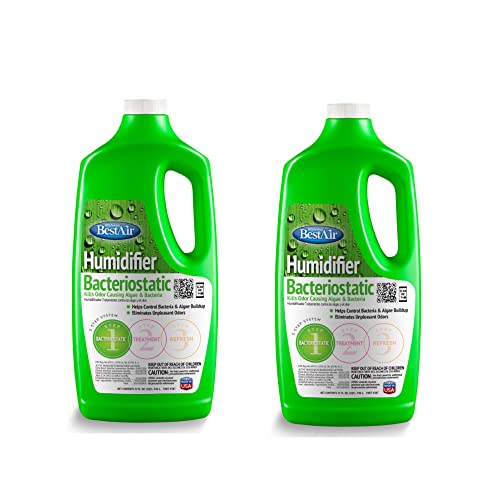
- Treatments such as BestAir 3BT ($22.90) and the Protec cleaning fish ($5.98) slow growth and scale between cleanings. They are not a substitute for cleaning.
- Distilled or demineralized water in a cool-mist unit cuts both scale and white dust, which shortens every clean that follows.
Our top-rated vaporizers
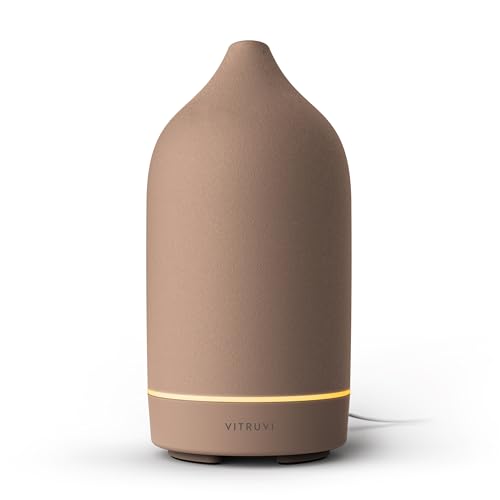
Whatever you decide, these are the picks we recommend across every category, ranked on verified output and value. Live price check on each.


As an Amazon Associate we earn from qualifying purchases, at no cost to you.
What you'll need
The six things that make a steam vaporizer or humidifier actually work for you: the medicated liquid and pads that turn steam into relief, the treatment and cleaning tools that keep the tank safe, and a meter so you know when the room is right. Prices are approximate at time of writing.





The schedule, by humidifier type
Cleaning intervals are not the same for every design, because the four common mechanisms fail in different ways. Ultrasonic units never heat their water, so microbial control is entirely down to you. Evaporative units pass air through a wet wick, which is both a filter and a sponge that loads with minerals. Warm-mist and steam units boil or heat, which handles waterborne organisms in the tank but concentrates minerals into hard scale on the heating surfaces. Match the schedule to the mechanism and the job stays small.
| Type | Daily | Weekly | The part that decides everything |
|---|---|---|---|
| Ultrasonic (cool mist) | Empty, rinse, dry | Vinegar descale plus sanitize per manual | The transducer disc: clean gently, never abrade |
| Evaporative (wick) | Empty, rinse, dry the tank | Descale the base and tray, check the wick | The wick filter: replace on the maker's calendar |
| Warm mist | Empty, rinse, dry; let it cool first | Vinegar descale of the heating element area | Scale on the heater: it throttles output as it thickens |
| Steam vaporizer | Empty, rinse, dry; let it cool first | Vinegar descale of the electrode area | The electrodes: scale stops the unit making steam at all |
Two caveats before you set a calendar reminder. Hard-water households should expect to descale more often than the schedule above, because the same dissolved minerals that make tap water taste like anything are what build the scale. And a unit running around the clock through a dry winter is working harder than one used a few nights a month, so scale the routine to the hours, not the dates. If output has quietly dropped, descaling is the first thing to try, not the last.
The daily minute that does most of the work
Here is the whole daily routine. Unplug the unit. Pour out every drop left in the tank and in the base. Rinse both with fresh water. Wipe them dry with a clean cloth. Leave the tank cap off and the parts apart until the next use. That is a minute of work, and it prevents most of what goes wrong with humidifiers, because organisms need standing water and time, and this habit denies them both.
The single most consequential mistake in this category is topping off yesterday's water. Water that sat all day in a warm bedroom is exactly where biofilm gets established, and pouring fresh water on top of it does not dilute anything that matters; it feeds it. If you fill nightly, empty nightly. If you fill in the morning, empty in the morning. The rule is that water never spends an idle day in the machine.
Two small additions belong in the same minute. Wipe the mist outlet or steam vent, where mineral crust builds until it restricts flow. And on any unit that heats water, let it cool fully before you handle the base, because a steam vaporizer holds genuinely hot water for a while after you switch it off.
The weekly deep clean: descale first, sanitize second
Once a week during a season of regular use, take the machine apart as far as the manual allows and work through it in order. Descaling comes first, and white vinegar is the tool, because scale is mineral and vinegar is mildly acidic, so it dissolves the chalky deposits that soap and scrubbing will not shift. Manuals commonly specify either undiluted white vinegar in the base or a mix of roughly one part vinegar to one part water, left to sit for twenty to thirty minutes, with heavier scale needing longer. Then lift the softened deposits with a soft brush and rinse thoroughly. The full method, including the ratios makers commonly publish and the parts that should never be soaked, is in our vinegar cleaning guide.
Sanitizing is a separate step with a separate product, and this is where your manual outranks the internet, because manufacturers know what their plastics, seals and coatings tolerate. Many specify a diluted household bleach solution, some specify hydrogen peroxide, and some specify a proprietary cleaner such as Venta humidifier cleaner at $24.99 (verified via the Amazon Creators API on September 5, 2026). Whichever yours names, observe the rule that has no exceptions: never mix bleach with vinegar, or with any other cleaner, in a tank. Acid plus chlorine bleach releases chlorine gas. Do one, rinse the unit out completely, then do the other only if the manual calls for both.
Finish by rinsing until no smell of vinegar or bleach survives, then run the unit for a few minutes with plain water in a room you do not mind before it goes back beside the bed. Vinegar fumes at 2 a.m. are an avoidable own goal.
What changes on an ultrasonic unit
Ultrasonic humidifiers, the quiet cool-mist units that dominate the category, have the least forgiving schedule of the four designs. Nothing inside reaches a temperature that controls microbial growth, and the mechanism exists specifically to throw the contents of the reservoir into the room as a fine breathable aerosol. If you are going to be lax with any humidifier, do not let it be this one.
The delicate part is the transducer, the small metal disc in the base that vibrates fast enough to shear water into mist. It must be clean and in direct contact with water to work at all. Lift scale off it with a cotton swab or soft cloth and vinegar, and use nothing abrasive, because a scratched or pitted transducer produces less mist permanently. Oily residue, usually from someone adding essential oils to a tank that was never designed for them, needs dish soap rather than vinegar.
Upstream of cleaning there is a water decision that halves the work. Tap-water minerals in an ultrasonic unit go two places: onto the transducer as scale, and into the room as the fine white dust that settles on every dark surface. Distilled or demineralized water solves both at once. A Pure Life six-gallon case runs $29.99, about $5.00 a gallon delivered, and the full trade-off by unit type is in can you use tap water in a humidifier.
What changes on evaporative and heated units
Evaporative units such as the Honeywell Cool Moisture evaporative at $76.42 or the Vornado Evap40 at $109.99 (prices verified via the Amazon Creators API on September 5, 2026) push air through a wet wick, so the wick is doing the humidifying and also catching the minerals. That is why these units throw no white dust: the minerals stay in the filter. It is also why the filter is a consumable and not a part. A loaded wick stiffens, wicks less water, and quietly reduces output long before it looks finished, which owners routinely mistake for the machine dying. Replace on the maker's calendar: a Honeywell Filter A 3-pack is $29.21, a Vornado wick 2-pack is $12.99, and Protec's extended-life replacement filter is $12.32. Budget filters as a real running cost when you choose between an evaporative unit and a filterless design.
Warm-mist and steam units flip the problem. Boiling deals with organisms in the tank water, which is a genuine hygiene advantage, but it leaves every dissolved mineral behind on the hot surfaces. On a steam vaporizer such as the Vicks Warm Steam Vaporizer V150 at $19.79, the current passes between two electrodes and the water's own mineral content carries it. Scale coats those electrodes, insulates them, and progressively strangles output until the unit simply stops steaming. Weekly vinegar on the electrode area, per the manual's procedure and with a soft brush rather than anything abrasive, is what keeps the machine alive. The full electrode story is in how to clean a vaporizer.
Treatments, tablets and cleaning aids: what they actually do
The care aisle sells two different things and they are easy to confuse. Bacteriostatic treatments such as BestAir 3BT at $22.90 for two 32 oz bottles or Essick Air 1970-2 at $18.60 are dosed into tank water to slow microbial growth between cleanings. Demineralization aids such as the Protec cleaning fish at $5.98 for about thirty days sit in the tank to slow scale accumulation, which is genuinely useful in a hard-water house. Prices verified via the Amazon Creators API on September 5, 2026.
Both categories are honest products and neither replaces cleaning. A treatment that slows growth in the water does nothing about the biofilm already clinging to a gasket, and a demineralization aid that slows scale still leaves scale. Think of them as extending the interval between deep cleans rather than eliminating the deep clean. One important check first: some manufacturers prohibit tank additives outright, and adding one can void a warranty, so read the manual before you drop anything in. Our humidifier cleaner rankings cover which products suit which designs.
What never to do
Never mix cleaning products in a tank. Bleach and vinegar together release chlorine gas. This is the one item on this page with no nuance and no exception.
Never put essential oils, VapoRub or any oily product into a tank that was not designed for it. Oil degrades plastics, gums up transducers and voids warranties, and the residue is far harder to clean out than any mineral scale. Scented products belong in a medicine cup, a scent-pad slot or a diffuser, each of which is a different machine doing a different job.
Never scrub a transducer or an electrode with anything abrasive. Both are precision surfaces. Once scratched, output drops permanently and no amount of cleaning brings it back.
Never run a unit you cannot fully dry. If a hose, gasket or crevice will not dry and will not come clean, and a persistent smell survives a full descale and sanitize cycle, the machine is finished rather than dirty. With a V150 at $19.79 and a Levoit 2.5 L top fill at $29.79, heroic restoration of a cheap unit rarely makes sense. And never run a humidifier past the point of usefulness: hold the room at the commonly cited 30 to 50 percent target from the EPA, since above roughly 60 percent you are growing mold on the walls instead of in the tank. Our guide to ideal bedroom humidity covers the numbers.
How to deep clean a humidifier (weekly)
- 1
Unplug and disassemble
Unplug the unit and let any heated model cool completely. Take it apart as far as the manual allows: tank, cap, base, tray, and any removable nozzle or float.
- 2
Empty and pre-rinse
Pour out all remaining water from the tank and the base and rinse both with fresh water to clear loose debris before any cleaner goes in.
- 3
Descale with white vinegar
Add white vinegar, undiluted or in the water ratio your manual specifies, to the base and tank. Let it sit twenty to thirty minutes, longer for heavy scale, so mineral deposits soften.
- 4
Brush the softened scale away
Work the deposits off with a soft brush or cloth. Clean an ultrasonic transducer or a steam unit's electrodes gently with a swab and never with anything abrasive.
- 5
Rinse completely before sanitizing
Rinse every part until no vinegar remains. This step is mandatory: never let a sanitizing solution meet vinegar residue inside the tank.
- 6
Sanitize per the manual
Apply the sanitizing solution your manual specifies, commonly a diluted bleach solution, hydrogen peroxide or a proprietary humidifier cleaner, for the stated dwell time.
- 7
Rinse, dry and air out
Rinse until nothing smells of vinegar or bleach, dry every part with a clean cloth, and leave the pieces apart to air before reassembling and refilling.
Ready to buy? Start with our top picks
Whatever this guide steered you toward, here's where most readers land, ranked on verified output and value. Live price check on each.
As an Amazon Associate we earn from qualifying purchases, at no cost to you.
Key terms
- Biofilm
- The slippery layer of microorganisms that establishes itself on wet surfaces inside a tank within days. It is why rinsing alone is not cleaning, and why a dry machine is a safe machine.
- Descaling
- Dissolving mineral deposits left behind by evaporating or boiling water, usually with white vinegar. Distinct from sanitizing, which targets organisms rather than minerals.
- Bacteriostatic treatment
- A dosed additive such as BestAir 3BT or Essick Air 1970 that slows microbial growth in tank water between cleanings. Check the manual first, since some makers prohibit additives.
- Wick filter
- The absorbent element in an evaporative humidifier that both wicks water into the airstream and traps minerals. A consumable, replaced on the maker's calendar rather than when it looks dirty.
- Transducer
- The small vibrating disc that produces mist in an ultrasonic humidifier. It needs gentle cleaning and direct water contact; abrasion permanently reduces output.
- Electrode scale
- Mineral buildup on the two electrodes of a steam vaporizer. It insulates the current path and progressively cuts steam output, which is the usual reason a working unit stops steaming.
Questions, answered
How often should I clean my humidifier?
Empty, rinse and dry it every single day it is used, and do a full descale and sanitize once a week during a season of regular use. Hard-water households and units running around the clock need the weekly step more often, since scale builds with hours of operation rather than with the calendar. The daily habit matters more than the weekly one: standing water plus time is what causes nearly every problem in this category, and a machine that dries out between uses simply does not develop them.
Can I use bleach to clean a humidifier?
Only if your manual says to, and only on its own. Many manufacturers do specify a diluted household bleach solution for sanitizing, and where that is the published instruction it is a sound one. Two conditions apply. First, follow the dilution and dwell time in your own manual, because makers know what their plastics and seals tolerate. Second, never let bleach meet vinegar or any other cleaner inside the tank, since acid plus chlorine bleach releases chlorine gas. Descale with vinegar, rinse the unit out completely, then sanitize as a separate step.
Can I use hydrogen peroxide instead of bleach?
Some manufacturers specify hydrogen peroxide as the sanitizing step, and if yours does then use it as written. It is a reasonable alternative for people who dislike bleach around bedding, and it rinses out without leaving a chlorine smell. The same rules apply as with any sanitizer: it is a separate step from descaling, it never goes into the tank alongside vinegar or bleach, and the unit gets rinsed thoroughly afterward. If your manual names a specific product, such as Venta humidifier cleaner at $24.99, that instruction outranks any general advice.
Why does my humidifier smell even after cleaning?
A smell that survives a full descale and sanitize cycle usually means growth somewhere the design will not let you reach: inside a hose, under a gasket, in a float chamber, or in a crevice a brush cannot enter. Start by soaking every removable part rather than just the tank, replacing any wick filter regardless of its age, and leaving everything fully dry for a day. If the smell returns within a run or two, the machine is finished rather than dirty. Retiring a low-cost unit is cheaper and more reliable than fighting it.
Do I really need to replace the filter, or can I wash it?
Replace it on the maker's schedule. A wick filter loads with mineral deposits gradually and looks much the same until it is badly gone, so appearance is a poor guide. A loaded wick stiffens, absorbs less water and quietly reduces output, which owners usually blame on the machine. Some manuals permit a rinse to clear loose debris, but very few endorse soaking a wick in vinegar, so check yours before trying it. Replacements are inexpensive: a Honeywell Filter A 3-pack is $29.21 and a Vornado wick 2-pack is $12.99, verified via the Amazon Creators API on September 5, 2026.
Do humidifier cleaning tablets and treatments work?
They help between cleanings and they do not replace one. Bacteriostatic treatments such as BestAir 3BT at $22.90 or Essick Air 1970-2 at $18.60 slow microbial growth in tank water. Demineralization aids such as the Protec cleaning fish at $5.98 for roughly thirty days slow scale accumulation, which is genuinely useful in hard water. Neither touches biofilm already attached to a surface, and neither dissolves existing scale. Check your manual before adding anything, because some manufacturers prohibit tank additives and using one can void a warranty.
What is the pink or slimy film in my tank?
A pink film is commonly attributed to Serratia marcescens, which is a bacterium rather than a mold despite the nickname, and it thrives in damp bathrooms and humidifier tanks. A slimy clear or gray film is ordinary biofilm. Either way the fix is the same sequence: scrub the film off physically, descale, sanitize per the manual, rinse, and then attack the cause with daily emptying and drying. Our guide to pink film in a humidifier walks through the removal and the prevention in detail.
Does using distilled water mean I can clean less often?
It reduces scale and white dust substantially, which makes every descale faster, but it changes nothing about microbial growth: distilled water sitting in a warm tank grows biofilm just like tap water does. So the weekly descale gets easier and the daily empty-and-dry stays exactly as important. One firm exception: do not switch an electrode steam vaporizer to distilled water, because those units need the minerals in tap water to conduct current and may not boil without them.
Filed under Explainer
Part of Vaporizer 101
Keep reading
How to Clean a Humidifier With Vinegar
The ratios makers commonly publish, which parts to soak, how long, and when vinegar is not enough.
Pink Mold in a Humidifier
What the pink film actually is, why it keeps coming back, and the routine that stops it.
Humidifier White Dust
Why ultrasonic units powder the room, which designs never do it, and the three real fixes.
Best Humidifier Cleaners
Treatments, descalers and demineralization aids ranked, with live Amazon prices.