Our Pick: Vicks
Check price on Amazon →Can You Use Tap Water in a Humidifier? An Honest Answer
It depends entirely on which machine you own, and most advice online fails because it answers for only one of them. In an ultrasonic cool-mist unit, tap water is the source of white dust and transducer scale, and public guidance is consistent in recommending distilled or demineralized water. In an evaporative unit, tap water is fine because the wick keeps the minerals. And in an electrode steam vaporizer, tap water is required, because distilled water has nothing in it to carry the current that makes the steam.
By The Vapor Reviews DeskUpdated 2026-09-05~9 min read Ranked on verified output, never box claimsHow we research
The answer by machine, up front. Ultrasonic cool mist: use distilled or demineralized water. Tap water works mechanically but throws mineral dust into the room and plates scale onto the transducer. Evaporative: tap water is fine and arguably preferable, because the wick captures the minerals and you were going to replace the wick anyway. Warm mist: tap water is fine, but expect scale on the heating element and descale on schedule. Electrode steam vaporizer: use tap water, because distilled water will not conduct current and the unit may never boil.
The reason one question has four answers is that the four designs treat dissolved minerals completely differently. Ultrasonic units aerosolize everything in the tank, so the minerals go into the room. Evaporative units evaporate only water off a wick, so the minerals stay in the filter. Heated units boil water off, so the minerals stay in the base as scale. And electrode vaporizers actively depend on those minerals, because the water itself is the conductor between two electrodes.
Public health guidance points the same way for the units it addresses. The consistent advice from the EPA and the Consumer Product Safety Commission on cool-mist and ultrasonic humidifiers is to use distilled or demineralized water rather than tap, and to empty and clean the reservoir daily, precisely because those designs put whatever is in the tank into the breathing air. That guidance is about mist-producing cool units, and it does not transfer to an electrode vaporizer that boils and depends on mineral content to operate at all.
The short version
- Ultrasonic cool mist: distilled or demineralized water. Tap water causes white dust and scales the transducer.
- Evaporative: tap water is fine. The wick traps the minerals, which is what makes the filter a consumable.
- Warm mist: tap water is fine, with regular descaling of the heating element.
- Electrode steam vaporizer such as the Vicks V150: tap water is required. Distilled water does not conduct and the unit may not boil.
- Vicks instructions cover adding a small pinch of salt when household water is very soft and a steam unit will not produce steam. Follow the manual exactly, and never salt any other design.
- EPA and CPSC guidance for cool-mist units: use distilled or demineralized water, empty and clean the reservoir daily.
- Filtered pitcher water and softened water do not solve white dust, because neither removes dissolved minerals.
Our top-rated vaporizers
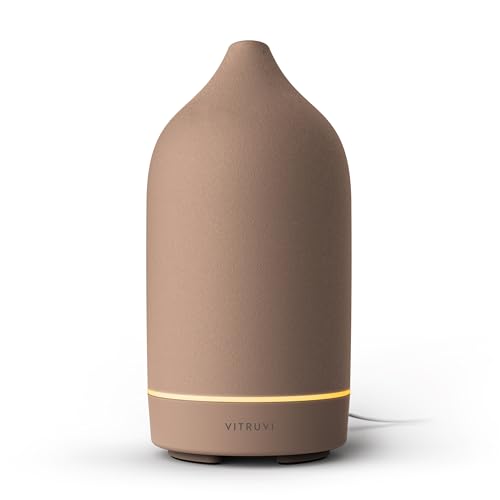
Whatever you decide, these are the picks we recommend across every category, ranked on verified output and value. Live price check on each.


As an Amazon Associate we earn from qualifying purchases, at no cost to you.
What you'll need
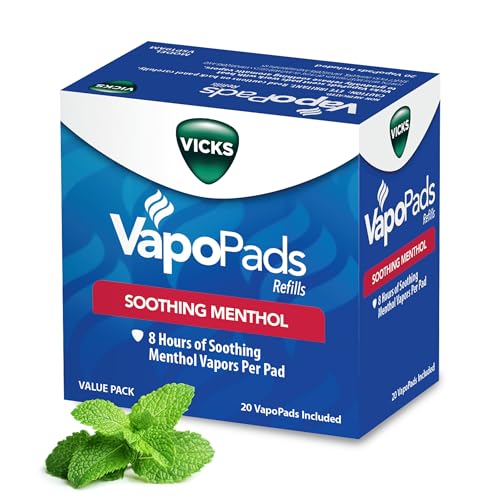
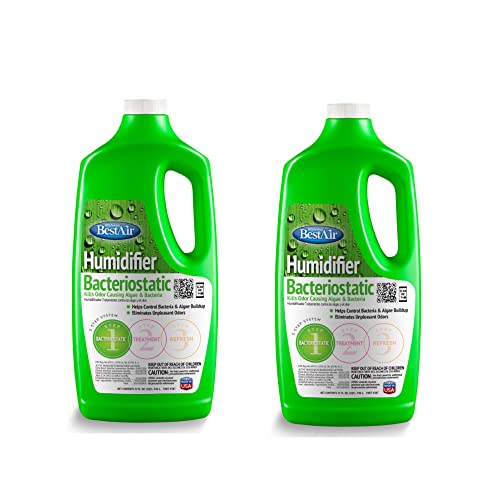
The six things that make a steam vaporizer or humidifier actually work for you: the medicated liquid and pads that turn steam into relief, the treatment and cleaning tools that keep the tank safe, and a meter so you know when the room is right. Prices are approximate at time of writing.




The answer table
| Unit type | Use what | Why | If you use tap anyway |
|---|---|---|---|
| Ultrasonic cool mist | Distilled or demineralized | Minerals are aerosolized into the room and plate the transducer | White dust on furniture, output drops as scale builds |
| Evaporative (wick) | Tap water is fine | Only water evaporates off the wick; minerals stay in the filter | Nothing unusual; the wick loads faster in hard water |
| Warm mist | Tap water is fine | Boiling leaves minerals in the base, not in the air | Scale on the heater; descale weekly or output falls |
| Electrode steam vaporizer | Tap water required | The water's mineral content carries the current that boils it | Distilled water may produce no steam at all |
Two clarifications that head off most of the confusion. First, "cool mist" is not one design: it covers both ultrasonic units, which aerosolize, and evaporative units, which do not, and the water answer is opposite for the two. Check whether your unit has a wick filter. If it does, it is evaporative. Second, "warm mist humidifier" and "steam vaporizer" are not the same machine either. A warm-mist humidifier heats water and cools the mist before release; an electrode steam vaporizer boils water into steam and depends on minerals to do it.
Ultrasonic units: distilled, and here is what it costs
This is the case where the answer is firm. An ultrasonic humidifier shears the tank contents into a fine aerosol without heating or filtering, so every dissolved mineral leaves with the mist, evaporates in the room and lands as white dust. The same minerals build on the transducer disc, and a scaled transducer makes less mist, which is the most common reason a quiet cool-mist unit seems to weaken over a season.
Distilled water fixes both at once. A Pure Life six-gallon case is $29.99, about $5.00 a gallon delivered (verified via the Amazon Creators API on September 5, 2026). Be realistic about that number before buying a big tank: a 6 L unit such as the Levoit Classic300S at $79.99 emptied nightly is more than a gallon and a half a night, which is a genuine recurring cost and a genuine hauling chore. A smaller bedside unit such as the Levoit 2.5 L top fill at $29.79 is far easier to feed.
Partial measures exist and should be described honestly. A demineralization aid such as the Protec cleaning fish at $5.98 for roughly thirty days captures part of the mineral load, which is often enough in soft-water areas and rarely enough in hard-water ones. What does not work at all: pitcher-filtered water, which targets taste and chlorine rather than dissolved minerals; softened water, which swaps calcium for sodium and still leaves a dissolved solid; and boiled tap water, which loses volume and nothing else.
Evaporative units: tap water is genuinely fine
An evaporative humidifier such as the Honeywell Cool Moisture evaporative at $76.42 or the Vornado Evap40 at $109.99 works by drawing air through a wet wick. Only water molecules make the jump from wick to air, so the minerals never leave the machine. That is why these units emit no white dust, and it is why tap water carries no penalty in the room.
The minerals do have to go somewhere, and where they go is the filter. In hard water a wick loads faster, stiffens sooner and wicks less, so the practical cost of tap water in an evaporative unit is filter frequency rather than dust. Replace on the maker's calendar rather than on appearance: a Honeywell Filter A 3-pack is $29.21, a Vornado wick 2-pack is $12.99, and Protec's extended-life filter is $12.32.
Using distilled water in an evaporative unit is not harmful, and it will extend wick life, but for most households it is money spent to slow a $10 consumable. If dust is the reason you were considering distilled water, an evaporative unit has already solved that problem structurally. Our cool-mist rankings cover both mechanisms side by side.
The steam vaporizer exception, and why it trips people up
This is the one that gets backwards most often, and the reason is that people read advice written for ultrasonic units and apply it to a machine that works on completely different principles. An electrode steam vaporizer such as the Vicks Warm Steam Vaporizer V150 at $19.79 has no heating coil. It has two electrodes, and it passes current directly through the water between them. The dissolved mineral content of ordinary tap water is what makes the water conductive enough for that to work.
Fill one with distilled water and you have filled it with a poor conductor. The unit may take a very long time to produce steam or produce none at all, and owners routinely conclude the machine is broken when it is simply being fed the wrong water. Vicks addresses this directly in its own instructions: where household water is very soft and a unit will not steam, a small pinch of salt is specified to raise conductivity. Follow the manual's wording exactly, add the smallest amount indicated, and never improvise upward, because too much salt makes the unit boil violently.
The trade-off on this design is scale. Boiling deposits minerals directly onto the electrodes, and a scaled electrode pair conducts poorly, so output falls and eventually stops. That is why the weekly vinegar descale is not optional on a steam vaporizer, as covered in how to clean a vaporizer, and why the water and cleaning decisions are really one decision. There is a fuller side-by-side in distilled vs tap water in a vaporizer.
What the public guidance actually says
For cool-mist and ultrasonic humidifiers, the guidance from the EPA and the Consumer Product Safety Commission has been consistent for years and comes down to three instructions: use distilled or demineralized water rather than tap water, empty the tank and dry all surfaces daily rather than topping off, and clean the unit regularly following the manufacturer's directions. The reasoning is the same in both cases: these designs put the contents of the reservoir into the air people breathe, whether that content is minerals or microbial growth.
Two things that guidance does not say, and that get invented in its name. It does not say tap water is unsafe to be around, and it is not a claim about drinking water quality; it is a statement about what happens when you aerosolize dissolved solids indoors. And it does not address electrode steam vaporizers, which do not aerosolize the tank and which cannot run on distilled water at all. Applying cool-mist advice to a boiling machine is how people end up with a vaporizer that will not steam.
The related guidance worth pairing with the water decision is the humidity target itself. The commonly cited EPA range for indoor relative humidity is 30 to 50 percent, with above roughly 60 percent inviting mold and dust mites. Water choice keeps the machine clean; the target keeps the room right. Both are covered in ideal bedroom humidity.
If you are going to use tap water anyway
Plenty of people will, and there is a sane way to do it. On an ultrasonic unit, accept that you are trading dust and cleaning time for convenience, and then compensate: descale weekly with white vinegar, clean the transducer gently with a swab, run a demineralization aid, and keep the unit off dark furniture and away from electronics so the dust falls somewhere forgiving. Expect to clean more often than the manual suggests, especially in hard water.
On an evaporative unit, no compensation is needed beyond replacing the wick on schedule and descaling the base and tray. On a warm-mist unit such as the Vicks Warm Mist Humidifier V745 at $39.49, tap water is expected and the compensation is descaling the heating element weekly, since scale there quietly throttles output.
Whatever the design, the daily habit outranks the water choice: empty the tank and base, rinse, dry, and never top off standing water. Distilled water in a tank left standing for three days still grows biofilm. The complete routine, with the differences by design, is in how to clean a humidifier.
Ready to buy? Start with our top picks
Whatever this guide steered you toward, here's where most readers land, ranked on verified output and value. Live price check on each.
As an Amazon Associate we earn from qualifying purchases, at no cost to you.
Key terms
- Distilled water
- Water with essentially all dissolved solids removed by distillation. The recommended fill for ultrasonic and cool-mist units, and the wrong fill for an electrode steam vaporizer.
- Demineralized water
- Water treated to remove dissolved minerals, by deionization or reverse osmosis. Functionally equivalent to distilled for humidifier purposes; pitcher-filtered water is not.
- Electrode vaporizer
- A steam design that passes current directly through the water between two electrodes. The water's own mineral content is the conductor, which is why it needs tap water rather than distilled.
- Wick filter
- The absorbent element in an evaporative humidifier. It holds back the minerals that would otherwise become white dust, which is why tap water is fine in these units and filters are consumable.
- Hard water
- Water with a high dissolved mineral content, mainly calcium and magnesium. It produces more white dust in ultrasonic units, faster scale in heated units, and shorter wick life in evaporative ones.
Questions, answered
Can I use tap water in my humidifier?
It depends on the design. In an ultrasonic cool-mist unit, tap water works but is not recommended, because the minerals become white dust in the room and scale on the transducer; EPA and CPSC guidance for cool-mist humidifiers is to use distilled or demineralized water and to empty and clean the reservoir daily. In an evaporative unit, tap water is fine because the wick keeps the minerals. In a warm-mist unit, tap water is fine with regular descaling. In an electrode steam vaporizer, tap water is required, since distilled water may not conduct enough current to boil.
Why does my Vicks vaporizer need tap water instead of distilled?
Because it has no heating coil. An electrode steam vaporizer such as the Vicks V150 passes electrical current directly through the water between two electrodes, and the dissolved mineral content of ordinary tap water is what makes the water conductive enough to boil. Distilled water is a poor conductor, so the unit may take a very long time to steam or produce none at all. Vicks addresses very soft household water in its own instructions by specifying a small pinch of salt to raise conductivity. Follow the manual exactly and never improvise a larger amount.
Can I put salt in a humidifier?
Only in an electrode steam vaporizer, only when the manufacturer's instructions call for it, and only in the amount specified. Vicks covers this case for households with very soft water where a steam unit will not produce steam, and a small pinch raises conductivity enough for the electrodes to work. Adding more makes the unit boil violently. Never add salt to an ultrasonic, evaporative or warm-mist humidifier: it does nothing useful in those designs, it accelerates corrosion and scale, and it can damage the machine and void the warranty.
Is bottled or filtered water good enough instead of distilled?
Usually not for the problem people are trying to solve. A carbon pitcher filter targets taste, odor and chlorine, not the dissolved calcium and magnesium that become white dust, so filtered tap water dusts about the same as the tap. Most bottled drinking water is spring or purified water that still contains dissolved minerals, sometimes added deliberately for taste. Softened water swaps calcium and magnesium for sodium and still leaves a dissolved solid to aerosolize. Distilled, deionized or reverse-osmosis water is what actually removes the load.
How much does using distilled water actually cost?
Enough to factor into the buying decision. A six-gallon Pure Life case is $29.99, roughly $5.00 a gallon delivered, verified via the Amazon Creators API on September 5, 2026. A small bedside unit such as a 2.5 L Levoit at $29.79 uses well under a gallon a night, which is manageable. A 6 L tank emptied nightly is more than a gallon and a half every night, which through a dry season becomes a real recurring expense and a real hauling chore. If that sounds unappealing, an evaporative unit removes the need entirely and substitutes wick filters at $12.99 to $29.21 a pack.
Does distilled water stop bacteria growing in the tank?
No, and this is the most common misunderstanding about it. Distilled water solves a mineral problem, not a microbial one. Water sitting in a warm tank grows biofilm regardless of how pure it started, because the organisms come from the air, your hands and the tank surfaces rather than from the water supply. So distilled water reduces white dust and slows scale, and the daily empty, rinse and dry routine remains exactly as important. If a pink or slimy film is appearing, that is a cleaning issue, not a water issue.
Can I use tap water in a humidifier in a baby's room?
The AAP recommends cool-mist humidifiers rather than warm-mist or steam units in children's rooms because of the scald risk, and for a cool-mist unit the water guidance is the standard one: distilled or demineralized water, emptied and dried daily. In practice that means either an ultrasonic unit fed distilled water or an evaporative unit where tap water is fine because the wick holds the minerals. Whatever you choose, keep the unit and its cord out of reach, and clean it on schedule, since a nursery humidifier runs more hours than most.
What happens if I use distilled water in a steam vaporizer by mistake?
Most likely nothing happens at all, which is the tell. The unit sits there warm and silent, produces little or no steam, and owners assume it has failed. Empty it, refill with ordinary tap water and it will normally start behaving immediately. If your household water is unusually soft and the unit still will not steam on tap water, that is the situation Vicks addresses in its instructions with a small pinch of salt to raise conductivity. Descale the electrodes with white vinegar at the same time, since scale produces the same symptom.
Filed under Explainer
Part of Vaporizer 101
Keep reading
Humidifier White Dust
The visible consequence of tap water in an ultrasonic unit, and the three ways to end it.
Distilled vs Tap Water in a Vaporizer
The same decision on the steam side, where distilled water can stop a unit working entirely.
How to Clean a Humidifier
The routine that matters more than water choice: daily drying, weekly descale, filters and wicks.
Best Cool-Mist Humidifiers
Ultrasonic and evaporative units ranked, including which ones spare you the distilled water run.