Our Pick: Vicks
Check price on Amazon →How to Clean a Humidifier With Vinegar: The Method
Plain white vinegar, poured into the base and left to sit for twenty to thirty minutes, dissolves the mineral scale that soap and scrubbing will not touch. That is what vinegar is for, and it is the right first step in almost every humidifier clean. What it is not is a sanitizer, which is why the makers who specify a vinegar soak also specify a separate disinfecting step afterward. Here is the ratio, the dwell time, the parts that should never be soaked, and the moment vinegar stops being the answer.
By The Vapor Reviews DeskUpdated 2026-09-05~9 min read Ranked on verified output, never box claimsHow we research
The method in one paragraph: unplug the humidifier and let any heated model cool. Empty it. Pour plain white vinegar into the base, either undiluted or mixed with an equal part of water, whichever your manual specifies, and put a vinegar and water mix into the tank as well. Let it sit twenty to thirty minutes, longer if the scale is thick. Brush the softened deposits away with a soft brush, rinse every part until no vinegar smell remains, then sanitize separately if your manual calls for it, and dry everything before reassembly.
Vinegar earns its place in this routine for one specific reason. Hard-water scale is mineral, mostly calcium and magnesium compounds left behind as water evaporates or boils away, and it is chemically basic. Vinegar is a mild acid, which is why it dissolves scale while dish soap and elbow grease just push it around. That is the entire job. It descales. It softens crust on a heating element, a steam vaporizer's electrodes, an ultrasonic transducer and the inside of a tank, and it does it cheaply and without leaving anything harmful behind once rinsed.
The thing to be clear about, because a lot of advice online blurs it, is that vinegar is a poor disinfectant for this application and the manufacturers know it. Manuals that specify a vinegar soak almost always specify a second step, usually a diluted bleach solution, a hydrogen peroxide solution or a proprietary cleaner, to handle microbial growth. Descaling and sanitizing are two different problems with two different chemistries, and the one rule that matters is that they never happen at the same time in the same tank.
The short version
- Use plain distilled white vinegar. Not cider vinegar, not cleaning vinegar at unusual strength unless your manual names it, and never a vinegar and bleach mix.
- Common maker guidance is undiluted vinegar in the base, or roughly a one-to-one vinegar and water mix, left to sit twenty to thirty minutes.
- Vinegar descales. It does not sanitize. Rinse it out completely before any disinfecting step, and never combine the two.
- Soak the base, tank and removable trays. Do not soak wick filters, electronics, motors or anything the manual excludes.
- Weekly during a season of use, more often in hard water. If output has dropped, descaling is the first thing to try.
- Rinse until nothing smells of vinegar, then run the unit briefly with plain water somewhere you do not mind before it returns to the bedroom.
- If a smell or a slimy film survives the descale, the problem is biological, not mineral, and vinegar was never the right tool for it.
Our top-rated vaporizers
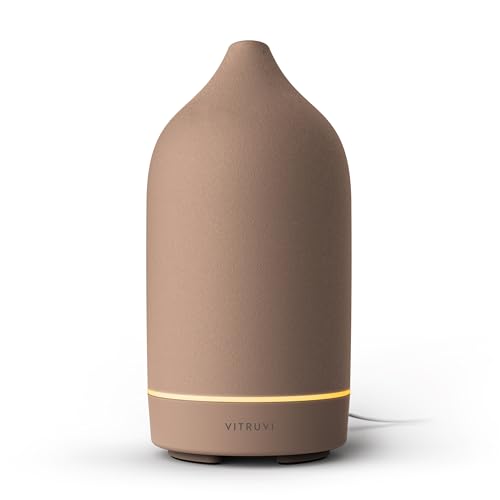
Whatever you decide, these are the picks we recommend across every category, ranked on verified output and value. Live price check on each.


As an Amazon Associate we earn from qualifying purchases, at no cost to you.
What you'll need
The six things that make a steam vaporizer or humidifier actually work for you: the medicated liquid and pads that turn steam into relief, the treatment and cleaning tools that keep the tank safe, and a meter so you know when the room is right. Prices are approximate at time of writing.





What vinegar does, and what it cannot do
Every humidifier that runs on tap water is slowly building a mineral record of that water. In an evaporative unit the minerals load into the wick. In an ultrasonic unit they coat the transducer and blow into the room as white dust. In a warm-mist or steam unit they bake onto the hot surfaces as hard scale. Vinegar targets exactly that deposit, and it is the reason a descaling soak often restores output on a unit the owner had written off.
What vinegar does not do well is kill things. It has some antimicrobial activity, but it is not a registered disinfectant for this use, and it will not reliably clear the biofilm that establishes itself on wet plastic within days. This is why manufacturer instructions treat descaling and sanitizing as two steps: vinegar for the minerals, then a bleach solution, a peroxide solution or a proprietary product such as Venta humidifier cleaner at $24.99 (verified via the Amazon Creators API on September 5, 2026) for the organisms.
The ratio and the dwell time
Manuals vary by design, so yours has the final word, but the guidance makers publish clusters tightly. For the base or reservoir where scale is worst, the common instruction is undiluted white vinegar poured in to cover the scaled surfaces. For the tank, where the job is lighter, a one-to-one mix of white vinegar and water is the usual call, and some manuals give it as roughly a cup of vinegar per gallon of water for a full-tank soak. Dwell time is commonly twenty to thirty minutes, extended to an hour or more when deposits are thick and crusty.
| Part | Commonly published approach | Dwell |
|---|---|---|
| Base or reservoir | Undiluted white vinegar covering the scaled surfaces | 20 to 30 minutes, longer for heavy scale |
| Tank | Vinegar and water, commonly about one to one, or a cup per gallon | 20 to 30 minutes, swirled once or twice |
| Transducer disc (ultrasonic) | Vinegar on a cotton swab or soft cloth, no abrasives | A few minutes, then wipe |
| Electrodes (steam vaporizer) | Vinegar per the manual's procedure, soft brush only | Per manual, typically 20 minutes |
| Wick filter | Do not soak unless your manual explicitly allows it; replace instead | Not applicable |
Two practical notes. Warm vinegar works faster than cold, so if your manual permits it, using vinegar that has been sitting at room temperature rather than straight from a cold cupboard speeds the soak a little. And resist the temptation to scale up the strength: doubling the concentration does not halve the time, and unusually strong cleaning vinegar can attack seals and finishes that ordinary household vinegar leaves alone.
Which parts get the soak, and which never do
Soak these: the base or water reservoir, the tank, the tank cap and its gasket, any removable tray or nozzle, and the float if it lifts out. These are the parts that hold standing water, so they are the parts that scale.
Never soak these: anything with electronics or a motor in it, which on most units means the whole lower housing apart from the water chamber the manual identifies. A humidifier base that contains a fan or a control board is not a bowl, however much it looks like one, so follow the manual on exactly where liquid is allowed.
Treat these gently: the ultrasonic transducer, which is a precision surface that loses output permanently if scratched, and a steam vaporizer's electrodes, which should see a soft brush and nothing harder. Both benefit from vinegar; neither benefits from scouring.
Do not soak the wick. Evaporative filters in units such as the Honeywell Cool Moisture evaporative at $76.42 are consumables whose whole job is trapping minerals, and most manuals say replace rather than restore. A Honeywell Filter A 3-pack is $29.21 and a Vornado wick 2-pack is $12.99, so the economics rarely favor an experiment that can leave a vinegar smell in the airstream for days.
How often, and the hard-water adjustment
Weekly is the working answer for a unit in regular seasonal use, and it slots into the same session as the sanitizing step covered in our full guide to cleaning a humidifier. But scale accumulates with hours of operation and with the mineral content of your particular tap water, not with the calendar, so two households running identical machines can need very different intervals.
The honest diagnostic is output. If a humidifier that used to empty its tank overnight now has water left in the morning, if a steam vaporizer is slow to start or has stopped producing steam, if an ultrasonic plume looks thin, descaling is the first thing to try and it very often fixes it outright. Waiting until you can see crust is waiting too long, because performance falls off well before the deposit is visible.
You can also reduce the load upstream. Distilled or demineralized water in a cool-mist unit puts almost no minerals into the machine, so scale builds far more slowly; a Pure Life six-gallon case is $29.99. A Protec cleaning fish at $5.98 for roughly thirty days slows accumulation in the tank between cleans. Neither removes the need to descale; both stretch the interval. And note the exception that catches people out: an electrode steam vaporizer needs the minerals in tap water to work, so distilled water is the wrong move there, as explained in can you use tap water in a humidifier.
When vinegar is not enough
Three signals mean you have a biological problem rather than a mineral one, and vinegar is the wrong tool for all three.
A slimy film that comes back within days. That is biofilm, and it needs physical removal followed by the sanitizing solution your manual specifies. Descaling first is still useful, because scale gives biofilm texture to cling to, but the descale alone will not hold it off.
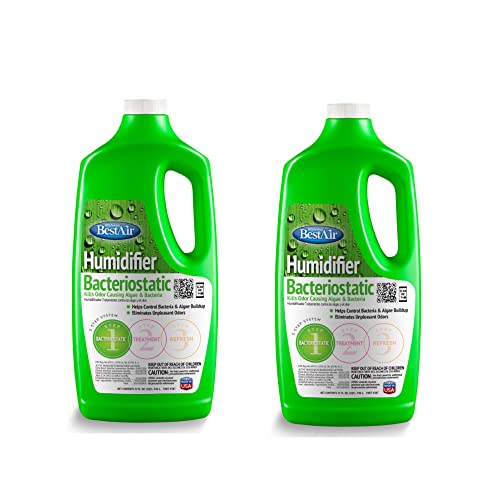
A pink or orange film. Commonly attributed to Serratia marcescens, a bacterium rather than a mold despite the nickname, it favors damp surfaces and reappears fast if the routine slips. Scrub it away, sanitize, and then fix the cause by emptying and drying daily; the full playbook is in pink film in a humidifier. Bacteriostatic treatments such as BestAir 3BT at $22.90 or Essick Air 1970-2 at $18.60 slow regrowth between cleanings, where the manual permits additives.
A smell that survives a full descale and sanitize. That usually means growth in a hose, under a gasket or in a chamber a brush cannot reach. At that point the machine is finished rather than dirty, and replacing a low-cost unit beats fighting it. Prices verified via the Amazon Creators API on September 5, 2026.
Finishing properly: rinse, dry, air out
The last third of this job is the part people rush, and it is why some owners conclude that vinegar cleaning smells terrible. Rinse every soaked part with fresh water repeatedly, not once, until you cannot smell vinegar on any surface. Residual acid in a tank does not harm anything, but it will announce itself in a warm bedroom as soon as the unit runs.
Then dry everything with a clean cloth and leave the parts apart to finish air-drying before reassembly. This matters more than it sounds: a machine that goes back together damp has just been handed the exact conditions the clean was meant to remove. If the unit will not be used for a while, store it dry and disassembled with the cap off.
Finally, run it for a few minutes with plain water in a room you do not mind before it returns to the bedside. That clears anything left in the outlet and confirms output has come back, which after a proper descale is often the most satisfying part. For the rest of the routine that surrounds this soak, including the sanitizing step and the daily habit that makes all of it easier, see how to clean a humidifier.
How to clean a humidifier with vinegar
- 1
Unplug, cool and disassemble
Unplug the unit and let any heated model cool fully. Separate the tank, cap, base and any removable tray or nozzle that the manual allows you to remove.
- 2
Empty and pre-rinse
Pour out all standing water from the tank and base, then rinse both with fresh water to clear loose debris before the vinegar goes in.
- 3
Add white vinegar
Pour undiluted white vinegar into the base to cover the scaled surfaces, and add a roughly one-to-one vinegar and water mix to the tank, or follow the ratio your manual specifies.
- 4
Let it sit twenty to thirty minutes
Leave the vinegar to work for twenty to thirty minutes, longer for thick deposits. Swirl the tank once or twice so the mix reaches the whole surface.
- 5
Brush the softened scale away
Work loosened deposits off with a soft brush or cloth. Use a cotton swab on an ultrasonic transducer and a soft brush on a steam unit's electrodes. Never use anything abrasive.
- 6
Rinse until no vinegar smell remains
Rinse every part repeatedly with fresh water. This step is mandatory before any sanitizing step, because vinegar must never meet bleach inside the tank.
- 7
Sanitize separately if the manual says to
Apply the disinfecting solution your manual specifies, such as a diluted bleach solution, hydrogen peroxide or a proprietary humidifier cleaner, then rinse again.
- 8
Dry, air out and test
Dry all parts with a clean cloth, leave them apart to finish air-drying, then reassemble and run the unit briefly on plain water before it returns to the bedroom.
Ready to buy? Start with our top picks
Whatever this guide steered you toward, here's where most readers land, ranked on verified output and value. Live price check on each.
As an Amazon Associate we earn from qualifying purchases, at no cost to you.
Key terms
- Descaling
- Dissolving the mineral deposits left behind by evaporating or boiling water. Vinegar's actual job here, and a separate task from killing anything living in the tank.
- Distilled white vinegar
- Ordinary household white vinegar, the strength sold for cooking. The right product for this job: cider vinegar leaves residue, and unusually strong cleaning vinegar can attack seals.
- Dwell time
- How long the vinegar sits before you scrub. Twenty to thirty minutes is the commonly published figure, extended for heavy scale. Longer soaking beats harder scrubbing every time.
- Sanitizing step
- The separate disinfecting pass, using whatever solution the manual names. It follows a complete rinse, never shares the tank with vinegar, and handles what descaling cannot.
- Biofilm
- The living layer that forms on wet surfaces within days. If a film returns quickly after a vinegar clean, the problem is biological and needs sanitizing plus daily drying, not more acid.
Questions, answered
What ratio of vinegar to water should I use in a humidifier?
Your manual has the final word, but published guidance clusters closely: undiluted white vinegar in the base or reservoir where scale is heaviest, and a roughly one-to-one vinegar and water mix in the tank, sometimes given as about a cup of vinegar per gallon of water. Dwell time is commonly twenty to thirty minutes, extended to an hour for thick deposits. Stronger is not better. Doubling the concentration does not halve the time, and unusually concentrated cleaning vinegar can damage gaskets and finishes that ordinary household vinegar leaves alone.
How long should I let vinegar sit in a humidifier?
Twenty to thirty minutes for routine weekly descaling, and up to an hour or more when the scale is thick and crusty. The scale softens as it dissolves, so the sign that the soak is done is that deposits lift with a soft brush instead of needing to be scraped. If they still resist after an hour, drain, refill with fresh vinegar and repeat rather than scrubbing harder, since scraping an ultrasonic transducer or a steam unit's electrodes causes permanent damage that no amount of cleaning reverses.
Does vinegar disinfect a humidifier?
Not reliably, and this is the most important limitation to understand. Vinegar is a mild acid that excels at dissolving mineral scale, but it is not a registered disinfectant for this application and it will not dependably clear the biofilm that forms on wet plastic within days. That is why manufacturer instructions treat descaling and sanitizing as two separate steps, with a diluted bleach solution, a hydrogen peroxide solution or a proprietary cleaner doing the disinfecting after the vinegar has been rinsed completely away.
Can I mix vinegar and bleach to clean a humidifier?
No. This is the one instruction on this page with no exception and no nuance. Mixing an acid such as vinegar with chlorine bleach releases chlorine gas, which is genuinely dangerous in a small bathroom or over a kitchen sink. If your manual calls for both, do them in sequence with a complete rinse in between: vinegar first for the scale, rinse until no vinegar remains anywhere in the tank or base, then the bleach solution at the dilution and dwell time your manual specifies, then rinse again thoroughly.
Can I soak the humidifier filter in vinegar?
Usually not, and most manuals say to replace rather than restore. A wick filter's job is to trap minerals, so it is a consumable by design, and a vinegar soak can leave a smell that the fan then pushes into the room for days. Some manuals do permit a rinse to clear loose debris, so check yours before assuming either way. Replacement filters are inexpensive enough that the experiment rarely pays: a Honeywell Filter A 3-pack is $29.21 and a Vornado wick 2-pack is $12.99, verified via the Amazon Creators API on September 5, 2026.
How often should I do a vinegar clean?
Weekly during a season of regular use, folded into the same session as the sanitizing step. Adjust for your water and your hours: hard-water households and units running around the clock need it more often, because scale builds with operating hours and mineral content rather than with the calendar. The practical trigger is output. If the tank is no longer emptying overnight, if a steam unit is slow to start, or if an ultrasonic plume looks thin, descale before assuming the machine is failing.
My humidifier still smells like vinegar. What went wrong?
The rinse was too short. Vinegar residue clings to plastic and to gasket surfaces, and a single rinse rarely clears it, especially in a base with recesses. Rinse repeatedly with fresh water until you genuinely cannot smell it on any part, dry everything with a clean cloth, leave the pieces apart to air out, then run the unit for a few minutes on plain water in a room you do not mind before it returns to the bedside. That last step also confirms output has recovered.
Can I use vinegar in a Vicks steam vaporizer?
Yes, and on an electrode steam unit it is the maintenance step that keeps the machine alive, because mineral scale on the electrodes progressively chokes steam output until the unit stops working. Follow your model's published procedure, use a soft brush rather than anything abrasive on the electrodes themselves, and rinse thoroughly before the next use. What you should not do is switch that unit to distilled water to avoid the problem, since electrode designs rely on the mineral content of tap water to conduct current at all.
Filed under Explainer
Part of Vaporizer 101
Keep reading
How to Clean a Humidifier
The full routine this soak belongs to: daily drying, weekly descale, sanitizing, filters and wicks.
Pink Mold in a Humidifier
The film vinegar cannot fix, what it actually is, and the sequence that clears it for good.
Can You Use Tap Water in a Humidifier?
The upstream decision that halves your descaling, plus the steam-vaporizer exception.
Best Humidifier Cleaners
Descalers, sanitizers and bacteriostatic treatments ranked, with live Amazon prices.