Our Pick: Vicks
Check price on Amazon →Pink Mold in a Humidifier: What It Is and How to Remove It
The pink or orange film in a humidifier tank is usually not mold at all. It is most commonly attributed to Serratia marcescens, a bacterium that lives happily on damp surfaces and shows up in showers, toilet tanks and any reservoir left wet between uses. That distinction matters, because it explains why the film wipes away easily, why it comes back within days, and why the fix is a sequence rather than a single scrub. Here is how to clear it and how to stop it returning.
By The Vapor Reviews DeskUpdated 2026-09-05~9 min read Ranked on verified output, never box claimsHow we research
Say the correction plainly first, because everything else follows from it: the pink film people find in a humidifier tank is commonly attributed to Serratia marcescens, which is a bacterium, not a mold. The nickname stuck because the color and the slick texture look like something fungal, and because the same organism produces the familiar pink ring in a shower or a toilet tank. Treating it as a bacterium rather than a mold is what makes the cleaning approach make sense.
The removal sequence is short. Empty and disassemble the unit, physically scrub the film off every surface it has colonized, descale with white vinegar to strip the mineral texture it was clinging to, then sanitize with whatever solution your manual specifies, rinse until nothing smells, and dry every part completely before reassembly. Scrubbing alone is not enough, because the film reestablishes from whatever remains in the crevices, and sanitizing alone is not enough either, because a disinfectant cannot reach through a layer it has to soak past.
The prevention is shorter still, and it is the half people skip. Empty the tank and the base every day, dry them, and leave them dry between uses. Pink film is a symptom of water standing in a warm room, so a machine that never holds idle water very rarely grows it. Everything else on this page, the treatments, the water choice, the weekly deep clean, is support for that one habit.
The short version
- The pink film is commonly Serratia marcescens, a bacterium, despite being universally called pink mold.
- It thrives on damp surfaces with something to feed on, which is why humidifier tanks, showers and toilet tanks all get it.
- Removal is a sequence: scrub the film off physically, descale with vinegar, sanitize per the manual, rinse, dry completely.
- Never mix bleach and vinegar in a tank. Descale, rinse fully, then sanitize as a separate step.
- Prevention is daily emptying and drying. Standing water in a warm room is the entire cause.
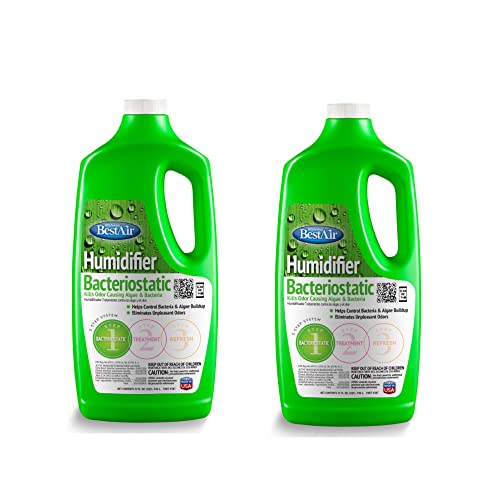
- Distilled water and bacteriostatic treatments such as BestAir 3BT ($22.90) or Essick Air 1970-2 ($18.60) slow regrowth; they do not replace the routine.
- If the film keeps returning from a place a brush cannot reach, the unit is finished rather than dirty.
Our top-rated vaporizers
Whatever you decide, these are the picks we recommend across every category, ranked on verified output and value. Live price check on each.


As an Amazon Associate we earn from qualifying purchases, at no cost to you.
What you'll need
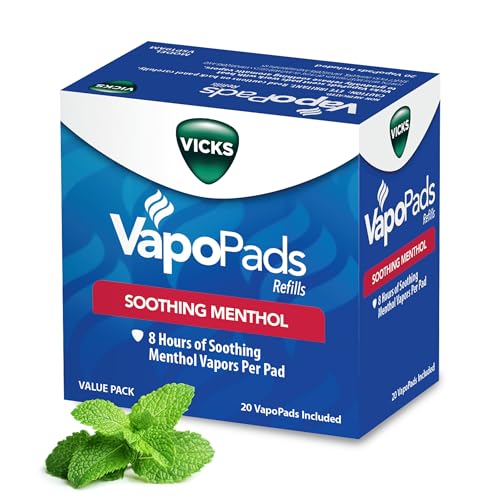
The six things that make a steam vaporizer or humidifier actually work for you: the medicated liquid and pads that turn steam into relief, the treatment and cleaning tools that keep the tank safe, and a meter so you know when the room is right. Prices are approximate at time of writing.




What the pink film actually is
Serratia marcescens is a common environmental bacterium that produces a reddish-pink pigment and colonizes damp surfaces with a nutrient source. It is the same organism generally blamed for the pink ring around a shower drain, the film inside a pet water bowl and the stain in a toilet tank, and a humidifier reservoir gives it everything it wants: water that sits still, room-temperature warmth and plastic surfaces that develop microscopic texture over time.
Calling it mold is understandable and not useful. Molds are fungi, they grow visible structures, and they generally need longer to establish. This film appears fast, sometimes within days of a tank being left full, and it wipes off leaving a clean-looking surface behind, which is exactly why people think they have solved it and are surprised when it returns by the weekend. What returned was not a new arrival; it was the population that survived in a gasket groove or under the cap thread.
On the health question, we stay in our lane. Vapor Reviews is a research and verification desk, not a medical authority, and we do not make health claims. The sensible position is the one every humidifier manual already takes: you do not want to aerosolize whatever is growing in a tank into a bedroom, so keep the tank clean and dry. If you have specific health concerns, particularly for an infant, an older adult or anyone with a compromised immune system or a lung condition, that is a question for a clinician rather than a review site.
Why it forms in a humidifier specifically
Three conditions have to line up, and a neglected humidifier supplies all three. Standing water is the first, and it is the one people underestimate: a tank topped off rather than emptied has held the same base water for days. Warmth is the second, which is why the problem is worse in a heated bedroom in winter, exactly when the humidifier is running. Surface texture is the third, and this is where mineral scale does its quiet damage, because a scaled tank wall gives a film far more to hold onto than smooth plastic does.
Design matters at the margins. Cool-mist ultrasonic units are the most exposed, because nothing inside them ever gets hot and the mechanism is built to aerosolize the contents of the reservoir. Evaporative units keep a permanently damp wick, which is its own habitat and one reason wicks are consumables. Warm-mist and steam vaporizers boil or heat their water, which helps in the tank, but the fill cap, the gasket and any cool reservoir still qualify as damp plastic.
Two habits reliably produce the film. The first is topping off yesterday's water instead of emptying it. The second is storing the unit assembled and damp between seasons, which turns a sealed tank into an incubator for months. Both are covered in the wider routine in how to clean a humidifier.
The removal sequence, in order
Order matters here more than product choice. Doing these steps out of sequence is the usual reason the film returns within a week.
| Step | What it does | Why it cannot be skipped |
|---|---|---|
| 1. Disassemble and empty | Exposes gaskets, caps, trays and the base | The film survives in the parts you did not open |
| 2. Scrub physically | Removes the visible film and its foothold | Disinfectant cannot penetrate a layer it must soak through |
| 3. Descale with white vinegar | Strips the mineral texture the film clings to | Scale is the surface that lets it reestablish fast |
| 4. Rinse completely | Clears all vinegar before any sanitizer | Vinegar and bleach together release chlorine gas |
| 5. Sanitize per the manual | Kills what the scrub left behind | The scrub is mechanical, not microbial |
| 6. Rinse and dry fully | Removes residue and denies moisture | A damp reassembly restarts the clock immediately |
For the scrub, use a soft brush and get into every thread, groove and gasket seat, especially the tank cap, which is the single most commonly missed part. For the descale, plain white vinegar at the ratio your manual specifies, with the method laid out in our vinegar cleaning guide. For the sanitizing step, use what your manual names: many specify a diluted household bleach solution, some specify hydrogen peroxide, and some specify a proprietary product such as Venta humidifier cleaner at $24.99 (verified via the Amazon Creators API on September 5, 2026). Never combine two of them.
Where it hides after you think you have won
The film reappearing three days after a thorough clean almost always means one of a short list of parts was not actually cleaned. The tank cap and its rubber gasket are first on that list by a wide margin: the threads hold water, the gasket seat is a perfect crevice, and the cap gets rinsed rather than scrubbed. The float or water-level sensor is second, since it is often a small assembly with a shaft that traps moisture.
After that: the base recesses around a transducer or heating element, which are shaped to hold a film of water that never fully drains; the mist nozzle or outlet, especially any part that swivels; tubing or a wick tray on evaporative and console units; and the underside of a top-fill lid, which is permanently splashed and almost never wiped. Any wick or filter that was in place during an outbreak should simply be replaced, since a colonized wick will reseed the machine no matter how well you clean everything around it.
If, after opening and cleaning every part the manual allows and replacing the filter, the pink film still returns within a week, the honest conclusion is that it is living somewhere the design does not let you reach. At that point the unit is finished rather than dirty. Replacing a low-cost humidifier is faster, cheaper and more certain than continuing to fight one, and our bedroom humidifier rankings weigh how easy each unit is to take apart and dry.
Prevention: the routine that actually holds
Empty and dry every day. Unplug, pour out the tank and the base, rinse, wipe dry, and leave the parts apart with the cap off until the next use. This one habit does more than every product in this section combined, because it removes the standing water the organism needs. Never top off yesterday's water.
Use distilled or demineralized water in a cool-mist unit. It will not sterilize anything, but it puts far fewer minerals into the tank, so scale builds slowly and the film has less texture to grip. A Pure Life six-gallon case is $29.99. The exception, as always, is an electrode steam vaporizer, which needs the minerals in tap water to run.
Use a treatment where the manual allows it. Bacteriostatic products such as BestAir 3BT at $22.90 for two 32 oz bottles or Essick Air 1970-2 at $18.60 slow microbial growth in tank water, and a Protec cleaning fish at $5.98 slows scale for about thirty days. Check the manual first, since some makers prohibit tank additives and using one can void a warranty. More options are ranked in best humidifier cleaners.
Do not overshoot the room. Holding a bedroom above the commonly cited 30 to 50 percent EPA range does not help anyone and it starts growing things on window frames and behind furniture instead. A Govee H5075 hygrometer at $11.69 settles the question for the price of a sandwich; the targets are in ideal bedroom humidity. And store it dry. At the end of a season, deep clean, dry every part fully, and store the unit disassembled with the cap off.
How to remove pink film from a humidifier
- 1
Unplug and take it apart
Unplug the unit, let any heated model cool, and separate the tank, cap, gasket, base, tray, float and nozzle as far as the manual allows.
- 2
Empty and discard the filter
Pour out all water. If the unit uses a wick or filter, replace it rather than cleaning it, since a colonized wick will reseed the machine.
- 3
Scrub the film off physically
Use a soft brush and work every surface, paying particular attention to cap threads, the gasket seat, the float shaft and base recesses. Mechanical removal comes before any chemical.
- 4
Descale with white vinegar
Add white vinegar at the ratio your manual specifies and let it sit twenty to thirty minutes to strip the mineral scale that gives the film its foothold, then brush again.
- 5
Rinse completely
Rinse every part until no vinegar remains. This step is mandatory: vinegar must never meet a bleach-based sanitizer inside the tank.
- 6
Sanitize per the manual
Apply the disinfecting solution your manual names, such as a diluted bleach solution, hydrogen peroxide or a proprietary humidifier cleaner, for the stated dwell time.
- 7
Rinse again and dry every part
Rinse until nothing smells of vinegar or bleach, dry each piece with a clean cloth, and leave everything apart to air-dry fully before reassembling.
- 8
Restart the daily habit
From the next fill onward, empty, rinse and dry the tank and base every day and never top off standing water. This is what keeps the film from coming back.
Ready to buy? Start with our top picks
Whatever this guide steered you toward, here's where most readers land, ranked on verified output and value. Live price check on each.
As an Amazon Associate we earn from qualifying purchases, at no cost to you.
Key terms
- Serratia marcescens
- The bacterium commonly held responsible for pink and orange films on damp surfaces, including humidifier tanks, showers and toilet tanks. A bacterium, not a mold, despite the popular name.
- Biofilm
- A community of microorganisms bound to a wet surface. It resists rinsing, which is why physical scrubbing has to come before any disinfectant can do its job.
- Bacteriostatic treatment
- A tank additive such as BestAir 3BT or Essick Air 1970 that slows microbial growth between cleanings. Useful support, never a replacement for emptying and drying.
- Sanitizing step
- The disinfecting pass with the solution your manual specifies, done after descaling and a complete rinse. Bleach and vinegar must never share a tank.
- Dry storage
- Ending a season by deep cleaning, drying every part and storing the unit disassembled with the cap off. A sealed damp tank in a closet is how an outbreak survives to next winter.
Questions, answered
Is pink mold in a humidifier actually mold?
Usually not. The pink or orange film is most commonly attributed to Serratia marcescens, a bacterium that produces a reddish pigment and colonizes damp surfaces, which is why the same film shows up around shower drains and in toilet tanks. Molds are fungi and generally look and behave differently. The distinction is practical rather than pedantic: this is a fast-establishing bacterium exploiting standing water, so the answer is a scrub, descale and sanitize sequence plus daily drying, not a hunt for a stronger antifungal product.
Is it dangerous to breathe air from a humidifier with pink film in it?
We are a research and verification desk, not a medical authority, so we will not make a health claim in either direction. What every manufacturer and public safety notice agrees on is the sensible operating position: you do not want to aerosolize whatever is growing in a tank into a room where people sleep, which is exactly why the manuals insist on daily emptying and regular cleaning. Stop using the unit until it is properly cleaned, and take any specific concern, especially for infants, older adults or anyone with a lung condition or compromised immune system, to a clinician.
How do I get rid of pink film for good?
Run the full sequence rather than any single step. Disassemble and empty the unit, replace any wick or filter, scrub every surface physically with a soft brush including cap threads and gasket seats, descale with white vinegar to remove the mineral texture the film grips, rinse completely, sanitize with the solution your manual specifies, rinse again and dry every part before reassembly. Then change the habit that caused it: empty, rinse and dry the tank and base daily, and never top off water that has been sitting.
Does bleach kill pink mold in a humidifier?
A diluted bleach solution is the sanitizing step many manufacturers specify, and where your manual calls for it, it does that job well. Two conditions apply. It has to come after the physical scrub, because a disinfectant cannot reach through a film it must soak past, and it has to come after a complete rinse of any vinegar, since acid plus chlorine bleach releases chlorine gas. Follow your manual's dilution and dwell time, rinse thoroughly afterward, and dry everything before the unit goes back together.
Why does the pink film keep coming back after I clean it?
Almost always because one part was rinsed instead of scrubbed. The tank cap and its gasket are the usual culprits, followed by the float or level sensor, base recesses around the transducer or heating element, the mist nozzle, and the underside of a top-fill lid. Any wick that was in place during the outbreak should be replaced rather than cleaned. If the film still returns within a week after opening and cleaning every part the manual allows, it is living somewhere the design will not let you reach and the unit is finished rather than dirty.
Will distilled water stop pink film forming?
It helps and it does not solve it. Distilled water carries almost no minerals, so scale builds far more slowly and the tank walls stay smooth, which denies the film the rough surface it prefers. But distilled water standing in a warm tank still supports growth, so the daily empty-and-dry stays exactly as important. A six-gallon Pure Life case runs $29.99, verified via the Amazon Creators API on September 5, 2026. Note the exception: electrode steam vaporizers need the minerals in tap water to conduct current and should not be switched to distilled.
Do humidifier treatments prevent pink film?
Bacteriostatic treatments such as BestAir 3BT at $22.90 or Essick Air 1970-2 at $18.60 slow microbial growth in tank water, which genuinely lengthens the interval between outbreaks. What they cannot do is touch a film already attached to a gasket or thread, and they do nothing about the standing water that caused the problem. Treat them as insurance on top of the routine, not as the routine. Check your manual before adding anything, because some manufacturers prohibit tank additives outright and using one can void the warranty.
Should I throw the humidifier out?
Only after one honest attempt at a complete clean, and then yes if it fails. The test is simple: fully disassemble, replace the filter, scrub, descale, sanitize, rinse, dry, and then keep up the daily empty-and-dry. If the pink film or a persistent smell returns within a week under that regime, the growth is in a place the design does not open, and no further cleaning will reach it. Given that a Vicks V150 is $19.79 and a Levoit 2.5 L top fill is $29.79, replacement usually beats a long fight.
Filed under Explainer
Part of Vaporizer 101
Keep reading
How to Clean a Humidifier
The daily and weekly routine that keeps films from forming in the first place, by unit type.
How to Clean a Humidifier With Vinegar
The descaling step in this sequence: ratios, dwell times, and what vinegar cannot do.
Can You Use Tap Water in a Humidifier?
Why distilled water slows scale, and the one unit type that needs tap water to run.
Best Humidifier Cleaners
Descalers, sanitizers and bacteriostatic treatments ranked, with live Amazon prices.