Our Pick: Vicks
Check price on Amazon →Vaporizer vs Nebulizer: Two Very Different Machines
A nebulizer is a medical device that turns prescribed liquid medication into an aerosol fine enough to be inhaled into the lungs, obtained and used under a clinician's direction. A vaporizer is a household appliance that puts water vapor into a room to make dry air more comfortable. They are not competing products and one is never a substitute for the other. Here is the distinction in full, why the mix-up is dangerous rather than merely confusing, and what a vaporizer or steam inhaler can legitimately do while you are waiting on care.
By The Vapor Reviews DeskUpdated 2026-09-05~8 min read Ranked on verified output, never box claimsHow we research
The short answer is that these are not two options on a shelf. A nebulizer is a medical device: it converts a prescribed liquid medication into a fine aerosol that a person breathes in through a mouthpiece or mask, and it exists so that a specific drug reaches the airways. It is prescribed, the medication that goes in it is prescribed, and both the device and the dose come from a clinician. A vaporizer is a household appliance that boils or evaporates plain water to raise the humidity of a room, sold in a drugstore next to the tissues, with no drug involved at any point.
We are writing this page because the search term exists and the confusion is genuinely hazardous in one direction. Someone whose child has been prescribed nebulizer treatments and who reads a comparison implying that a $19.79 vaporizer is the cheaper equivalent has been badly misled. There is no version of a room humidifier that delivers medication to the lungs, and no additive you can buy for one that changes that. If a clinician has prescribed nebulizer treatments, the vaporizer aisle is not an alternative path.
The reverse mix-up is harmless but wasteful: people who simply have a dry bedroom sometimes think they need a nebulizer, when what they want costs twenty dollars and sits on a nightstand. This page sorts out which is which, states plainly what a vaporizer can and cannot do, and points to the drug-free comfort options that are legitimate to buy without a prescription.
The short version
- A nebulizer is a medical device for delivering prescribed medication to the airways as an inhaled aerosol. The device and the medication both come through a clinician.
- A vaporizer or humidifier is a household appliance that adds water vapor to a room. No medication is involved, and none can be added to make one work like a nebulizer.
- Never substitute one for the other. If nebulizer treatments have been prescribed, a humidifier is not a cheaper version of them.
- Nothing you can buy for a humidifier turns it into a medication delivery device. VapoSteam and VapoPads are aromatic comfort products, not inhaled drugs delivered to the lungs.
- What a vaporizer legitimately does: raises room humidity toward the 30 to 50 percent band, which makes dryness, a raw throat and congestion more comfortable.
- The drug-free option for targeted comfort is a personal steam inhaler, such as the Vicks Sinus Inhaler at $42.98, used in short sessions.
- Breathing difficulty, wheezing, a barking cough, or a cough in an infant are reasons to seek care, not reasons to shop.
Our top-rated vaporizers
Whatever you decide, these are the picks we recommend across every category, ranked on verified output and value. Live price check on each.


As an Amazon Associate we earn from qualifying purchases, at no cost to you.
What you'll need
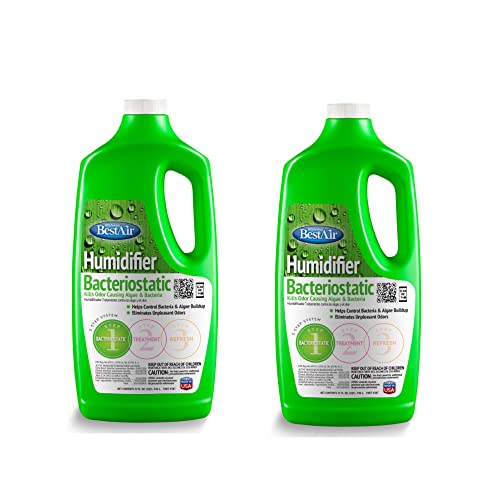
The six things that make a steam vaporizer or humidifier actually work for you: the medicated liquid and pads that turn steam into relief, the treatment and cleaning tools that keep the tank safe, and a meter so you know when the room is right. Prices are approximate at time of writing.




What a nebulizer is, and why we do not review them
A nebulizer takes a liquid medication and breaks it into an aerosol of droplets small enough to be carried into the airways on a breath, delivered through a mouthpiece or a face mask over several minutes. The technology varies, jet nebulizers driven by a compressor, ultrasonic units, and mesh nebulizers among them, but the purpose does not: it is a delivery route for a drug. The medication is prescribed, the dose is prescribed, and the schedule is prescribed. In the United States the devices themselves are regulated medical devices, and the medications used in them are prescription products.
That is why you will not find nebulizer reviews on this site, and why we will not give you a recommendation for one. It would be outside our competence and outside the boundary of what a consumer review desk should be doing. Which nebulizer, which medication, which mask size and how often are questions for the clinician who prescribed the treatment and the pharmacist who fills it, not for a product roundup.
What a vaporizer is, and what it can actually do
A vaporizer is a household appliance whose entire function is putting water vapor into the air of a room. The steam type boils water between two electrodes and vents steam; warm-mist units heat water and cool the vapor before release; cool-mist units either atomize water ultrasonically or evaporate it off a wet wick with a fan. The mechanisms are described in full in how a vaporizer works, and the category distinctions in vaporizer vs humidifier.
What that does for a person is environmental and modest. Air below about 30 percent relative humidity actively pulls moisture from the nose and throat over a night of sleep, which makes a cold's raw throat and a stuffed nose considerably more miserable. Raising a bedroom into the 30 to 50 percent range the EPA commonly cites removes that additional irritation. It is a genuine comfort improvement and it is not treatment: added humidity does not act on an infection, does not open constricted airways, and there is no good evidence it shortens a cold. We work through the boundary carefully in is a vaporizer good for a cough.
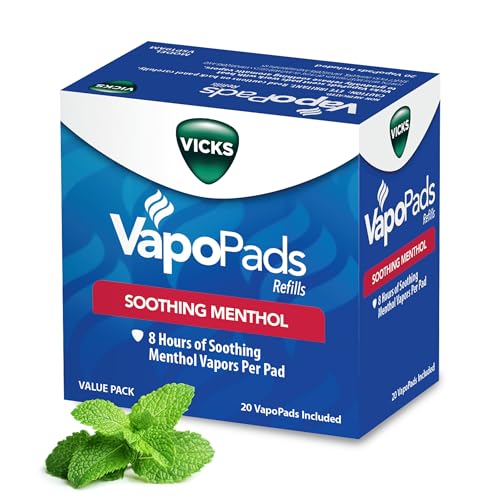
Nothing you add changes that. Vicks VapoSteam at $9.98 in a medicine cup and VapoPads at $14.97 for twenty in a pad slot are aromatic products that produce a strong sensation of clearer breathing. They are used according to their own labels, and they are not a drug being delivered to the lungs by a device. Where each product may go, and what damages a machine, is covered in can you put Vicks in a humidifier. Prices verified via the Amazon Creators API on September 5, 2026.
Side by side
| Nebulizer | Vaporizer or humidifier | |
|---|---|---|
| What it is | A medical device for delivering medication | A household appliance for room humidity |
| What goes in it | Prescribed liquid medication | Water, plus an aromatic product only where the design provides a cup, pad slot or oil tray |
| Where it is aimed | The user's airways, through a mouthpiece or mask | The air of the whole room |
| How you get one | Through a clinician and a pharmacy | Off a shelf or from Amazon |
| Who decides how it is used | The prescribing clinician | You, following the manual |
| Purpose | Treatment, as directed | Comfort: reducing the irritation of dry air |
| Session length | As prescribed | Hours, typically overnight |
| Can it replace the other? | No | No |
Read the last row as the whole page. The two machines share a superficial visual, a plume of something coming out of a device, and share nothing else: not the contents, not the target, not the purpose, and not the decision-making authority over how they are used.
Where a steam inhaler fits, and where it does not
A personal steam inhaler is the product people are often circling when they end up on this comparison. It is a small unit that boils a modest volume of water and concentrates the vapor at your nose and mouth through a mask for a short session, typically five to fifteen minutes. The Vicks Sinus Inhaler at $42.98 has a face mask and a VapoPad slot, the Vicks Personal Steam Inhaler V1200 at $49.99 adds variable steam control, the Beurer SI30 is $39.99, and the cordless Mypurmist Free is $179.95. Prices verified via the Amazon Creators API on September 5, 2026, and our ranking is at best steam inhalers.
Understand exactly what that is: a drug-free comfort device. It puts warm water vapor where you can feel it, which many people find makes congestion more bearable for a while. Steam inhalation is a long-standing comfort measure and it is not established to shorten or cure a cold. It is not a nebulizer with a different name, it does not deliver medication, and it is not a substitute for a prescribed treatment.
Two cautions. The scald risk is higher than with a room unit because your face is close to a source of hot water and steam; follow the manual, and do not leave a young child to use one unattended. And do not improvise: putting anything other than what the manual specifies into a steam inhaler is not a way to make it act on your airways, it is a way to ruin the device and possibly to inhale something that was never intended to be inhaled.
When the answer is a phone call, not a purchase
This is the section that matters most on this page. Seek medical care rather than shopping if there is:
- Any difficulty breathing: fast or labored breathing, visible effort, the skin pulling in between or below the ribs, wheezing or noisy breathing at rest, or a bluish tinge to the lips. This is urgent.
- A harsh, barking or seal-like cough, particularly in a young child and particularly at night.
- A cough or breathing difficulty in a young infant, especially with feeding problems or fewer wet diapers.
- A known lung condition such as asthma or COPD with symptoms that are not responding to the plan you have been given.
- A prescribed nebulizer treatment you cannot access, for cost, supply or any other reason. Say so to your clinician or pharmacist; there are usually options, and none of them is a humidifier.
If a humidifier is what you actually need
Plenty of people arrive at this comparison with a straightforward dry-air problem and no medical question at all. If that is you, the decision is easy and cheap. Measure the room first with a Govee H5075 hygrometer at $11.69; if it reads below 30 percent relative humidity, a humidifier has a real job to do, and if it reads 30 to 50 percent it does not. The targets are in ideal humidity for a bedroom.
From there: an adult who wants medicated vapor during a cold buys the Vicks Warm Steam Vaporizer V150 at $19.79 for its medicine cup. Anyone with a child in the room buys cool mist instead, per American Academy of Pediatrics guidance, because steam and warm-mist units hold hot water and can scald: the Frida Baby 3-in-1 at $43.49 is the nursery shape. Someone facing a whole dry winter buys a humidistat unit such as the Levoit LV600S at $109.00 so the room holds a target rather than running blind.
Whichever you buy, clean it. A neglected tank is the one way a humidifier can actively make an airway worse, and the routine is short: empty and dry daily, descale weekly. That is covered in how to clean a vaporizer, and the full decision tree by problem is in how to choose a vaporizer. Prices verified via the Amazon Creators API on September 5, 2026.
Ready to buy? Start with our top picks
Whatever this guide steered you toward, here's where most readers land, ranked on verified output and value. Live price check on each.
As an Amazon Associate we earn from qualifying purchases, at no cost to you.
Key terms
- Nebulizer
- A medical device that converts prescribed liquid medication into an inhalable aerosol delivered through a mouthpiece or mask. The device and the medication are obtained through a clinician, and how it is used is directed by that clinician.
- Vaporizer (household)
- An appliance that boils or evaporates plain water to raise the humidity of a room. No medication is involved, its target is the room rather than a person's airways, and its benefit is comfort rather than treatment.
- Steam inhaler
- A drug-free comfort device that concentrates warm water vapor at the nose and mouth through a mask for a short session, typically five to fifteen minutes. It delivers no medication and is not a substitute for a prescribed treatment.
- Aerosol
- A suspension of fine droplets in air. Nebulizers are engineered to produce droplets in a size range intended to reach the airways with a drug; a humidifier's output is water vapor and mist aimed at a room, not a person.
- Comfort measure
- An intervention that makes symptoms easier to live with without acting on their cause. Room humidity and steam are comfort measures for the irritation of dry air; a prescribed medication is not, which is the entire distinction on this page.
Questions, answered
What is the difference between a vaporizer and a nebulizer?
A nebulizer is a medical device that turns prescribed liquid medication into a fine aerosol a person breathes into their airways through a mouthpiece or mask. Both the device and the medication come through a clinician, and how it is used is directed by that clinician. A vaporizer is a household appliance that boils or evaporates plain water to raise the humidity of a room, sold over the counter, with no drug involved at any stage. One delivers medication to a person; the other adds moisture to a room. They share a superficial visual and nothing else.
Can I use a vaporizer instead of a nebulizer?
No. If a clinician has prescribed nebulizer treatments, a humidifier or vaporizer is not a cheaper or over-the-counter version of them, and treating it as one means going without the prescribed treatment. There is no household humidifier that delivers medication to the airways and no additive sold for one that changes that. If cost, supply or access is the reason you are asking, raise it with your clinician or pharmacist, because there are usually options and none of them involves the humidifier aisle.
Can I put medication in a humidifier or vaporizer?
No. The only things that legitimately go into these machines are water and, where the design provides a specific compartment, the aromatic product made for that compartment: a medicated inhalant such as VapoSteam in a steam vaporizer's medicine cup, scent pads in a pad slot, or essential oil in a dedicated oil tray. Prescription medication is never among them. Putting a medication into a humidifier does not deliver it to your airways in any controlled way, and it will contaminate and can damage the machine. Follow every product's own label.
Is a steam inhaler the same as a nebulizer?
No. A steam inhaler is a drug-free comfort device: it boils plain water and concentrates warm vapor at your nose and mouth for a short session, typically five to fifteen minutes, and it delivers no medication. Options include the Vicks Sinus Inhaler at $42.98, the Vicks V1200 at $49.99, the Beurer SI30 at $39.99 and the cordless Mypurmist Free at $179.95 (prices verified via the Amazon Creators API on September 5, 2026). Steam inhalation is a long-standing comfort measure for congestion that is not established to shorten a cold, and it is not a substitute for a prescribed treatment.
Which is better for a child's cough, a vaporizer or a nebulizer?
That is not a comparison to make on a shopping site, because a nebulizer is only in the picture if a clinician has prescribed one, in which case you follow that prescription. Separately from any prescribed treatment, a cool-mist humidifier can make a dry room more comfortable for a child, and the American Academy of Pediatrics recommends cool-mist rather than steam or warm-mist units in children's rooms because hot water can scald. A barking cough, any difficulty breathing, or a cough in a young infant are reasons to contact a clinician rather than to buy an appliance.
Do nebulizers and humidifiers use the same technology?
Some nebulizers use ultrasonic or mesh atomization, and ultrasonic humidifiers also atomize liquid, so there is a family resemblance in the physics. What differs is everything that matters: nebulizers are engineered to produce droplets in a size range intended to carry a specific drug into a person's airways over a controlled session, and they are regulated as medical devices. A humidifier is engineered to move a lot of plain water into a room over hours. Shared physics does not make one a version of the other, any more than a garden hose is a version of an intravenous line.
What can a vaporizer legitimately help with?
The discomfort of dry air. Below about 30 percent relative humidity the air pulls moisture from your nose and throat over a night of sleep, which makes a raw throat, a stuffed nose and a dry cough considerably more miserable. Raising a bedroom into the 30 to 50 percent range the EPA commonly cites removes that added irritation, which is a real and worthwhile comfort benefit. Medicated inhalants used in a medicine cup add a strong sensation of clearer breathing. None of it treats an illness, opens constricted airways or shortens a cold.
When should I stop researching devices and call someone?
Immediately, if there is any difficulty breathing: fast or labored breathing, visible effort, the skin pulling in around the ribs, wheezing or noisy breathing at rest, or a bluish tinge to the lips. Also for a harsh barking or seal-like cough, especially in a young child at night; any cough or breathing difficulty in a young infant; symptoms of a known lung condition that are not responding to your plan; and any situation where a prescribed treatment is not accessible to you. Nothing on this site diagnoses, treats, prevents or cures anything.
Filed under Explainer
Part of Vaporizer 101 · Head-to-Head Comparisons
Keep reading
Is a Vaporizer Good for a Cough?
What humidity and steam actually do for a cough, what they do not, and the symptoms that mean calling a clinician.
Vaporizer vs Humidifier
If a room appliance is what you need, this is the category question: hot steam versus mist that is never hot.
How to Choose a Vaporizer
Route by the problem: cold, nursery, dry bedroom, sinuses, skin or scent, with the unit to buy for each.
Can You Put Vicks in a Humidifier?
The complete what-goes-where: medicine cups, pad slots, oil trays, and the things that belong in no tank at all.