Our Pick: Vicks
Check price on Amazon →How to Use Vicks VapoRub: The Label, Step by Step
VapoRub has directions printed on the jar, and almost every question people ask about it is answered there: rub it on the chest and throat, cover with warm loose clothing, repeat up to three times daily per the label. This guide walks that routine step by step, covers the version to use for a child aged two and over, explains what to do for a baby under two, and is blunt about the four things you must never do with it. Prices verified live via the Amazon Creators API on September 5, 2026.
By The Steam & Humidity Desk2026-09-05~9 min read Ranked on verified output, never box claimsHow we research
The short version, straight from the label: rub a layer of VapoRub on the chest and throat, cover with warm, dry clothing kept loose so the vapors can reach the nose and mouth, and repeat up to three times daily per the label. It is for external use only. Do not heat it, do not put it in a humidifier or vaporizer tank, do not swallow it, and keep it away from the eyes. The original ointment is not for children under 2, which is the single most important line on the jar.
Everything else on this page is detail around that routine, and it exists because VapoRub is applied in the dark, by tired people, to people who feel awful, which is exactly the situation in which improvisation happens. The improvisations are predictable: warming the jar to make it work harder, spooning it into a humidifier tank, using the adult jar on a toddler because it was the one within reach. Each of those crosses a line the label draws, and each is avoidable in about ten seconds of reading.
One framing note before the steps. VapoRub is an over-the-counter topical ointment whose label states its uses as a cough suppressant and a topical analgesic. It does not shorten a cold and it does not treat an infection. What it offers is comfort, which is worth having. We are a research and verification desk, not a clinic: nothing here is medical advice, every safety statement below is drawn from the product's own label rather than invented by us, and persistent, severe or worsening symptoms are a reason to speak to a clinician rather than to reach for a jar.
The short version
- The routine: thin layer on the chest and throat, warm dry clothing kept loose over it, up to three times daily per the label. External use only.
- Never heat it, never put it in a humidifier or vaporizer tank, never ingest it, and keep it out of the eyes and nostrils.
- The original jar is not for children under 2 per the label. Children's VapoRub at $7.47 covers ages 2 and up; BabyRub at $7.47 is non-medicated and labeled from 3 months.
- If you want medicated vapor in the room rather than ointment on skin, use VapoSteam at $9.98 in a steam vaporizer with a medicine cup, never a rub in a tank.
- Stop and see a clinician if a cough lasts more than a week, keeps coming back, or comes with fever, rash or headache, and if a rub irritates the skin.
Our top-rated vaporizers
Whatever you decide, these are the picks we recommend across every category, ranked on verified output and value. Live price check on each.


As an Amazon Associate we earn from qualifying purchases, at no cost to you.
What you'll need
The six things that make a steam vaporizer or humidifier actually work for you: the medicated liquid and pads that turn steam into relief, the treatment and cleaning tools that keep the tank safe, and a meter so you know when the room is right. Prices are approximate at time of writing.




Before you open the jar: which Vicks product are you holding?
Half the mistakes in this category are made before anything is applied, because Vicks sells five adjacent products with similar packaging and very different labels. Sort this out first. Vicks VapoRub at $22.41 is the medicated ointment for external use, not for children under 2. Children's VapoRub at $7.47 is the formulation labeled for ages 2 and up. Vicks BabyRub at $7.47 is non-medicated, with aloe, eucalyptus, lavender and rosemary, labeled for ages 3 months and up. All three prices were verified live via the Amazon Creators API on September 5, 2026.
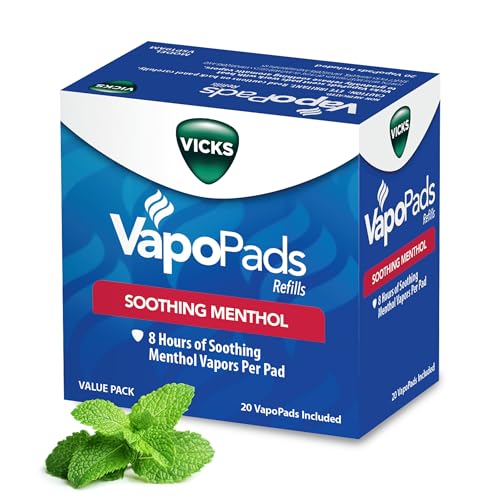
Two more are not rubs at all and must never be confused with one. VapoSteam at $9.98 is a medicated liquid for the medicine cup of a steam vaporizer. VapoPads at $14.97 for 20 are scent pads for units with a pad slot. Neither goes on skin, and neither is a substitute for the other.
Step one: the chest and throat rub
The core application is simple and worth doing deliberately. Wash and dry your hands. Scoop a small amount and warm it briefly between your fingertips, which is the only warming that is ever appropriate here. Spread it over the chest and throat in an even layer, following the amount your jar's directions specify. Keep it on intact skin, away from the eyes, out of the nostrils, and off any area that is broken, raw or already irritated.
The label's own instruction is to cover the area with warm, dry clothing after applying, and the part everyone skips is the next clause: keep the clothing loose. The point of the covering is not to seal the ointment against the skin but to hold a pocket of warm air where the vapors can rise toward the nose and mouth. Tight clothing defeats the mechanism and makes a mess of a shirt for nothing.
The label also covers a second use, as a topical analgesic on muscles and joints, which is a different application from the cough one and follows the same external-use rules. Whichever use you are after, wash your hands afterward, particularly before touching your own face or a child's.
Step two: how often, and when to stop
The label frequency is up to three times daily. That is the manufacturer's stated ceiling, and it is not a number to round up because a night is going badly. Applying more often does not increase the comfort effect in any way the label recognizes; it increases residue on bedding and the chance of skin irritation, and it burns through a $22.41 jar at speed.
Stop using it and consider a clinician if the skin under the application becomes red, itchy or sore, if a cough lasts more than about a week or keeps coming back, or if it arrives alongside fever, rash or persistent headache. Those are not review-site judgments, they are the standard cautions printed on this class of product, and they matter more than any purchasing advice on this site.
Children: the age lines, exactly as the labels state them
This is the section to get right, and the only correct source is the label. The original VapoRub label states that it is not for children under 2. Children's VapoRub at $7.47 is the version labeled for ages 2 and up, and it is the jar to keep in a house with school-age children. Follow the directions on that jar rather than the adult one.
Under two, the Vicks product with its own younger label is BabyRub, which is non-medicated and labeled for 3 months and up. Non-medicated is a meaningful distinction: it makes no active drug claim, so treat it as a soothing bedtime massage ointment rather than as a smaller VapoRub. Our full write-up is the Vicks BabyRub review. If you are unsure about a specific child, a pediatrician is the right person to ask, not a search result.
For a young child, the higher-leverage change is usually the room rather than the rub. The American Academy of Pediatrics recommends cool-mist humidifiers in children's rooms because warm-mist and steam units carry a scald risk, and any humidifier that is not cleaned will grow mold and bacteria. The picks are in the best humidifier for a baby.
The four things you must never do
Never heat it. Not in a microwave, not in a pan, not floated in a mug of boiling water, not set on a radiator. It is an ointment formulated for application at skin temperature. Heating it produces a splatter and burn risk and no benefit the label recognizes.
Never put it in a humidifier or vaporizer tank. An oil-based ointment in a water tank coats an ultrasonic transducer until it stops nebulizing, or fouls a heating element in a warm-mist unit. It ruins the machine, voids the warranty, and does not produce medicated vapor. The full explanation, including what to do if you already did it, is in can you put Vicks in a humidifier.
Never ingest it. The label says external use only. Swallowing an ointment is not a stronger version of applying it.
Never near the eyes, inside the nostrils, or on broken skin. Wash your hands after every application, and be particularly careful before handling a child's face or a contact lens.
Pairing the rub with the room
The rub treats a person; the machine treats the air, and on most bad nights the air is the larger variable. Dry indoor air is a genuine irritant to an already inflamed airway, and the commonly cited comfortable indoor target is 30 to 50 percent relative humidity. Above roughly 60 percent you stop helping and start encouraging mold and dust mites, which is why a hygrometer is a sensible $10 to $12 purchase rather than a gadget.
If you want warm medicated vapor, the pairing that works is a steam vaporizer with a medicine cup plus VapoSteam. The Vicks V150 was $19.79 on September 5, 2026, and a V150 with an 8 oz VapoSteam bundle came back at $29.77. If there is a child in the room, choose cool mist instead and skip the medicated liquid entirely. Operating detail is in how to use a Vicks vaporizer, the target numbers are in ideal humidity for a bedroom, and the honest answer on coughs is in is a vaporizer good for a cough.
Whatever machine you run, clean it. A humidifier left standing with old water is the one real hygiene problem in this whole category, and it undoes any comfort the room was providing. The routine is in how to clean a vaporizer.
The variations people ask about
On the feet, with socks. This is the most persistent internet routine associated with the product and it is not one of the label's stated uses. If you want to do it, it is a comfort ritual rather than a labeled application, the same external-use precautions apply, and nobody should expect it to do more than the chest rub does.
Under the nose. Keep it out of the nostrils. The label directs application to the chest and throat, with loose warm clothing over the top so vapors can reach the nose on their own. That is the designed path.
In a bowl of hot water as a makeshift inhaler. No. That is heating it, which is the first hard no on this page, and it adds a scald risk from the water on top. If personal steam is the goal, the products designed for that job are dedicated steam inhalers, ranked in the best steam inhalers, and the session technique is in how to use a steam inhaler.
A mess-free format. If greasy hands are the reason the jar sits unused, Vicks sells a non-medicated VapoStick at $18.47 and a wearable VapoPatch at $19.44. Both are non-medicated, so read them as aroma and comfort products rather than as the ointment in a new shape.
How to use Vicks VapoRub (per the label)
- 1
Check the jar and the age
Confirm which Vicks product you are holding and read its own label. The original VapoRub is not for children under 2. Children's VapoRub is labeled for ages 2 and up, and BabyRub is non-medicated and labeled from 3 months.
- 2
Wash your hands and warm a small amount
Wash and dry your hands, then scoop a small amount and soften it briefly between your fingertips. That is the only warming that is ever appropriate: never microwave the jar or place it near a heat source.
- 3
Rub a layer on the chest and throat
Spread an even layer over the chest and throat in the amount your jar's directions specify. Keep it on intact skin, away from the eyes, out of the nostrils, and off broken or irritated skin.
- 4
Cover with warm, loose clothing
Cover the area with warm, dry clothing left loose, so a pocket of warm air lets the vapors rise toward the nose and mouth. Tight clothing defeats the purpose and ruins the shirt.
- 5
Repeat up to three times daily per the label
Reapply no more than the label's stated frequency of up to three times daily. More applications do not produce more comfort, they just add residue and raise the chance of skin irritation.
- 6
Wash your hands and put the jar away
Wash your hands after applying, especially before touching your face, a child's face or contact lenses. Store the jar per the label, and never in a hot car or near a heat source.
- 7
Stop and get advice if things change
Stop if the skin becomes red, itchy or sore. Speak to a clinician if a cough lasts more than about a week, keeps returning, or arrives with fever, rash or persistent headache.
Ready to buy? Start with our top picks
Whatever this guide steered you toward, here's where most readers land, ranked on verified output and value. Live price check on each.
As an Amazon Associate we earn from qualifying purchases, at no cost to you.
Key terms
- Topical ointment
- A preparation applied to the surface of the skin and nowhere else. VapoRub's label designates it for external use, which is what rules out heating it, ingesting it, and adding it to any water tank.
- Cough suppressant (topical)
- One of the two uses stated on the VapoRub label, alongside topical analgesic. It describes the product's authorized purpose, not a claim that it shortens or treats the underlying illness.
- Non-medicated
- Carries no active drug ingredient and therefore no drug claim. Vicks BabyRub, VapoStick and VapoPatch are non-medicated, which is why they are comfort and aroma products rather than smaller versions of the ointment.
- Medicine cup
- The small reservoir on a steam vaporizer, separate from the water tank, designed to hold VapoSteam. It is the only place a medicated liquid belongs in one of these machines, and cool-mist units do not have one.
- Scent pad slot
- A dedicated compartment on some humidifiers and inhalers that holds a VapoPad. Like the medicine cup, it exists precisely so that nothing aromatic ever has to go into the water tank.
- Relative humidity target
- The commonly cited comfortable indoor range of 30 to 50 percent. Below it, dry air irritates an inflamed airway; above roughly 60 percent, mold and dust mites become the new problem.
Questions, answered
Where exactly do you rub Vicks VapoRub?
On the chest and throat, per the label directions, then covered with warm, dry clothing kept loose so the vapors can reach the nose and mouth. The label also covers a topical analgesic use on muscles and joints. Keep it away from the eyes, out of the nostrils, and off broken or irritated skin, and wash your hands afterward. The under-the-nose and on-the-feet variations that circulate online are not among the label's stated applications, so treat them as comfort rituals rather than instructions.
How many times a day can you use VapoRub?
Up to three times daily, which is the frequency printed on the label. That is a ceiling rather than a target. Applying more often does not deliver more of the comfort effect the label describes, and it does increase the chance of skin irritation along with the amount of residue on clothing and bedding. If three applications a day feels inadequate, the more useful adjustment is usually the room's humidity, and if symptoms are persistent or worsening, a clinician is the right next step.
Can you heat Vicks VapoRub or put it in hot water?
No to both. VapoRub is an ointment formulated to be applied at skin temperature, and heating it in a microwave, a pan, or a bowl of hot water creates a splatter and scald hazard while adding nothing the label recognizes. The steaming-bowl version is doubly risky because it combines hot water with an improvised use. If warm vapor is what you want, use a device engineered for it: a steam vaporizer with VapoSteam in its medicine cup, or a dedicated steam inhaler.
Can VapoRub go in a humidifier?
Never. It is an oil-based ointment and a humidifier tank holds water. In an ultrasonic unit the oil coats the transducer until the mist stops; in a warm-mist unit it fouls the heating element. Either way you have ruined the machine and voided its warranty, and you have not produced medicated vapor. The products designed to go into machines are VapoSteam at $9.98, for the medicine cup of a steam vaporizer, and VapoPads at $14.97 for 20, for units with a scent pad slot.
What age can children use VapoRub?
The original VapoRub label states it is not for children under 2. Children's VapoRub, $7.47 at our September 5, 2026 Creators API check, is the formulation labeled for ages 2 and up. For a child under 2, the Vicks product with a younger label is BabyRub, non-medicated and labeled for ages 3 months and up, also at $7.47. Always follow the directions on the specific jar you own rather than transferring instructions between products, and ask a pediatrician about any individual child.
Does VapoRub actually stop a cough?
Its label lists a topical cough suppressant use, and that is the extent of what should be claimed for it. It does not shorten a cold, it does not treat an infection, and it does not prevent one. In practice most people describe it as making a bad night more bearable, which is a real benefit and a legitimate reason to spend $22.41. If a cough lasts more than about a week, keeps returning, or comes with fever, rash or persistent headache, stop looking for a better ointment and speak to a clinician.
VapoRub or VapoSteam: which one do I need?
They are not alternatives, they are different products for different places. VapoRub is an ointment applied to a chest. VapoSteam at $9.98 is a medicated liquid that goes in the medicine cup of a steam vaporizer, which is a machine that boils water into steam. If you want something on a person, it is the rub. If you want something in the room, it is the liquid plus a compatible machine, such as the Vicks V150 at $19.79. We compare them directly in our VapoRub vs VapoSteam guide.
Does VapoRub stain clothes and bedding?
It leaves an oily residue, which is the most common practical complaint about the product and the reason many people stop using it. The label's own instruction to cover the area with warm dry clothing means something is going to absorb it, so use an old shirt or a dedicated pillowcase rather than good linen. If the mess is the deciding factor, the non-medicated VapoStick at $18.47 and the non-medicated VapoPatch at $19.44 exist precisely to avoid it, with the trade-off that neither is the medicated ointment.
Filed under Explainer
Keep reading
Vicks VapoRub Review
What the $22.41 jar is, what it is not, and which version to buy for whom.
Vicks VapoRub vs VapoSteam
Ointment on skin versus medicated liquid in a machine, and the units each one needs.
Can You Put Vicks in a Humidifier?
No, and here is precisely what it does to an ultrasonic or warm-mist unit.
Best Vicks Products for Colds
The full Vicks lineup ranked by the job each product actually does in a sick room.